






































 HOME
HOMEWhat Is a Ceramic Board and Why It Matters in Modern Electronics?
Today ceramic boards are indispensable elements of high-performance electronics, lighting, and industrial systems. The boards' main material is ceramics, which gives them superb heat resistance, insulation, and mechanical strength compared to metals and plastics. No matter the application, be it manufacturing power modules, LED systems, or medical devices, ceramic boards are the only materials that can guarantee such a high degree of reliability.
Understanding Ceramic Boards
A ceramic board is basically a solid base that can resist very high temperatures and that is manufactured from materials like alumina, aluminum nitride, and Beryllium Oxide. If a piece of equipment is going to be exposed to high temperatures or electrical currents, then it must be equipped with a ceramic board to prevent distortion or loss of conductivity.
Ceramic boards are not like standard substrates; they are similar in that they provide electrical insulation but also have the very good thermal performance. Thus, they are perfect for connecting rather fragile electronic parts and at the same time conducting heat away.
Common Ceramic Materials
There are three common materials ceramic boards are manufactured out of:
1. Alumina (Al₂O₃): One of the most common alternatives that is performance-cost effective. It contains good thermal conducting properties and mechanical strength thus is applicable in the general-purpose applications.
2. Aluminum Nitride (AlN): This is an exceptionally good heat sink and thermal expansion rate matching that of silicon and serves to safeguard sensitive semiconductor components.
3. Beryllium Oxide (BeO): It has exceptional thermal conductivity; however, it is not as widespread because of its complicated handling needs.
All materials have their own benefits, though they all have higher temperature resistance than traditional substrates.
How Ceramic Boards Are Made?
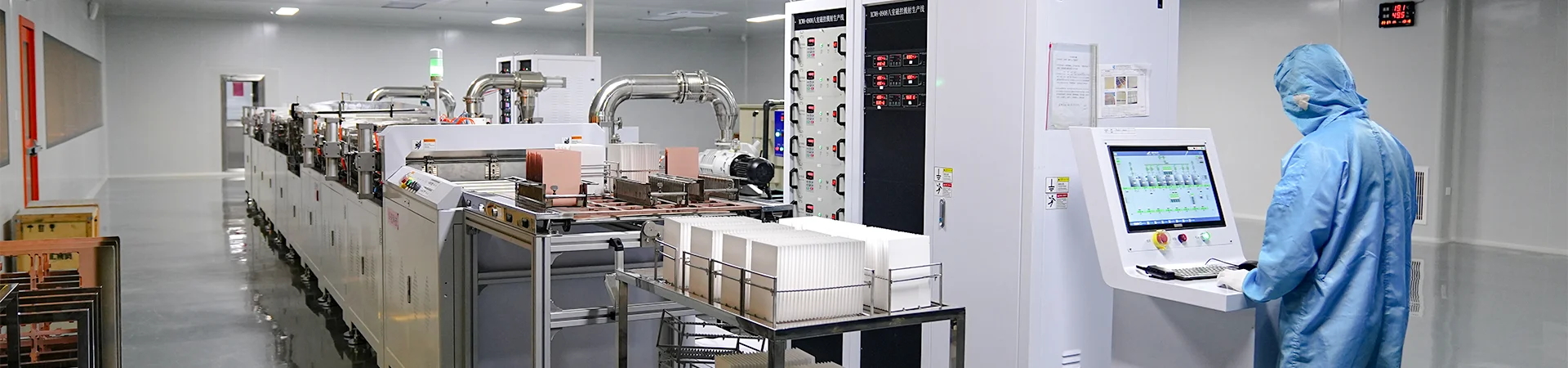
Firing and metallization are done to produce ceramic boards. The steps typically include:
1. Substrate Preparation: The ceramic base is shaped into thin layers.
2. Conductor Printing: This process consists of printing a conductive paste which could be silver, tungsten, or molybdenum over a substrate to create a circuit.
3. Lamination and Firing: Layers are laminated and fired at high temperatures in order to make a strong, dense and completely sintered structure.
4. Surface Finishing: The board is coated and treated for bonding, soldering, and protection.
The firing process permanently fuses the conductive layer and the ceramic substrate giving the conductor layer and the ceramic substrate outstanding mechanical and thermal stability.
Key Benefits of Ceramic Boards
Ceramic Boards have been preferred due to its outstanding functionality in harsh environments. The following are some of the fundamental strengths:
High Thermal Conductivity: They can absorb the heat and leave components cooler and increase their life cycle.
Excellent Electrical Insulation: The non-conductive ceramic base will not allow leakage of electricity.
Low Thermal Expansion: The substrate increases in size very minimally when heated hence straining mounted components minimally.
Durability: Corrosion, wear and high voltage resistant.
Compact Design: Allows for higher circuit density and better miniaturization.
This has made ceramic boards useful in power modules, LED lights, sensors, and RF uses.
Common Applications
Ceramic boards find application in the industries where the most important factors are the heat management and reliability:
LED lighting systems
Power converters and amplifiers
Automotive control systems
Aerospace instruments
High-frequency communication devices
The ceramic boards are more effective and efficient in terms of stability over time in comparison to traditional PCBs due to the performance at temperatures higher than 300degree.
Why Choose BST Ceramic PCB for Ceramic Board Manufacturing?
At BST Ceramic PCB, we deal with the designing and production of superior ceramic boards with accuracy. We are also ISO 9001, ISO 13485 and IATF 16949 certified, and we maintain high quality in all the production stages.
High-quality materials and processes allow us to provide high performance ceramic boards to address the most demanding needs. Our team can offer technical skills, quick turnover and quality no matter what production you require whether it be prototypes or mass production.
Conclusion
Ceramic boards are also strong, heat-resistant, and reliable enough to meet the requirements of the current electronic systems. These boards will keep on replacing traditional substrates as technology advances and they cannot be used in the cases where there is no compromise in terms of performance and durability.
BST Ceramic PCB has a reputation that you can rely on to be a respected manufacturer of ceramic boards that delivers custom solutions to your design, budget, and application requirements.
 Products
 About us
 Contact us