











































 HOME
HOME

-

Ceramic PCB for Humanoid Robot joint actuators
2026 04,07 -
LTCC PCB Surprises: What Most People Miss
2025 12,09 -
Step-by-Step Guide to DPC PCB Design for Sensor Systems
2025 12,03 -
Ceramic PCBs Essential Benefits and Applications
2025 12,01 -
How Al2O3 DPC Ceramic Substrate PCB Enhances Heat Dissipation in Modern Electronics?
2025 11,28 -
How to Choose Between Ceramic, FR4, and Metal Core PCBs
2025 11,27 -
DPC Ceramic PCB Materials: Surprising Science Inside
2025 11,26 -
Wire bondable 2-layer Alumina substrates PCB | Bstceramic PCB
2025 09,22 -
Silicon Nitride Substrate, Silicon Nitride Ceramic Substrate Formula
2025 05,08 -
What is thick film ceramic PCB?
2023 08,02
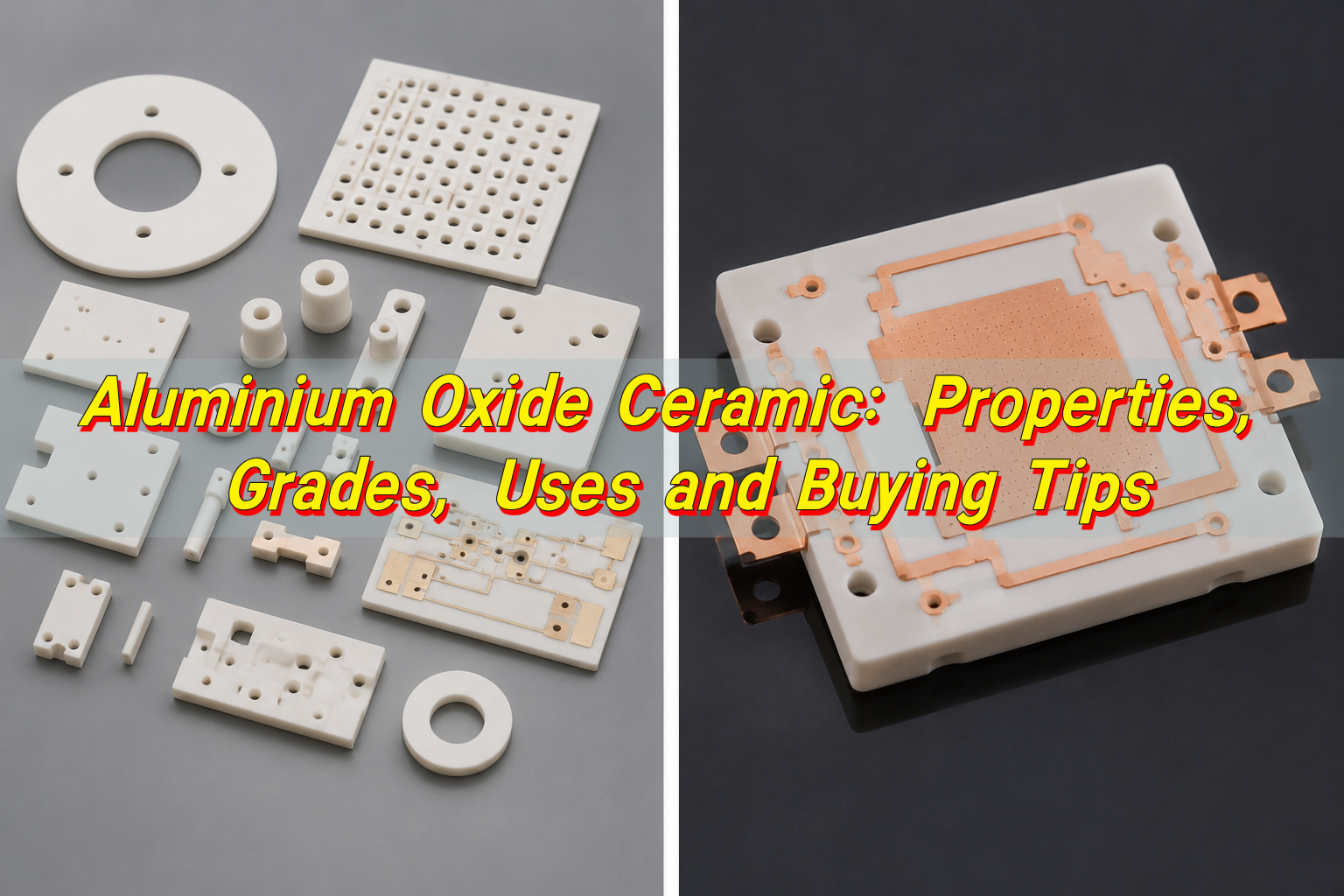
Aluminium Oxide Ceramic: Properties, Grades, Uses and Buying Tips
aluminium oxide ceramic offers strong insulation, wear resistance and stable heat performance for electronic substrates, industrial parts and custom OEM projects.
Aluminium oxide ceramic, also called alumina ceramic or Al₂O₃ ceramic, is one of the most widely used technical ceramic materials in electronics, industrial equipment, power devices, sensors, mechanical wear parts, and custom ceramic substrates. It is valued because it brings together electrical insulation, heat resistance, dimensional stability, hardness, chemical resistance, and manufacturable cost in one material system.
For engineers, the real question is rarely “Is alumina good?” The better question is “Which grade, thickness, surface finish, metallization, tolerance, and testing method should be used for this project?” For buyers, the key is to choose a ceramic supplier that understands both material behavior and real production risk, especially when the part involves ceramic PCB substrates, high-voltage insulation, custom shapes, or batch production.
What Is Aluminium Oxide Ceramic?
Aluminium oxide ceramic is an advanced ceramic material made mainly from alumina powder. Its chemical formula is Al₂O₃. After powder preparation, forming, drying, and high-temperature sintering, the material becomes a dense, hard, electrically insulating ceramic body.
In industry, it may be called:
- Aluminium oxide ceramic
- Aluminum oxide ceramic
- Alumina ceramic
- Al₂O₃ ceramic
- Alumina substrate
- Alumina ceramic PCB substrate
- Metallized alumina ceramic
The spelling “aluminium” is common in Europe and many international markets, while “aluminum” is common in the United States. Both normally refer to the same ceramic family.
Alumina is widely used because it offers a strong price-to-performance balance compared with many other technical ceramics.
Why Is Aluminium Oxide Ceramic Important in Engineering?
Aluminium oxide ceramic matters because it solves several engineering problems at the same time. It can insulate electricity, transfer moderate heat, resist wear, withstand high temperatures, and keep its shape under demanding operating conditions.
In electronics, this is useful for ceramic PCB substrates, resistor substrates, LED modules, sensor carriers, power electronics, high-voltage insulation plates, and thick-film circuits. In mechanical systems, it is used for seals, guides, nozzles, sleeves, valve parts, and wear-resistant components.
A common reason engineers choose alumina is stability. Plastic parts may deform under heat. Metals conduct electricity and may corrode. FR4 may not handle high temperature or high voltage in some projects. Aluminium oxide ceramic sits between these options and gives a reliable balance for many industrial designs.
Morgan Advanced Materials notes that 90–98% alumina ceramics can provide dielectric strength, dimensional stability, abrasion resistance, chemical resistance, and good thermal conductivity.
How Does Aluminium Oxide Ceramic Work?
Aluminium oxide ceramic works through its dense ceramic microstructure. During sintering, alumina particles bond together and form a rigid crystalline body. This gives the material its hardness, insulation, and thermal stability.
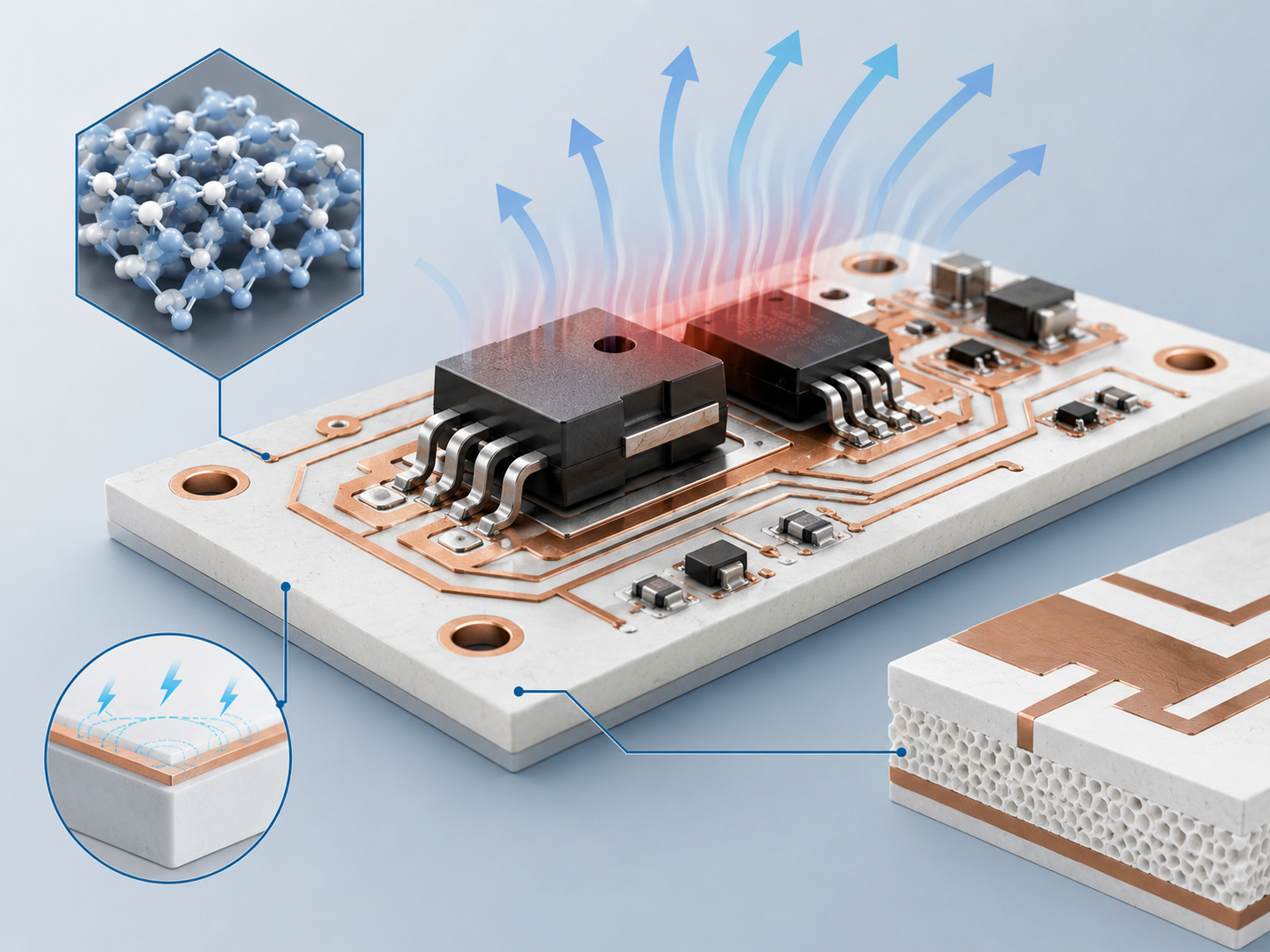
Its performance comes from several mechanisms:
| Property | How It Works | Engineering Value |
|---|---|---|
| Electrical insulation | Dense oxide structure resists electron flow | Suitable for high-voltage and electronic insulation |
| Thermal stability | Ceramic bonds remain stable at high temperature | Useful for power devices and hot environments |
| Wear resistance | Hard crystalline grains resist abrasion | Suitable for guides, seals, nozzles, and sliding parts |
| Chemical resistance | Oxide ceramic surface resists many corrosive media | Useful in industrial and laboratory equipment |
| Dimensional stability | Low deformation compared with polymers | Helps maintain assembly precision |
For ceramic PCB substrates, alumina supports conductive layers through thick-film printing, thin-film processes, direct plated copper, or other metallization methods. The ceramic substrate acts as the electrical insulation and mechanical support, while the metal layer carries current and forms the circuit pattern.
What Are the Main Types of Aluminium Oxide Ceramic?
Aluminium oxide ceramic is usually classified by alumina purity, processing method, and application form. The most common grades include 92%, 95%, 96%, 99%, 99.5%, 99.7%, and 99.9% alumina.
| Type | Typical Use | Main Advantage |
|---|---|---|
| 92% alumina | General wear parts, insulators, structural parts | Lower cost and good mechanical performance |
| 95% alumina | Industrial insulation and mechanical components | Balanced strength and manufacturability |
| 96% alumina | Ceramic PCB substrates, thick-film circuits, electronic carriers | Strong balance of insulation, thermal performance, and cost |
| 99% alumina | High-purity insulation, semiconductor, precision parts | Better purity and cleaner performance |
| 99.5%+ alumina | High-end electronics, vacuum, medical, lab systems | Higher purity and tighter material control |
| Metallized alumina | Brazed assemblies, feedthroughs, ceramic-to-metal parts | Allows metal joining and electrical connection |
| Alumina ceramic PCB | Power electronics, LED, sensors, resistor circuits | Combines ceramic substrate with circuit layer |
For most ceramic PCB and electronic substrate projects, 96% alumina is often the practical starting point. It offers stable insulation and acceptable thermal performance without the cost of very high-purity alumina. Higher-purity grades may be selected when dielectric loss, contamination, temperature stability, surface quality, or special processing requirements become more demanding.
What Material Properties Should Engineers Check?
Material properties should not be selected from one number alone. Alumina performance changes with purity, grain size, density, porosity, forming method, sintering curve, surface finish, and supplier process control.
Typical engineering properties include:
| Property | Typical Engineering Range | Why It Matters |
|---|---|---|
| Alumina content | 92%–99.9% | Affects purity, strength, insulation, thermal behavior, and cost |
| Thermal conductivity | About 12–38.5 W/m·K depending on grade and source | Helps transfer heat from components or working surfaces |
| Dielectric constant | Around 7.8–11.1 depending on grade and test condition | Important for RF, sensor, and high-voltage design |
| Thermal expansion | About 4.5–10.9 × 10⁻⁶/K depending on composition | Affects soldering, bonding, and assembly stress |
| Water absorption | Usually very low when properly sintered | Indicates density and ceramic maturity |
| Hardness | High compared with metals and polymers | Supports wear-resistant use |
| Flexural strength | Depends strongly on grade, surface finish, and flaws | Important for thin plates and load-bearing parts |
AZoM lists alumina thermal conductivity in the 12–38.5 W/m·K range, dielectric constant in the 7.8–11.1 range, and thermal expansion in the 4.5–10.9 × 10⁻⁶/K range, showing why project-specific datasheets matter.
For ceramic PCB design, engineers should pay special attention to thermal conductivity, dielectric strength, surface roughness, thickness tolerance, flatness, copper adhesion, solderability, and thermal cycling behavior.
What Are the Advantages of Aluminium Oxide Ceramic?
Aluminium oxide ceramic is popular because it is not limited to one benefit. It gives a useful combination of electrical, thermal, mechanical, and chemical properties.
Key advantages include:
- Strong electrical insulation
- Good thermal stability
- Moderate heat transfer compared with FR4
- High hardness and wear resistance
- Good corrosion resistance
- Low water absorption when properly sintered
- Stable dimensions after firing
- Good compatibility with metallization
- Lower cost than many high-end ceramics
- Mature global manufacturing supply chain
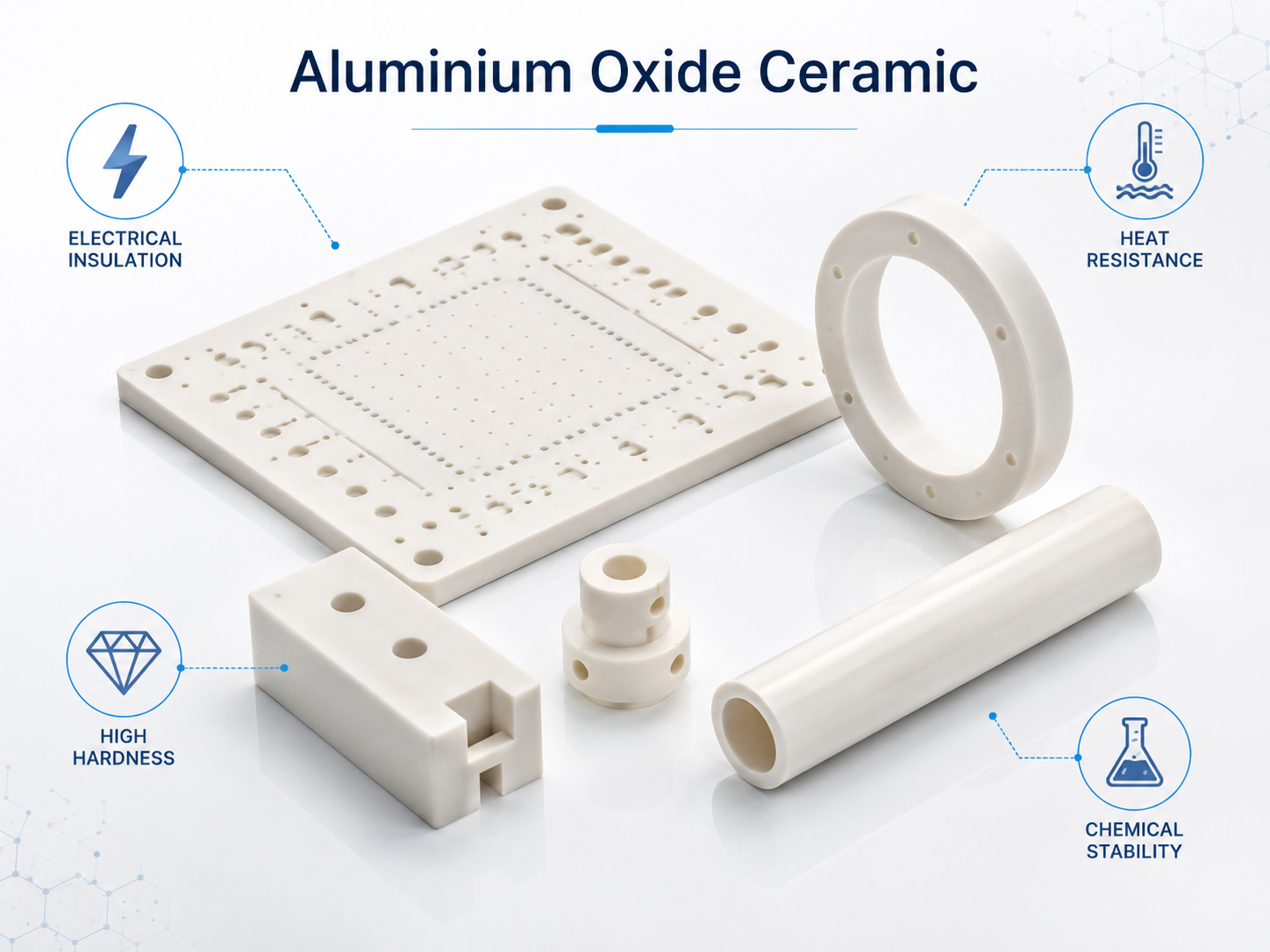
For many electronics projects, alumina is selected when FR4 is not thermally or electrically sufficient, but aluminum nitride or silicon nitride would be too expensive. This makes it a practical material for medium-to-high reliability designs, especially when the project needs custom ceramic substrates, high-voltage isolation, or stable thick-film circuitry.
What Are the Limitations of Aluminium Oxide Ceramic?
Aluminium oxide ceramic is strong and hard, but it is still a brittle ceramic. It does not deform like metal. This means poor mechanical design can lead to cracking, chipping, edge damage, or failure during assembly.
Common limitations include:
| Limitation | Practical Meaning | Design Response |
|---|---|---|
| Brittleness | It can crack under impact or point load | Use radius corners, avoid sharp notches, control screw torque |
| Moderate thermal conductivity | Better than FR4, lower than AlN | Use AlN or copper substrate for very high heat flux |
| Machining cost after sintering | Fired ceramic is hard to cut | Design holes and features before sintering when possible |
| CTE mismatch | Stress may occur with copper, solder, or housing | Check thermal cycling and assembly structure |
| Surface flaw sensitivity | Microcracks can reduce strength | Specify edge treatment and inspection standard |
| Size shrinkage during sintering | Final dimensions require process compensation | Use experienced ceramic manufacturers for tight tolerance parts |
In many failed projects, the material itself is not the main problem. The real cause is poor matching between ceramic grade, geometry, metallization, soldering process, mounting method, and production tolerance.
How Does Aluminium Oxide Ceramic Compare with Other Materials?
Aluminium oxide ceramic is often compared with FR4, aluminum PCB, copper substrate, aluminum nitride, silicon nitride, zirconia, and beryllium oxide. Each material has its own position.
| Material | Strength | Limitation | Best Fit |
|---|---|---|---|
| FR4 | Low cost, mature PCB process | Limited heat and high-voltage performance | Standard control boards |
| Aluminum PCB | Good heat spreading, affordable | Dielectric layer adds thermal resistance | LED lighting and power boards |
| Copper substrate | Excellent heat spreading | Higher cost and heavier structure | High-power thermal designs |
| Aluminium oxide ceramic | Insulation, heat stability, wear resistance, cost balance | Brittle and moderate thermal conductivity | Ceramic PCBs, sensors, high-voltage insulation |
| Aluminum nitride | High thermal conductivity and good insulation | Higher cost and more process sensitivity | High-power modules and laser/LED packages |
| Silicon nitride | High toughness and thermal shock resistance | Higher cost and specialized supply | Automotive power modules and demanding thermal cycling |
| Zirconia | High toughness and wear performance | Lower thermal conductivity | Mechanical wear and structural parts |
| Beryllium oxide | Very high thermal conductivity | Toxicity concerns during processing | Specialized legacy or controlled applications |
For most ceramic PCB projects, aluminium oxide ceramic is chosen when the design needs insulation, heat resistance, and cost control. Aluminum nitride is preferred when thermal conductivity is the top priority. Silicon nitride is more attractive when thermal shock and mechanical toughness are critical.
How Should You Choose the Right Alumina Grade?
The best alumina grade depends on the application, not on the highest purity. Higher purity may improve some properties, but it also increases material cost and processing requirements.
Use this selection logic:
| Project Requirement | Recommended Direction |
|---|---|
| General insulation washer or support | 92%–95% alumina may be enough |
| Ceramic PCB substrate | 96% alumina is often a practical choice |
| Thick-film circuit substrate | 96% alumina with controlled surface roughness |
| High-purity electronic or vacuum part | 99% or higher alumina |
| Wear-resistant mechanical part | 95%–99% alumina depending on load and surface finish |
| High-voltage insulation | Check dielectric strength, creepage, thickness, and surface quality |
| RF or sensor substrate | Check dielectric constant, loss, flatness, and surface roughness |
| High thermal load | Compare alumina with AlN or copper-based alternatives |
A useful rule is simple: do not buy purity without a reason. If 96% alumina meets the electrical, thermal, mechanical, and cost targets, it may be the best commercial option. If the project needs tighter contamination control, higher dielectric stability, special polishing, or advanced metallization, then higher-purity alumina can be justified.
Where Is Aluminium Oxide Ceramic Used?
Aluminium oxide ceramic is used across electronics, industrial manufacturing, automotive systems, medical devices, energy equipment, semiconductor tools, and mechanical wear applications.
Common applications include:
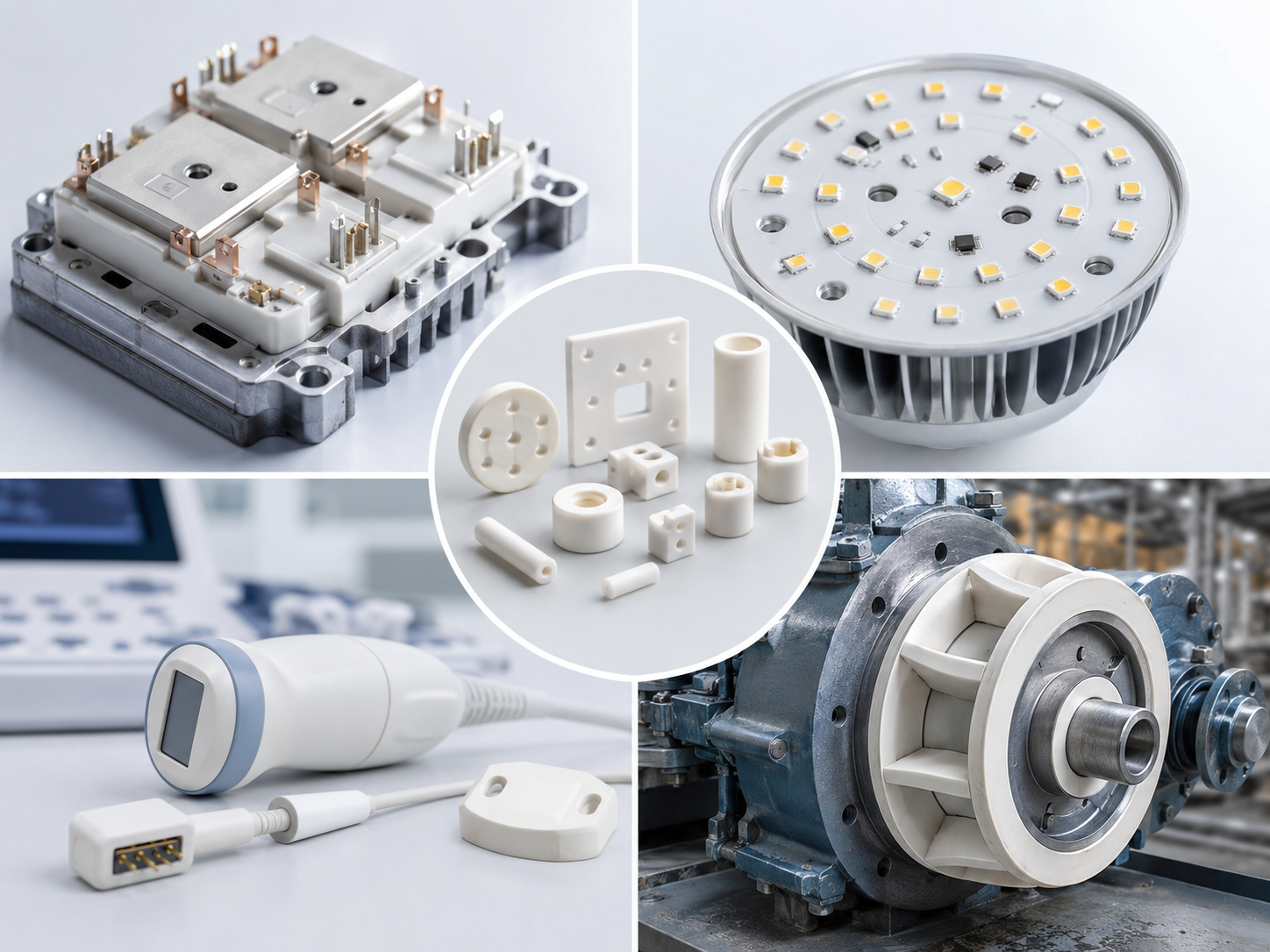
| Industry | Typical Parts |
|---|---|
| Electronics | Ceramic PCB substrates, resistor substrates, sensor carriers, insulating plates |
| Power devices | High-voltage insulation, IGBT auxiliary substrates, heat-resistant carriers |
| LED lighting | Ceramic LED substrates, thermal support plates |
| Automotive electronics | Sensor substrates, ignition components, insulation spacers |
| Medical devices | Insulating parts, wear-resistant guides, ceramic housings |
| Semiconductor equipment | Vacuum-compatible insulators, handling parts, precision ceramic plates |
| Industrial machinery | Nozzles, bushings, seal rings, guide rails, wear sleeves |
| New energy | Insulation plates, power module support, battery-related fixtures |
| Aerospace and defense | High-temperature insulation and stable structural components |
In ceramic PCB manufacturing, alumina is often used for thick-film circuits, thin-film circuits, DPC ceramic PCBs, metallized substrates, and custom ceramic carriers where organic laminates cannot provide enough thermal or dielectric stability.
What Manufacturing Processes Are Used?
Aluminium oxide ceramic manufacturing usually includes powder preparation, forming, drying, sintering, finishing, inspection, and packaging. For ceramic PCB or metallized substrates, circuit processing and metallization are added.
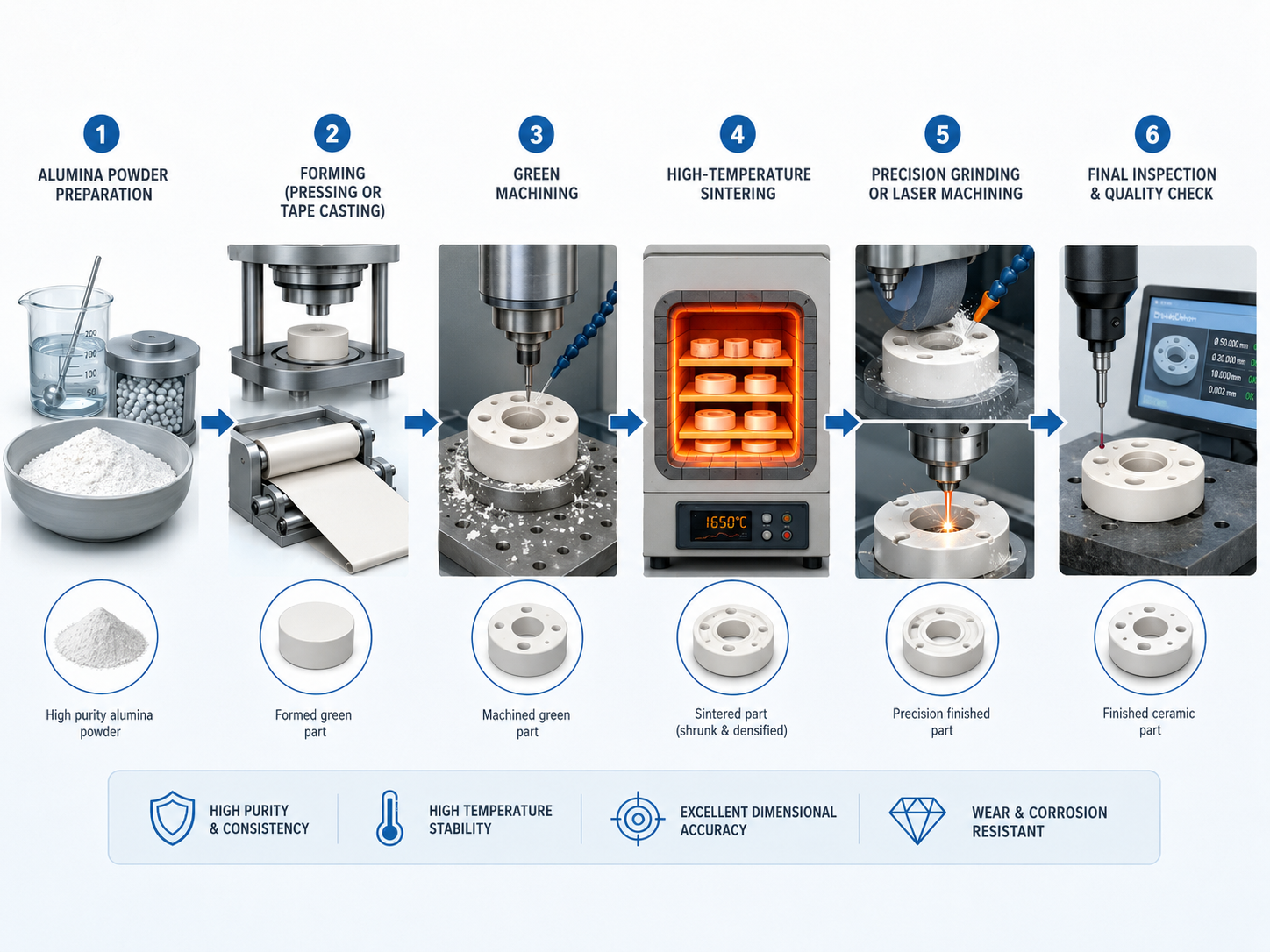
Typical process flow:
| Step | Purpose | Key Control Point |
|---|---|---|
| Powder preparation | Mix alumina powder with additives and binder | Purity, particle size, mixing uniformity |
| Forming | Shape the green body by pressing, tape casting, extrusion, or injection molding | Density uniformity and shrinkage control |
| Green machining | Create holes, slots, or shapes before firing | Avoid deformation and edge defects |
| Sintering | Fire the ceramic at high temperature | Temperature curve, density, porosity, shrinkage |
| Lapping or grinding | Improve thickness, flatness, and surface finish | Thickness tolerance and surface damage |
| Laser cutting or drilling | Create precision contours or micro-features | Chipping, taper, heat-affected zone |
| Metallization | Add conductive layers when needed | Adhesion, line width, copper thickness, solderability |
| Final inspection | Confirm dimensions and performance | Visual, electrical, mechanical, and thermal checks |
For ceramic PCB applications, common circuit processes include thick-film printing, thin-film deposition, direct plated copper, DPC, and DBC/DCB depending on copper thickness, circuit precision, thermal requirement, and order quantity.
What Testing Methods and Standards Should Be Considered?
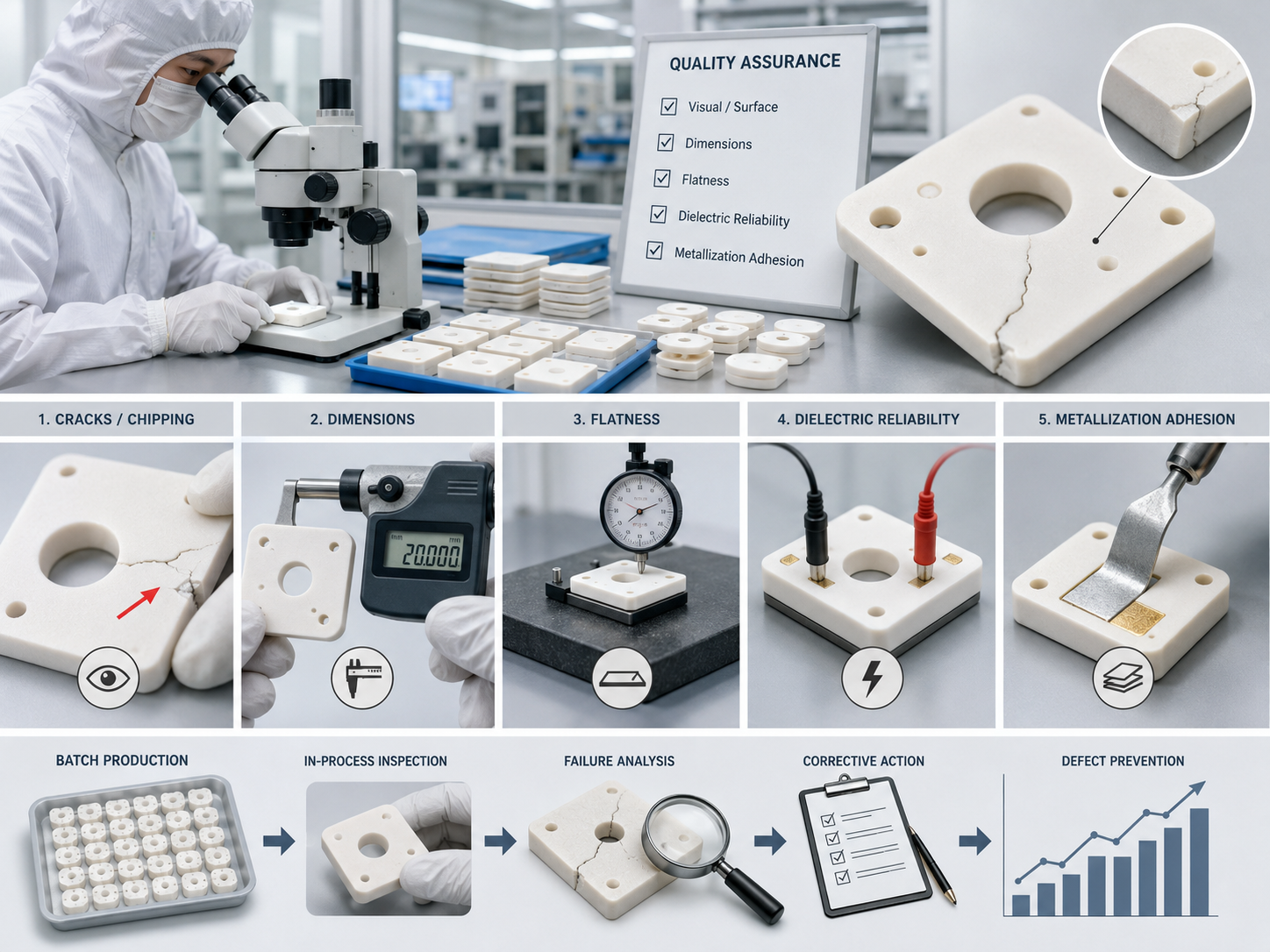
Testing should match the application. A ceramic wear sleeve does not need the same test plan as a high-voltage ceramic PCB substrate. Still, several inspection items are common.
Important tests include:
- Dimension inspection
- Thickness and flatness measurement
- Surface roughness testing
- Visual inspection for cracks, chips, pores, stains, and warpage
- Dielectric withstand testing
- Insulation resistance testing
- Thermal conductivity confirmation when required
- Flexural strength testing
- Water absorption, density, and porosity testing
- Metallization adhesion or peel strength testing
- Solderability testing for ceramic PCB
- Thermal cycling and thermal shock testing
- RoHS material compliance for electronic products
ASTM C1161 is used for flexural strength testing of advanced ceramics at ambient temperature, while ASTM C373 covers water absorption, bulk density, apparent porosity, and apparent specific gravity for fired ceramic products.
For ceramic PCB projects, IPC-related requirements may also be discussed when the product is treated as a printed board. IPC-6012 covers qualification and performance requirements for rigid printed boards, while RoHS restricts hazardous substances in electrical and electronic equipment placed on relevant markets.
What Design Details Affect Performance?
Good ceramic design starts before manufacturing. Alumina is reliable when it is designed correctly, but it is not forgiving when geometry creates stress concentration.
Engineers should check:
| Design Item | Why It Matters |
|---|---|
| Thickness | Affects strength, thermal path, cost, and dielectric withstand |
| Hole size and spacing | Small holes increase processing difficulty and cracking risk |
| Edge distance | Too little edge margin can cause chipping or fracture |
| Corner radius | Sharp internal corners concentrate stress |
| Surface roughness | Affects printing, bonding, sealing, and insulation |
| Flatness | Critical for bonding, soldering, and assembly |
| Metallization type | Determines current capacity, adhesion, solderability, and cost |
| Copper thickness | Affects current, thermal spreading, and stress |
| Mounting method | Screw pressure or point loading can crack ceramic |
| Thermal expansion match | Important when ceramic is bonded to copper, metal housings, or solder joints |
For ceramic PCB projects, design review should check line width, spacing, via structure, copper thickness, substrate thickness, solder mask requirement, surface finish, component footprint, current path, heat path, isolation distance, and assembly temperature profile.
What Real Project Cases Show Practical Value?
In one power LED project, a customer needed better insulation and heat stability than standard FR4 could provide. The board did not require the highest thermal conductivity available, but it needed stable operation near heat-generating LEDs. A 96% alumina ceramic substrate gave a balanced solution. It improved thermal behavior compared with organic laminate and kept the cost lower than aluminum nitride.
In a sensor module project, the design required stable dimensions, clean insulation, and reliable conductor patterns. The engineering team selected an alumina thick-film substrate because it provided a stable ceramic base and allowed printed conductive traces. The key process control was not only the ceramic grade, but also surface roughness, printing accuracy, firing curve, and post-firing inspection.
In a mechanical wear part project, a metal guide surface showed abrasion after long operation. Replacing the contact surface with alumina ceramic reduced wear and improved dimensional stability. The important lesson was to avoid sharp ceramic edges and to polish the contact area properly, because surface finish had a direct effect on service life.
These cases show one core point: alumina works best when material selection, geometry, process route, and inspection plan are considered together.
What Failure Problems Happen in Aluminium Oxide Ceramic Parts?
Most failures come from stress, thermal mismatch, poor processing control, improper assembly, or wrong material selection.
Common failure modes include:
| Failure Mode | Possible Cause | Prevention |
|---|---|---|
| Edge chipping | Rough handling, sharp contour, poor cutting | Add chamfer, improve packaging, control laser/grinding process |
| Cracking during assembly | Excessive screw torque or point load | Use torque control, washers, larger contact area |
| Thermal shock crack | Fast temperature change or CTE mismatch | Validate thermal cycling and avoid sudden heat gradients |
| Warpage | Poor sintering control or uneven metallization stress | Control firing curve, substrate thickness, copper balance |
| Poor metallization adhesion | Surface contamination, wrong paste, firing issue | Clean surface, validate metallization system, test adhesion |
| Poor solderability | Oxidation, wrong finish, storage issue | Use suitable finish and controlled packaging |
| Dielectric failure | Surface contamination, pores, insufficient clearance | Clean process, test withstand voltage, design creepage distance |
| Dimensional mismatch | Sintering shrinkage not compensated | Use experienced tooling and process compensation |
For batch production, failure prevention should begin during DFM review. Waiting until final inspection is too late because ceramic processing has fewer rework options than metal or polymer manufacturing.
What Factors Affect Aluminium Oxide Ceramic Cost?
Cost depends on more than material grade. Two parts made from the same alumina content can have very different prices if their geometry, tolerance, surface finish, and metallization requirements are different.
Main cost factors include:
- Alumina purity
- Substrate or part thickness
- Overall dimensions
- Quantity and panel utilization
- Hole count and hole diameter
- Laser cutting complexity
- Tolerance requirement
- Flatness requirement
- Surface roughness requirement
- Lapping or polishing need
- Metallization type
- Copper thickness or printed conductor material
- Inspection requirements
- Packaging method
- Prototype urgency
- Batch consistency requirement
For buyers, the most effective cost-control method is not simply asking for a lower unit price. It is to give complete technical files, define realistic tolerances, avoid over-specification, and allow the supplier to suggest manufacturable alternatives.
How Can Buyers Choose a Reliable Aluminium Oxide Ceramic Supplier?
A reliable supplier should understand both material production and application requirements. This is especially important for ceramic PCB substrates, metallized ceramics, and custom alumina parts.
A good supplier should be able to provide:
- Material grade options
- Ceramic datasheet
- Manufacturing process explanation
- DFM review before production
- Tolerance capability
- Surface finish options
- Metallization capability if needed
- Inspection report
- Electrical test for ceramic PCB
- Packaging plan for brittle parts
- Batch traceability
- RoHS documentation when required
- Prototype and mass production support
- Global shipping experience
For overseas buyers sourcing from China, the supplier should not pretend to have local factories, warehouses, or branches that do not exist. A more reliable approach is clear: China source factory production, transparent engineering communication, export-ready documentation, stable packaging, and global delivery support.
Buyers in North America and Europe often care more about compliance, documentation, repeatability, and long-term supply stability. Buyers in Southeast Asia may focus more on cost, lead time, small-batch customization, and logistics flexibility. A capable China manufacturer should adapt to these regional purchasing priorities without using false local claims.
What Should You Prepare Before Requesting a Quote?
A complete RFQ helps the factory quote faster and reduces misunderstanding. For aluminium oxide ceramic parts, incomplete drawings often lead to repeated communication, inaccurate pricing, or unnecessary delays.
Prepare these files and details:
| RFQ Item | Why It Is Needed |
|---|---|
| 2D drawing | Defines dimensions, tolerance, holes, chamfers, and surface requirements |
| 3D file if available | Helps check structure and machining feasibility |
| Material grade | Confirms alumina content and performance level |
| Thickness | Affects cost, strength, insulation, and lead time |
| Surface finish | Important for bonding, printing, sealing, or sliding |
| Quantity | Determines tooling, panelization, and unit cost |
| Application | Helps supplier judge hidden risks |
| Operating temperature | Affects material and metallization choice |
| Voltage/current requirement | Critical for ceramic PCB and insulation parts |
| Metallization details | Defines conductor material, thickness, finish, and solderability |
| Testing requirements | Confirms inspection cost and quality standard |
| Packaging requirement | Prevents shipping damage |
For ceramic PCB projects, also prepare Gerber files, stackup, copper thickness, surface finish, solder mask requirement, component assembly information, and special reliability requirements.
FAQs About Aluminium Oxide Ceramic
Is aluminium oxide ceramic the same as alumina ceramic?
Yes. Aluminium oxide ceramic, aluminum oxide ceramic, alumina ceramic, and Al₂O₃ ceramic usually refer to the same ceramic material family. The difference is mainly naming and regional spelling. “Aluminium” is more common in British English, while “aluminum” is common in American English. In engineering documents, Al₂O₃ is the clearest term because it directly identifies the chemical composition.
Is aluminium oxide ceramic good for PCB substrates?
Yes, alumina is widely used for ceramic PCB substrates, especially when the design needs electrical insulation, heat resistance, dimensional stability, and better thermal performance than FR4. It is often used in thick-film circuits, DPC ceramic PCBs, LED modules, power electronics, sensors, and high-voltage applications. For very high heat flux, aluminum nitride may be a better choice.
What is the difference between 96% and 99% alumina?
96% alumina is often selected for electronic substrates because it offers a good balance of cost, insulation, manufacturability, and thermal performance. 99% alumina has higher purity and may be preferred for cleaner, higher-performance, or more demanding applications. The better choice depends on electrical performance, surface quality, temperature, contamination limits, and budget.
Is aluminium oxide ceramic electrically conductive?
No. Aluminium oxide ceramic is normally an electrical insulator. This is one reason it is used in high-voltage insulation parts, ceramic substrates, feedthroughs, and electronic carriers. However, conductive circuits can be added through metallization, such as thick-film printing, thin-film deposition, copper plating, or other ceramic PCB processes.
Does aluminium oxide ceramic conduct heat?
Yes, but its thermal conductivity is moderate compared with high-thermal ceramics such as aluminum nitride. Alumina conducts heat better than many organic PCB laminates, which makes it useful for ceramic substrates and thermal support parts. If the project has extreme thermal density, engineers should compare alumina with AlN, copper substrate, or other thermal solutions.
Can aluminium oxide ceramic replace aluminum PCB?
It can replace aluminum PCB in some projects, but not all. Alumina provides strong insulation and a stable ceramic body without an organic dielectric layer. Aluminum PCB is usually cheaper and easier for many LED and power designs. The choice depends on heat flow, voltage isolation, board size, circuit complexity, mechanical structure, and target cost.
Why does alumina ceramic crack during assembly?
Cracking often happens because of point load, excessive screw torque, sharp corners, poor edge treatment, thermal shock, or CTE mismatch with metal parts. Alumina is hard but brittle, so it needs proper mechanical support. Using chamfers, radius corners, torque control, compliant washers, and balanced mounting pressure can greatly reduce cracking risk.
What surface finish is needed for alumina ceramic parts?
The surface finish depends on the application. A sliding wear part may need polishing. A thick-film circuit substrate may need controlled roughness for printing adhesion. A bonding surface may need lapping or tight flatness. A high-voltage insulation plate may need clean surfaces without cracks, pores, or contamination. Surface requirements should be shown clearly on the drawing.
Can alumina ceramic be laser cut or drilled?
Yes. Alumina ceramic can be laser cut or drilled, especially for substrates, holes, slots, and custom shapes. However, laser processing must control edge chipping, taper, microcracks, and heat-affected zones. For some features, green machining before sintering may be more economical. The best route depends on thickness, tolerance, hole size, and quantity.
Is aluminium oxide ceramic suitable for high-voltage insulation?
Yes, alumina is commonly used for electrical insulation and high-voltage applications. Still, the design must check more than material selection. Thickness, creepage distance, clearance, surface cleanliness, humidity, metallization edge distance, porosity, and voltage test conditions all affect reliability. For critical products, dielectric withstand and insulation resistance testing should be included.
What makes aluminium oxide ceramic more expensive?
Higher purity, tight tolerance, thin substrates, high flatness, polishing, many small holes, complex contours, metallization, copper thickness, advanced inspection, and small urgent batches all increase cost. Buyers can reduce cost by using realistic tolerances, standard thicknesses, proper panel design, and complete drawings. Over-specifying purity or flatness often adds cost without improving performance.
How should alumina ceramic parts be packed for export?
Alumina parts should be packed to prevent impact, vibration, edge contact, and surface scratching. Thin substrates need separators, foam protection, vacuum or moisture-resistant
 Products
 About us
 Contact us