

































 HOME
HOME

-

Ceramic PCB for Humanoid Robot joint actuators
2026 04,07 -
LTCC PCB Surprises: What Most People Miss
2025 12,09 -
Step-by-Step Guide to DPC PCB Design for Sensor Systems
2025 12,03 -
Ceramic PCBs Essential Benefits and Applications
2025 12,01 -
How Al2O3 DPC Ceramic Substrate PCB Enhances Heat Dissipation in Modern Electronics?
2025 11,28 -
How to Choose Between Ceramic, FR4, and Metal Core PCBs
2025 11,27 -
DPC Ceramic PCB Materials: Surprising Science Inside
2025 11,26 -
Wire bondable 2-layer Alumina substrates PCB | Bstceramic PCB
2025 09,22 -
Silicon Nitride Substrate, Silicon Nitride Ceramic Substrate Formula
2025 05,08 -
What is thick film ceramic PCB?
2023 08,02
How Al2O3 DPC Ceramic Substrate PCB Enhances Heat Dissipation in Modern Electronics?

Al2O3 dpc ceramic substrate pcb brings you superior heat dissipation for modern electronics. You face significant risks when thermal management fails, as more than 55% of electronic device failures stem from temperature problems. The ceramic base provides a remarkable advantage in thermal performance compared to traditional boards.
| Material Type | Thermal Conductivity (W/mK) |
|---|---|
| Al2O3 Ceramic | 20 to 30 |
| FR4 | 0.3 to 0.5 |
You gain reliability and efficiency by choosing the right material and manufacturing process for your pcb.
Key Takeaways
- Al2O3 DPC ceramic substrate PCBs provide excellent heat dissipation, reducing the risk of overheating in electronic devices.
- These PCBs have high thermal conductivity, allowing heat to move quickly away from sensitive components, ensuring reliable operation.
- The robust structure and dielectric strength of ceramic substrates protect against electrical breakdown, making them ideal for high-voltage applications.
- Choosing DPC ceramic technology enhances the lifespan of electronics, supporting long-term reliability in demanding environments.
- For optimal performance, consider the thickness and layer structure of your PCB to maximize heat management and circuit density.
Al2O3 DPC Ceramic Substrate PCB Features
Thermal Conductivity and Reliability
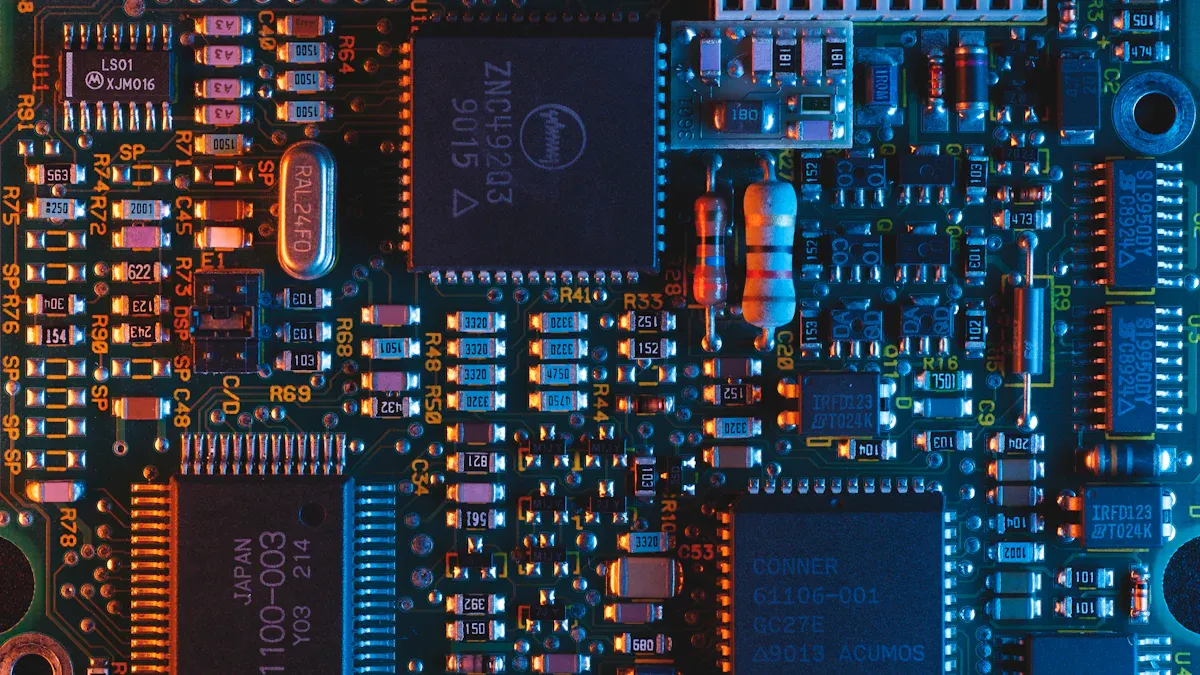
You demand high thermal performance in modern electronics, and the al2o3 dpc ceramic substrate pcb delivers exactly that. The ceramic substrate provides a high thermal conductivity range from 24 to 170 W/mK, which far exceeds conventional PCB materials. This wide range allows you to select the optimal dissipation level for your application, ensuring that heat moves away from sensitive components quickly and efficiently.
| Material | Thermal Conductivity (W/mK) |
|---|---|
| Al2O3 DPC Ceramic Substrate PCBs | 24-170 |
You benefit from this high thermal conductivity because it supports stable operation even in high temperature environments. The dpc ceramic substrate maintains its structure and performance under thermal stress, which means you can trust your device to operate reliably over time. High temperature stability is a key advantage, especially for power electronics and inverter systems that generate significant heat.
Tip: When you choose a dpc ceramic pcb, you reduce the risk of overheating and extend the lifespan of your electronics.
Board Structure and Material Specs
The structure of the al2o3 dpc ceramic substrate pcb is engineered for both strength and versatility. You get a board thickness of 0.635mm (±0.1mm), which balances mechanical durability with efficient heat dissipation. The copper conductor layer, available in thicknesses from 10um (≈1/3oz) to 140um (4oz), provides excellent electrical performance while supporting rapid heat transfer.
| Thickness (mm) | Copper Thickness (Oz) |
|---|---|
| 0.635 | 2Oz (70um) |
You can design intricate circuits thanks to minimum line width and space of 3/3mil (0.075/0.075mm), and the minimum hole diameter of 100μm ensures compatibility with a wide range of components. The ceramic substrate supports board dimensions up to 120mm x 180mm and 1-2 layers, giving you flexibility for various applications.
The dpc ceramic substrate also excels in electrical insulation. With dielectric strength exceeding 17 KV/mm, you gain protection against voltage surges and electrical breakdown. Water absorption is virtually zero, so your pcb remains stable and reliable even in humid or harsh environments.
| Property | Unit | Value |
|---|---|---|
| Dielectric Strength | KV/mm | >17 |
| Water Absorption | % | 0 |
You also meet strict industry standards, including ROHS compliance and Grade A flammability, which ensures safety and environmental responsibility.
Surface Finish and Durability
Surface finish plays a critical role in the durability and performance of your dpc ceramic substrate. The ENEPIG finish (Electroless Nickel Electroless Palladium Immersion Gold) offers excellent solderability and corrosion resistance, which means you achieve reliable connections and long-lasting performance.
| Surface Finish | Characteristics | Impact on Durability |
|---|---|---|
| Polished Surface | Smooth and uniform, ideal for high precision applications. | Enhances adhesion of metal coatings and improves reliability of solder joints, but prone to scratching. |
| Rough Surface | Higher surface area for adhesion, beneficial for bond strength. | Improves solderability and mechanical strength, suitable for robust applications. |
| Chemically Treated | Modified for specific properties like wettability and adhesion. | Customizable for improved solderability and resistance to environmental conditions. |
You notice that the absence of solder mask and silkscreen streamlines the manufacturing process. While this design choice reduces complexity, you must handle and assemble the pcb with care to maintain long-term reliability. The ceramic substrate itself provides robust protection against oxidation and physical damage, supporting consistent performance in demanding environments.
Note: The dpc process and ceramic substrate work together to deliver outstanding heat dissipation performance and reliability, even when exposed to high temperatures and challenging conditions.
You gain confidence in your electronics when you choose al2o3 dpc ceramic substrate pcb technology. The combination of high thermal conductivity, advanced board structure, and durable surface finish ensures your devices operate efficiently and reliably, no matter the application.
DPC Process and Heat Management
Direct Plating Copper Technology
You gain a significant advantage in heat management when you use direct plating copper (DPC) technology on a ceramic substrate. The DPC process creates a seamless copper layer directly on the ceramic, forming a highly efficient thermal pathway. This method stands out for its precision and reliability, especially in high-power applications.
The DPC process for ceramic substrates follows a series of carefully controlled steps:
- Substrate Preparation: You start by cleaning and drying the ceramic substrate to remove any contaminants.
- Surface Activation: Chemical treatment enhances copper adhesion to the ceramic substrate.
- Copper Plating:
- Electroless Plating: A thin copper layer is deposited without electricity, ensuring uniform coverage.
- Electrolytic Plating: You build up the copper thickness using an electric current for robust conductivity.
- Circuit Pattern Definition: Photoresist is applied and exposed to UV light, defining the circuit layout.
- Etching: Unneeded copper is removed, revealing the precise circuit pattern.
- Photoresist Removal: The remaining photoresist is stripped away.
- Final Treatment: Surface finishing, such as ENEPIG, is applied for solderability and oxidation protection.
This process allows you to achieve fine circuit patterns and consistent copper thickness, which are essential for high-performance electronic devices. The direct copper-to-ceramic bond ensures minimal thermal resistance, supporting superior heat dissipation performance.
Copper Bonding and Thermal Pathways
You benefit from the DPC process because it creates direct and efficient thermal pathways between heat-generating components and the ceramic substrate. The copper layer, bonded directly to the ceramic, enables rapid heat transfer away from critical areas. This structure minimizes thermal resistance and maximizes heat dissipation.
- DPC ceramic PCB technology provides you with a high thermal conductivity interface. For example, DPC packages using aluminum nitride substrates can reach thermal conductivity values between 170 and 230 W/m·K. Even with aluminum oxide, you still achieve a range of 24–30 W/m·K, which is much higher than traditional PCB materials.
- The DPC process reduces the number of interfaces between the copper and ceramic substrate, lowering the risk of delamination and improving high temperature stability.
- You experience enhanced heat dissipation, especially in high-power and high-density applications, where efficient thermal management is critical.
Note: The direct copper bonding in DPC ceramic substrate PCBs ensures that heat moves quickly from the source to the ceramic substrate, protecting sensitive components and extending device lifespan.
Advantages Over Traditional PCBs
When you compare DPC ceramic PCB technology to conventional PCB manufacturing, the benefits become clear. Traditional PCBs, such as those made from FR-4, have limited thermal conductivity and lower maximum operating temperatures. In contrast, DPC ceramic substrate PCBs deliver superior performance in demanding environments.
| Material Type | Maximum Operating Temperature | Glass-Transition Temperature (Tg) | Coefficient of Thermal Expansion (CTE) |
|---|---|---|---|
| Ceramic (Alumina) | Up to 800°C | N/A | 2.6–3.5 ppm/°C |
| Ceramic (Silicon Carbide) | Higher than 800°C | N/A | 2.6–3.5 ppm/°C |
| FR-4 | N/A | 130–170°C | 14–17 ppm/°C |
You notice that ceramic substrate PCBs, especially those using the DPC process, offer:
- Much higher maximum operating temperatures, supporting applications up to 800°C.
- Lower coefficient of thermal expansion, which means better dimensional stability under thermal cycling.
- No glass-transition temperature, so you avoid the risk of softening or warping at elevated temperatures.
You also gain from the high thermal conductivity and robust structure of the ceramic substrate. This combination ensures reliable operation in high-voltage, high-power, and high-temperature environments. The DPC ceramic substrate PCB stands out for its ability to maintain performance and reliability where traditional PCBs would fail.
Tip: Choose DPC ceramic PCB technology when you need efficient heat dissipation, high reliability, and long-term durability in your electronic designs.
By leveraging the DPC process, you ensure that your devices benefit from advanced heat management, high conductivity, and exceptional high temperature stability. The al2o3 dpc ceramic substrate pcb gives you a competitive edge in modern electronics, where efficient dissipation and reliability are essential.
PCB Design for Efficient Heat Dissipation
Layer and Thickness Optimization
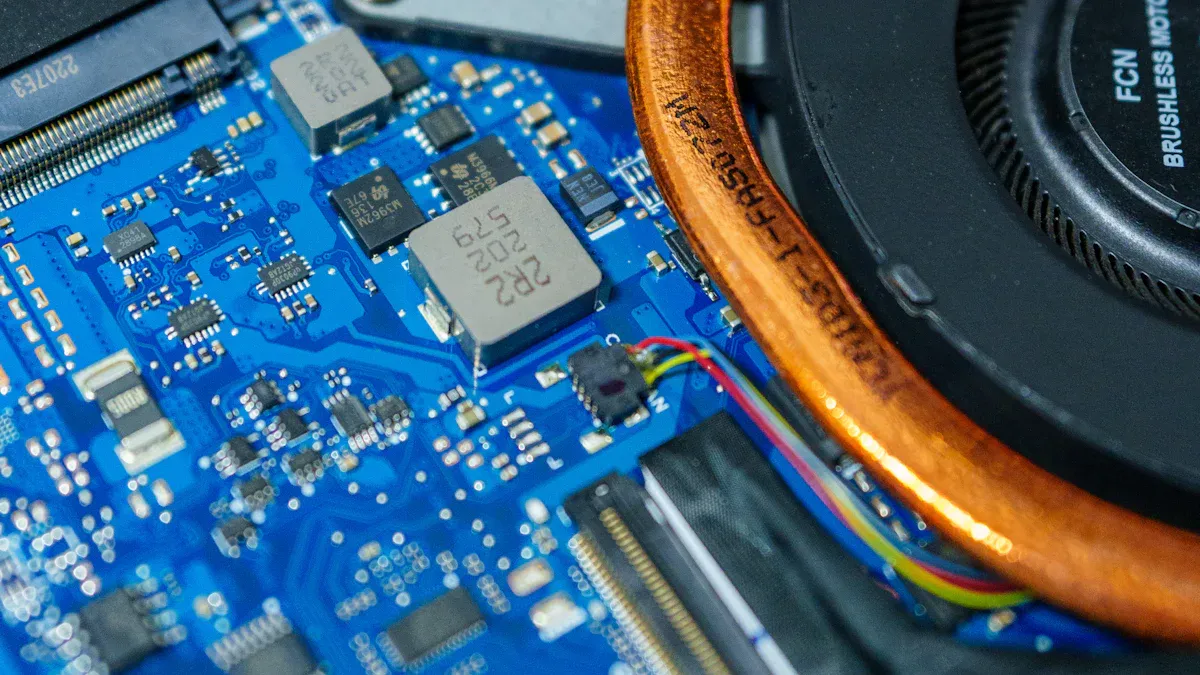
You achieve optimal heat dissipation performance by carefully selecting the number of layers and the thickness of your ceramic substrate. The dpc process allows you to use a single or double-layer structure, which supports efficient thermal transfer. You can choose a base material thickness from 0.15 mm up to 6 mm, depending on your application’s power density and mechanical requirements. Thicker ceramic substrates provide greater mechanical strength and improved heat spreading, while thinner boards offer compactness for miniaturized designs. The copper layer, deposited through dpc, ensures a direct and robust thermal path from components to the ceramic substrate. This design maximizes the high thermal conductivity of the al2o3 dpc ceramic substrate pcb, allowing you to manage heat in high-power modules.
Circuit Density and Component Compatibility
You benefit from the dpc ceramic pcb’s ability to support fine line widths and tight spacing. With a minimum line width and space of 3/3 mil, you can design complex circuits without sacrificing reliability. The ceramic substrate accommodates a wide range of components, including IGBT modules and LEDs, due to its excellent compatibility and electrical insulation. The following table highlights key attributes that support high-power integration:
| Attribute | Value |
|---|---|
| Thermal Conductivity | 24-170 W/mk |
| Dielectric Strength | >15 KV/mm |
| Substrate Type | Al2O3, AlN, Si3N4 |
| Base Material Thickness | 0.15-6 mm |
| Water Absorption | ≤0.5% |
| Flammability | Grade A |
You can trust the dpc ceramic substrate to maintain stable operation, even when you push your pcb to handle demanding loads. This flexibility makes the ceramic substrate ideal for advanced power electronics and lighting systems.
Dielectric Strength and Environmental Resistance
You rely on the ceramic substrate for outstanding dielectric strength and environmental durability. The dpc ceramic substrate provides dielectric strength above 15 KV/mm, which protects your circuits from voltage surges and electrical breakdown. You also gain confidence in harsh environments, as the ceramic substrate resists moisture, corrosion, and rapid temperature changes. The table below summarizes how the dpc ceramic pcb performs in environmental tests:
| Test Type | Description | Outcome |
|---|---|---|
| Humidity Test | Boards are subjected to hot and wet conditions for extended periods. | Assesses durability in moisture. |
| Salt Spray Test | Evaluates resistance to corrosion by exposing boards to salt spray. | Determines rust resistance. |
| Thermal Shock Test | Involves rapid temperature changes to identify weak points in the boards. | Tests thermal stability. |
| Environmental Stability | Soaking in water, acid, and base for 500 hours. | Very small change in resistance. |
Tip: You extend the service life of your electronics by choosing a dpc ceramic substrate that withstands challenging conditions. The ceramic substrate’s low water absorption and Grade A flammability rating further enhance safety and reliability.
You ensure your pcb design delivers efficient dissipation, robust electrical insulation, and long-term stability by leveraging the unique properties of the dpc ceramic substrate.
DPC Ceramic PCB Applications
Inverter Systems
You rely on inverter systems for efficient power conversion in industrial and renewable energy sectors. The dpc ceramic substrate gives you a clear advantage in these demanding environments. The high thermal conductivity and robust structure of the ceramic substrate ensure that your inverter modules operate with greater efficiency and reliability. The dpc process creates a direct copper bond, which improves heat dissipation and extends the lifespan of your equipment. You can see the performance improvements in the table below:
| Result | Benefit |
|---|---|
| Thermal conductivity improved | Greater efficiency in inverter systems |
| Enhanced durability | Longer lifespan compared to normal PCBs |
You gain stable operation and reduced maintenance costs when you choose dpc ceramic pcb technology for your inverter applications.
Power Electronics and LEDs
You need reliable solutions for power electronics and LED modules, where heat dissipation is critical. The ceramic substrate supports high-power devices by enabling rapid heat transfer away from sensitive components. You benefit from the following features:
- The ceramic substrate provides excellent thermal management, which maintains LED brightness and extends service life.
- The dpc ceramic substrate ensures stable performance in high-temperature conditions, so your power electronics remain reliable.
- You achieve efficient dissipation, which prevents overheating and supports high-density circuit designs.
- The dpc process allows for compact layouts, making your LED and power modules more efficient.
You can trust ceramic technology to deliver consistent results in the heat dissipation application industry.
High-Voltage and Harsh Environments
You face unique challenges in high-voltage and harsh environments. The dpc ceramic substrate offers outstanding dielectric strength and chemical stability, which protect your circuits from electrical breakdown and corrosion. The table below highlights key properties:
| Property | Value |
|---|---|
| Dielectric breakdown voltage (KV/mm) | >15 |
| Sintering temperature (°C) | 1500-1700 |
You benefit from excellent electrical insulation and reliable performance, even under extreme conditions. The ceramic substrate resists moisture, oxidation, and rapid temperature changes, making it ideal for high-voltage modules, VCSEL, and other advanced electronics. The dpc ceramic substrate ensures your pcb maintains its integrity and functionality, no matter the environment.
You gain significant advantages by choosing Al2O3 DPC ceramic substrate PCBs for your electronics.
- You achieve excellent thermal management and stable operation in high-power environments.
- You minimize overheating risks, extend component lifespan, and support long-term reliability.
- You benefit from superior thermal conductivity, even heat distribution, and compatibility with advanced technologies.
Industry experts recommend that you verify substrate purity, dielectric strength, and compliance with standards.
- Enhance heat transfer with advanced materials.
- Use simulation tools to optimize thermal management.
- Request technical documentation and supplier support.
You can reach out through our email or inquiry form for tailored solutions and technical guidance.
 Products
 About us
 Contact us