




















































 HOME
HOME


-

Ceramic PCB for Humanoid Robot joint actuators
2026 04,07 -
LTCC PCB Surprises: What Most People Miss
2025 12,09 -
Step-by-Step Guide to DPC PCB Design for Sensor Systems
2025 12,03 -
Ceramic PCBs Essential Benefits and Applications
2025 12,01 -
How Al2O3 DPC Ceramic Substrate PCB Enhances Heat Dissipation in Modern Electronics?
2025 11,28 -
How to Choose Between Ceramic, FR4, and Metal Core PCBs
2025 11,27 -
DPC Ceramic PCB Materials: Surprising Science Inside
2025 11,26 -
Wire bondable 2-layer Alumina substrates PCB | Bstceramic PCB
2025 09,22 -
Silicon Nitride Substrate, Silicon Nitride Ceramic Substrate Formula
2025 05,08 -
What is thick film ceramic PCB?
2023 08,02
Aluminum Oxide Conductivity | Thermal & Electrical Properties
Published:
Aluminum oxide conductivity is an important topic for engineers, PCB designers, power electronics teams, and purchasing teams who need a ceramic material with stable heat transfer and dependable electrical insulation. Aluminum oxide, also called alumina or Al₂O₃, is widely used in ceramic PCB substrates because it offers a balanced combination of thermal conductivity, dielectric strength, mechanical hardness, chemical stability, and cost efficiency. It does not behave like copper, aluminum, or other conductive metals. Instead, it works as a high-performance insulating ceramic that can move heat away from components while keeping electrical circuits isolated.
This balance is exactly why alumina remains one of the most trusted ceramic substrate materials in LED modules, power electronics, sensors, automotive electronics, medical devices, industrial controls, and RF-related assemblies. For many applications, the goal is not to find the highest possible thermal conductivity. The real goal is to find a material that offers reliable thermal management, strong insulation, manufacturability, and stable long-term performance. BSTCeramicPCB often sees alumina selected when customers need a practical ceramic PCB solution that performs well without moving into more expensive ceramic systems such as aluminum nitride.
What Is Aluminum Oxide Conductivity?
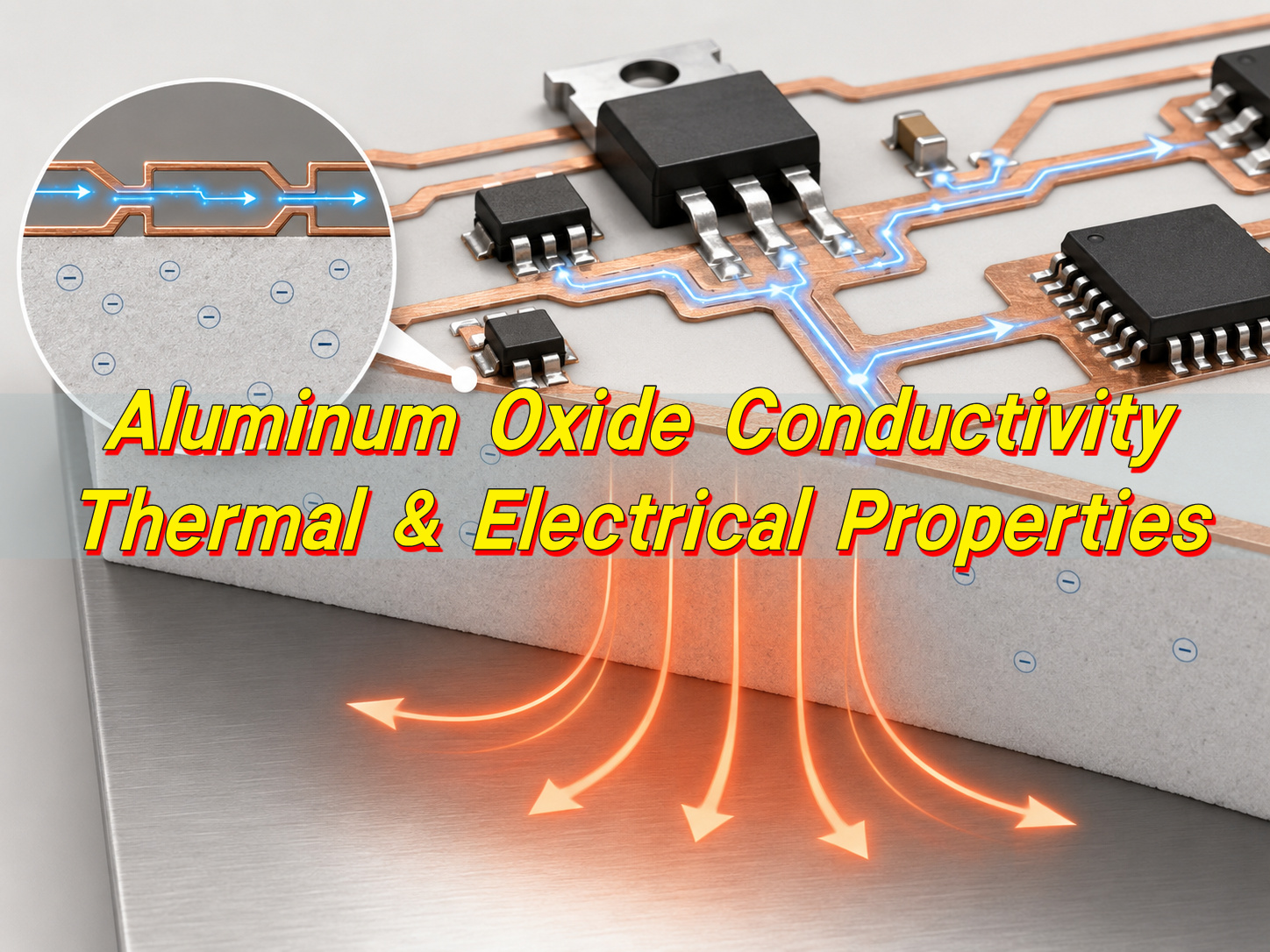
Aluminum oxide conductivity describes how aluminum oxide transfers energy through its material structure. In electronics, this usually refers to two different properties: electrical conductivity and thermal conductivity.
Aluminum oxide has very low electrical conductivity. In practical terms, it acts as an electrical insulator. This makes it suitable for circuits where current must stay within copper traces, pads, and plated areas instead of leaking through the ceramic base. At the same time, alumina has much better thermal conductivity than standard FR4 laminate. This allows heat from power components, LEDs, resistors, sensors, and driver ICs to move through the ceramic substrate more efficiently.
The conductivity of aluminum oxide depends on several material and process factors. Purity, density, grain size, porosity, temperature, surface condition, and metallization process can all affect the final performance. A 96% alumina substrate may not show the same thermal behavior as a 99.6% alumina substrate. A dense ceramic body usually conducts heat better than a porous one.
For PCB applications, this property combination is powerful. Aluminum oxide gives engineers a stable insulating base that can also support practical heat spreading. That is one reason alumina ceramic PCBs are often used when FR4 is no longer sufficient, but the project does not require the higher cost of aluminum nitride.
Is Aluminum Oxide Conductive or Insulating?
Aluminum oxide is primarily an insulating material. It is not electrically conductive in the way metals are conductive. This is one of its greatest advantages in electronic substrate design. In a ceramic PCB, the substrate should support the circuit mechanically, help remove heat, and maintain electrical separation between conductive paths. Alumina performs this role very well because it has high electrical resistivity and strong dielectric properties.
Aluminum oxide electrical conductivity is extremely low, while aluminum oxide thermal conductivity is relatively strong for an insulating ceramic. This dual behavior makes alumina valuable in power and high-reliability electronics.
A simple way to understand it is this: alumina blocks current but helps transfer heat. That is the core reason it is used in ceramic PCB substrates. A power LED, MOSFET, ceramic resistor, or sensor circuit may generate heat during operation. The ceramic substrate can help pull that heat away from the component area while still keeping the circuit electrically isolated.
| Property | Aluminum Oxide Behavior | Meaning for Ceramic PCBs |
|---|---|---|
| Electrical behavior | Strong insulator | Helps prevent current leakage through the substrate |
| Thermal behavior | Moderate to strong heat conductor for a ceramic | Helps transfer heat away from components |
| Dielectric strength | High | Supports electrical isolation in compact designs |
| Mechanical behavior | Hard and dimensionally stable | Supports reliable substrate shape and structure |
| Cost position | More economical than many advanced ceramics | Suitable for many commercial and industrial PCB applications |
So, is aluminum oxide conductive or insulating? The most accurate answer is that it is electrically insulating but thermally conductive enough for many electronic applications. This distinction matters when choosing a ceramic PCB material. A metal-core PCB can conduct heat well, but it needs dielectric layers for insulation. Alumina ceramic PCB substrates provide both heat transfer and insulation in the ceramic body itself, which can simplify the structure and improve reliability in suitable designs.
What Is the Electrical Conductivity of Aluminum Oxide?
The electrical conductivity of aluminum oxide is very low, which is why alumina is classified as an electrical insulator. Instead of allowing electrons to move freely, the crystal structure of aluminum oxide restricts electron flow. This gives the material high resistivity and strong dielectric performance. In PCB language, this means the ceramic substrate helps separate conductive copper features and supports stable electrical isolation.
Exact values can vary by purity, temperature, test method, and material grade. In many room-temperature electronic applications, alumina has extremely high volume resistivity. Engineers often discuss alumina in terms of resistivity rather than conductivity because its conductivity is so low. Higher resistivity means lower electrical conductivity.
When customers search for aluminum oxide conductivity electrical data, they are usually trying to confirm whether alumina can safely act as an insulating layer in their application. For most ceramic PCB uses, the answer is yes, provided the selected substrate grade, thickness, voltage spacing, surface finish, and metallization design match the working conditions.
Aluminum oxide electrical conductivity can rise at elevated temperatures because heat can increase charge carrier activity. Even so, alumina remains a widely used insulating ceramic across many temperature ranges. This temperature-related behavior is one reason engineers should consider the real operating environment rather than relying only on a room-temperature data point.
Important electrical properties related to alumina include:
- Volume resistivity, which describes resistance through the bulk ceramic body.
- Surface resistivity, which describes resistance along the ceramic surface.
- Dielectric strength, which shows how much voltage the material can withstand before breakdown.
- Dielectric constant, which affects signal behavior in certain circuit designs.
- Loss tangent, which matters in higher-frequency or precision electronic applications.
For ceramic PCBs, electrical performance is not only a raw material issue. It also depends on processing. Surface cleanliness, metallization quality, copper adhesion, fired conductor systems, and final inspection can influence the finished board. At BSTCeramicPCB, alumina ceramic PCB projects are reviewed from both material and process perspectives because the final board must work as a complete engineered structure, not just as a ceramic plate with copper on it.
What Is Aluminum Oxide Thermal Conductivity?
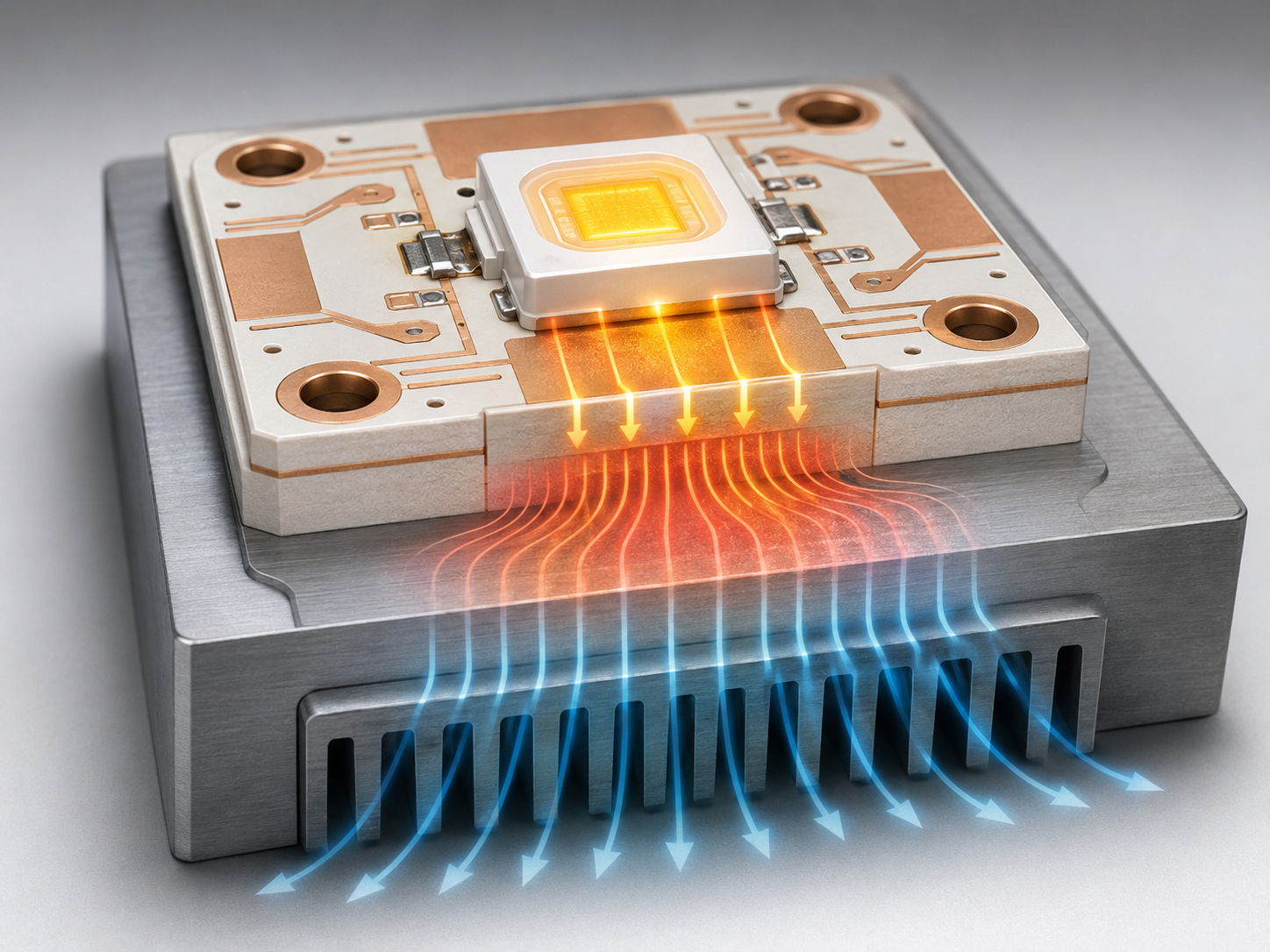
Aluminum oxide thermal conductivity describes how well heat moves through alumina. For ceramic PCB applications, this is one of the most important reasons to choose alumina instead of ordinary FR4. Standard FR4 has relatively low thermal conductivity, often around 0.3 W/m·K depending on the grade and construction. Alumina usually offers much higher thermal conductivity, commonly in the range of about 20 to 35 W/m·K depending on purity, density, and manufacturer data.
This improvement can make a clear difference in power electronics and LED applications. Heat generated by components can pass through the ceramic substrate more efficiently, helping reduce local hot spots and improving thermal stability. In compact electronic designs, even a small improvement in heat spreading can support better component life, more stable output, and more predictable performance.
The thermal conductivity of aluminum oxide is not as high as aluminum nitride, which can reach much higher values in advanced grades. However, alumina offers an excellent balance between performance, availability, mechanical strength, process maturity, and cost.
| Material | Typical Thermal Conductivity Range | Electrical Behavior | Common PCB Use |
|---|---|---|---|
| FR4 | Around 0.3 W/m·K | Insulating | Standard electronic PCBs |
| Aluminum oxide ceramic | About 20 to 35 W/m·K | Insulating | Ceramic PCBs, LED modules, sensors, power circuits |
| Aluminum nitride ceramic | Often much higher than alumina | Insulating | High-power modules and demanding thermal designs |
| Copper | About 400 W/m·K | Electrically conductive | Traces, pads, heat spreading layers |
| Aluminum metal | About 200 W/m·K | Electrically conductive | Metal-core PCB base and heat sinks |
For many engineers, thermal conductivity aluminum oxide performance is attractive because it gives a strong practical upgrade without making the design overly complex. Alumina ceramic substrates can be made in different thicknesses and formats, with metallization patterns suited for specific assembly needs.
It is also worth noting that thermal conductivity is directional in the final PCB structure. Heat may move through the ceramic thickness, across the copper layer, into solder joints, and toward a heat sink or housing. A good thermal path depends on the whole stack, not only the ceramic material. Copper thickness, solder coverage, interface material, mounting pressure, and mechanical contact all influence final thermal performance.
How Is Thermal Conductivity of Aluminum Oxide Different from Electrical Conductivity?
The thermal conductivity of aluminum oxide and its electrical conductivity describe two different forms of energy movement. Thermal conductivity describes heat transfer. Electrical conductivity describes current flow. Aluminum oxide is useful because it supports one while strongly limiting the other. It helps heat move through the substrate, but it resists electrical current flow.
This distinction is important in ceramic PCB design. A substrate under a power device may need to pull heat away from the component while preventing electrical connection between different circuit areas. If the material conducted electricity like metal, it would create short-circuit risks unless extra insulating layers were added. Alumina avoids that issue by acting as a dielectric ceramic while still providing a useful thermal route.
A brief description is helpful before comparing them directly. Thermal conductivity is mainly related to lattice vibration and heat transfer through the ceramic structure. Electrical conductivity is related to the movement of charged particles. Alumina’s atomic bonding and wide band gap make it difficult for electrical charge to move, while its dense ceramic structure allows heat transfer at a much better rate than polymer-based PCB materials.
| Comparison Item | Thermal Conductivity of Aluminum Oxide | Electrical Conductivity of Aluminum Oxide |
|---|---|---|
| What it measures | Heat movement through alumina | Electric current movement through alumina |
| Practical behavior | Transfers heat better than FR4 | Acts as a strong electrical insulator |
| Desired result in ceramic PCB | Helps remove heat from components | Helps isolate circuit paths |
| Main design concern | Heat path, ceramic thickness, copper area, mounting interface | Voltage spacing, dielectric strength, surface cleanliness |
| Temperature influence | Usually decreases as temperature rises | Can increase at high temperature but remains insulating in many uses |
| Why it matters | Supports thermal stability | Supports circuit safety and signal isolation |
This difference is the foundation of alumina ceramic PCB value. A board can carry copper traces for electrical routing, while the alumina substrate provides insulation and heat transfer at the same time. The result is a compact and durable platform for power LEDs, electronic heaters, sensors, power control modules, and other circuits that benefit from ceramic performance.
BSTCeramicPCB uses this material behavior as part of its ceramic PCB design review. When a customer provides Gerber files, drawings, stackup goals, voltage requirements, and thermal targets, the engineering review can help identify whether alumina is a good match. The review may also consider copper thickness, substrate thickness, hole design, surface finish, and assembly conditions.
What Factors Affect the Conductivity of Aluminum Oxide?
The conductivity of aluminum oxide is influenced by material composition, ceramic processing, physical structure, and operating conditions. This is why two alumina substrates may not perform exactly the same even if both are described as aluminum oxide ceramic. For PCB applications, the selected material grade should match the expected electrical, thermal, mechanical, and environmental requirements.
Purity is one of the most discussed factors. Higher-purity alumina generally provides better dielectric properties and can also improve thermal behavior. Common ceramic substrate grades include 96% alumina and higher-purity grades such as 99% or 99.6% alumina.
Density and porosity are also important. A denser ceramic structure usually supports better heat transfer because fewer pores interrupt the thermal path. Porosity can reduce thermal conductivity and may also affect mechanical strength.
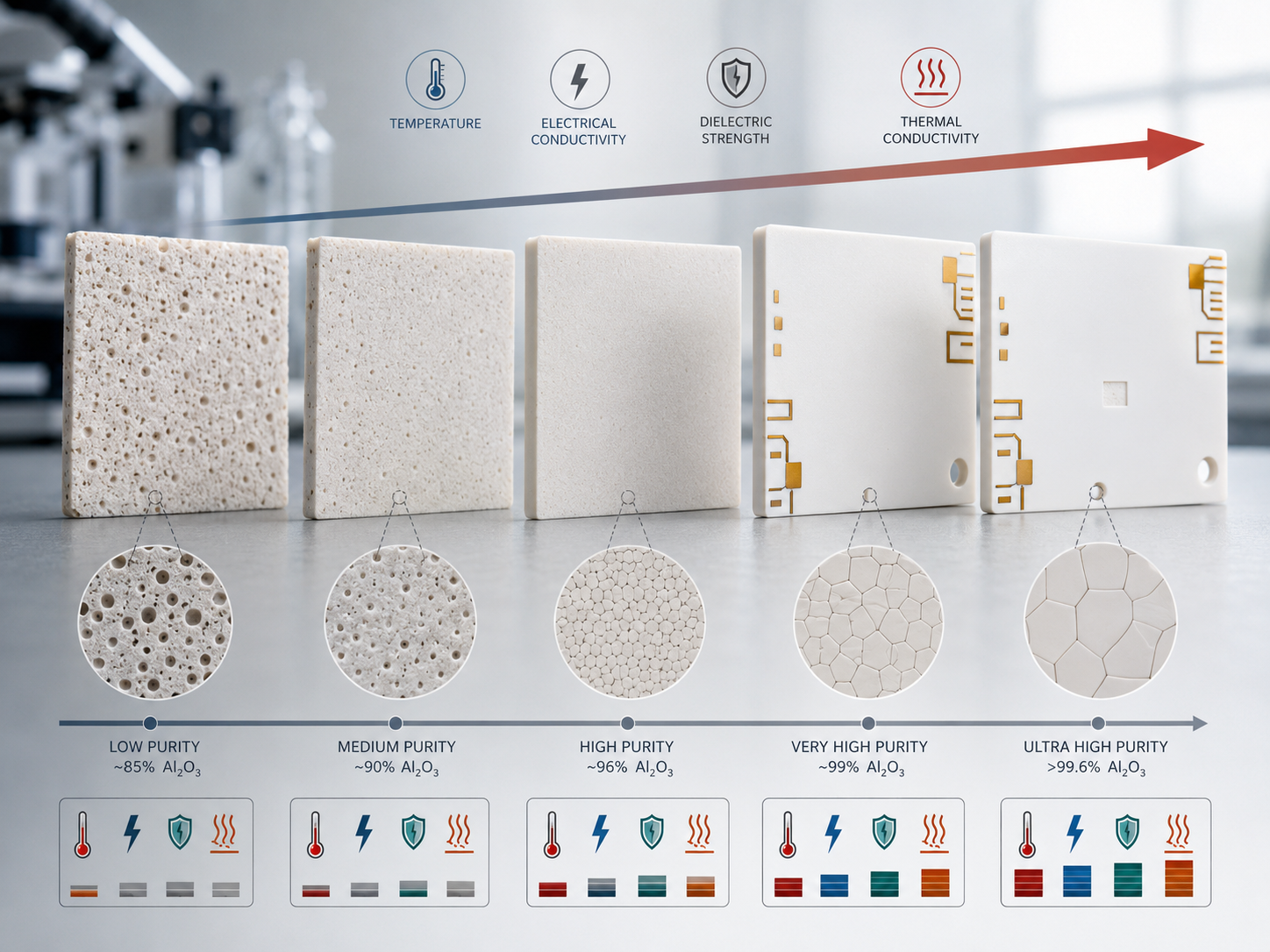
Several factors deserve attention during material selection:
- Purity level: Higher alumina content can improve insulation consistency and thermal performance.
- Temperature: Thermal conductivity often decreases as temperature rises, while electrical conductivity may increase.
- Microstructure: Grain size, porosity, and density affect how heat moves through the substrate.
- Thickness: Thinner substrates can reduce thermal resistance, while thicker substrates may offer better mechanical strength and voltage separation.
- Surface quality: Smooth, clean surfaces support stable metallization and reliable assembly.
- Metallization method: Copper bonding, thick film, DPC, DBC-related processes, and other methods influence the finished PCB’s thermal and electrical behavior.
- Operating environment: Humidity, contamination, voltage stress, and thermal cycling can affect long-term performance.
BSTCeramicPCB can help customers evaluate alumina substrate choices from a manufacturing and application standpoint. Instead of selecting a ceramic grade only by a single data sheet number, the team can review how the material fits the actual PCB structure, copper pattern, tolerance needs, and production quantity.
How Does Alumina Purity Affect Conductivity?
Alumina purity has a direct influence on both thermal and electrical properties. In most ceramic PCB discussions, purity refers to the percentage of aluminum oxide in the ceramic body. Common grades include 96% alumina and higher-purity grades such as 99% or 99.6% alumina.
A 96% alumina substrate is widely used because it offers reliable insulation, good mechanical strength, useful thermal conductivity, and attractive cost efficiency. It is a practical choice for many LED, sensor, control, and industrial ceramic PCB applications. Higher-purity alumina can provide improved dielectric behavior, better chemical resistance, and potentially stronger thermal performance depending on the manufacturer and process. It may also be preferred in more demanding electronic, medical, aerospace, or high-reliability projects.
The relationship between purity and conductivity is not always a simple straight line. Additives are sometimes used to support sintering and improve manufacturability. These additives may influence grain structure, density, and thermal performance. A well-made 96% alumina substrate may perform better in a real PCB than a poorly processed higher-purity substrate. That is why process control matters alongside purity level.
| Alumina Grade | Typical Character | Conductivity Impact | Common Ceramic PCB Use |
|---|---|---|---|
| 96% alumina | Balanced and widely available | Good thermal conductivity with strong insulation | LEDs, sensors, power control, industrial electronics |
| 99% alumina | Higher purity and refined properties | Improved dielectric stability and possible thermal benefit | Higher-reliability circuits and precision modules |
| 99.5% to 99.6% alumina | Premium alumina grade | Strong insulation and stable ceramic behavior | More demanding electronic and technical applications |
From an electrical point of view, higher purity often supports high resistivity and stable dielectric performance. From a thermal point of view, higher purity and higher density can help improve heat transfer. Still, the final decision should consider more than conductivity.
In many commercial ceramic PCB projects, 96% alumina gives the best overall value. It is a proven material with mature manufacturing routes. For projects where electrical insulation, dimensional stability, and stable heat transfer are all important, this grade often provides a strong starting point.
How Does Aluminum Oxide Thermal Conductivity vs Temperature Change?
Aluminum oxide thermal conductivity vs temperature is an important topic because ceramic PCBs often operate under heat. In general, the thermal conductivity of alumina decreases as temperature rises. This means alumina transfers heat more efficiently at lower temperatures than it does at elevated temperatures.
At room temperature, alumina offers much better thermal conductivity than FR4. As the ceramic becomes hotter, phonon scattering increases inside the material structure. In simple terms, heat-carrying vibrations encounter more resistance at higher temperatures. This reduces thermal conductivity compared with the room-temperature value.
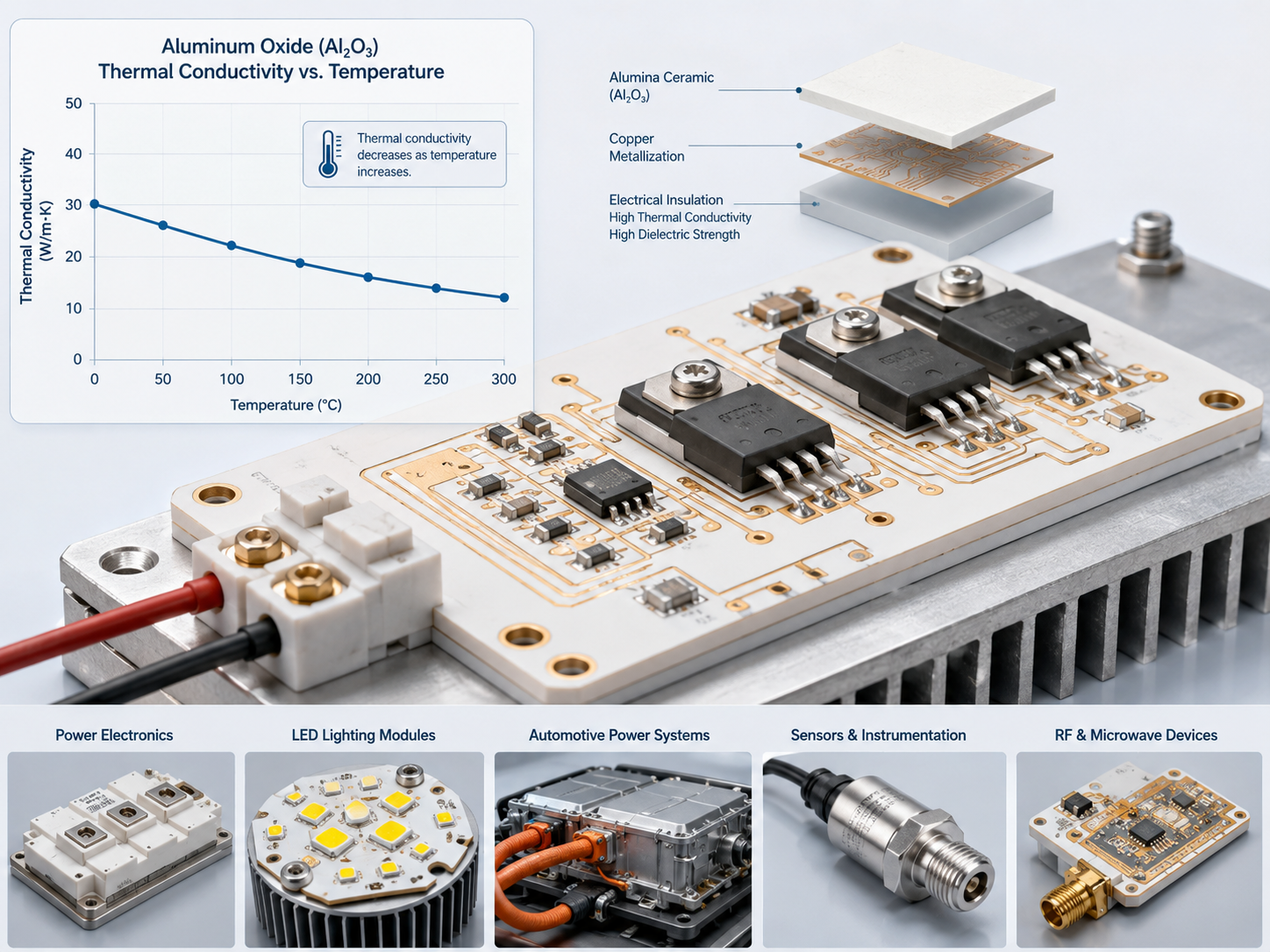
This temperature relationship matters in LED modules, power resistors, automotive electronics, heater controllers, and other applications where the substrate may run warm for long periods. Engineers should avoid selecting a material based only on a room-temperature data point if the actual assembly works at elevated temperature. A more practical approach is to review operating temperature, component heat generation, board thickness, copper area, and heat sink connection together.
| Temperature Condition | Typical Alumina Thermal Behavior | Design Meaning |
|---|---|---|
| Room temperature | Higher thermal conductivity value | Useful for baseline material comparison |
| Moderate operating temperature | Thermal conductivity begins to reduce | Thermal path should be designed with margin |
| High operating temperature | Lower thermal conductivity than room-temperature value | Heat sinking, copper design, and interface control become more important |
| Thermal cycling environment | Repeated expansion and contraction occur | Material, copper adhesion, and assembly reliability should be reviewed |
The good news is that alumina remains a stable ceramic material across many operating environments. Its thermal conductivity may decrease with temperature, but its mechanical stability, insulation performance, and ceramic durability still make it suitable for many demanding applications.
For better thermal results, engineers can use several practical design methods. A thinner alumina substrate can reduce thermal resistance through the board. Larger copper areas can help spread heat. A well-designed mounting interface can improve heat transfer into the housing or heat sink.
BSTCeramicPCB can support this review by checking ceramic thickness, copper layout, hole design, metallization type, and thermal path assumptions. This helps customers move from material selection to a more production-ready ceramic PCB design.
Why Is Aluminum Oxide Used in Ceramic PCB Substrates?
Aluminum oxide is used in ceramic PCB substrates because it provides a rare combination of heat transfer, electrical insulation, mechanical strength, dimensional stability, and process maturity. Many electronic designs need a substrate that can support copper circuitry while helping components operate at controlled temperatures.
Compared with FR4, alumina offers much higher thermal conductivity and better high-temperature stability. Compared with many advanced ceramics, alumina is easier to source and more economical. It also has a long history in electronic packaging, thick-film circuits, sensors, LED substrates, and power module support structures.
Ceramic PCB substrates made from alumina can be used in different forms depending on the application. Some use thick-film metallization. Some use direct plated copper or other copper deposition methods. Others may require precision holes, surface finishing, or specific copper thickness. The material can support compact designs where thermal performance and electrical isolation are both required.
Typical applications include:
- LED lighting modules, where heat control supports brightness stability and service life.
- Power electronics, including drivers, converters, regulators, and power control circuits.
- Automotive electronics, especially modules exposed to heat, vibration, or compact packaging demands.
- Medical electronics, where stable insulation and ceramic reliability can be valuable.
- Industrial control systems, including sensor circuits, control boards, and equipment electronics.
- High-temperature electronics, where polymer-based laminates may reach their performance limits.
- Precision sensors, where dimensional stability and insulation help maintain signal consistency.
Another reason alumina is popular is its balanced cost structure. Aluminum nitride offers higher thermal conductivity, but it also costs more and may require more careful processing. For many applications, alumina delivers enough thermal performance with excellent reliability and a more accessible price point.
BSTCeramicPCB integrates alumina into ceramic PCB manufacturing for customers who need reliable boards for thermal, electrical, and mechanical performance. We can support substrate selection, layout review, metallization discussion, and fabrication planning so that the chosen ceramic material fits the final product requirement.
When Should You Choose Aluminum Oxide for Ceramic PCBs?
You should choose aluminum oxide for ceramic PCBs when your design needs reliable electrical insulation, better thermal conductivity than FR4, strong mechanical stability, and a practical production cost. Alumina is especially suitable when the circuit produces heat but still needs a stable insulating substrate.
Alumina is often a smart fit for LED modules, industrial power circuits, automotive electronics, sensor boards, compact control modules, ceramic heater circuits, and electronic assemblies exposed to steady heat. It can also be useful when dimensional stability, moisture resistance, and surface durability are important.
| Design Requirement | Is Aluminum Oxide a Good Choice? | Reason |
|---|---|---|
| Better thermal transfer than FR4 | Yes | Alumina offers much higher thermal conductivity than standard FR4 |
| Strong electrical insulation | Yes | Alumina has high resistivity and dielectric strength |
| Ultra-high thermal conductivity | Sometimes | Aluminum nitride may be better for the most demanding heat loads |
| Cost-sensitive ceramic PCB project | Yes | Alumina provides a strong balance of performance and cost |
| LED and sensor substrate | Yes | It supports heat spreading, insulation, and stable assembly |
| Compact power electronics | Yes | It supports thermal control and electrical separation |
| Very high-power module with strict thermal limits | Needs review | Material choice should be confirmed through thermal design analysis |
BSTCeramicPCB can help you evaluate whether alumina ceramic PCB substrates are suitable for your project, from material selection to manufacturability review and production support. For ceramic PCB inquiries, drawings, Gerber files, substrate requirements, or technical questions, contact sales@bstceramicpcb.com
 Products
 About us
 Contact us