















































 HOME
HOME


-

Ceramic PCB for Humanoid Robot joint actuators
2026 04,07 -
LTCC PCB Surprises: What Most People Miss
2025 12,09 -
Step-by-Step Guide to DPC PCB Design for Sensor Systems
2025 12,03 -
Ceramic PCBs Essential Benefits and Applications
2025 12,01 -
How Al2O3 DPC Ceramic Substrate PCB Enhances Heat Dissipation in Modern Electronics?
2025 11,28 -
How to Choose Between Ceramic, FR4, and Metal Core PCBs
2025 11,27 -
DPC Ceramic PCB Materials: Surprising Science Inside
2025 11,26 -
Wire bondable 2-layer Alumina substrates PCB | Bstceramic PCB
2025 09,22 -
Silicon Nitride Substrate, Silicon Nitride Ceramic Substrate Formula
2025 05,08 -
What is thick film ceramic PCB?
2023 08,02
Zirconia Toughened Alumina (ZTA) for High-Impact Electronics: Reliable Ceramic Solutions
Published:
Table of Contents
- What Is Zirconia Toughened Alumina (ZTA) and Why It Matters
- Technical Standards and Performance Benchmarks for ZTA in Australia
- Key Design Considerations for High-Impact Electronic Applications
- Industry Applications Across Australia’s Harsh Operating Environments
- Manufacturing and Reliability Optimization for ZTA Ceramic PCBs
- Why BSTCERAMICPCB Is the Preferred ZTA Supplier for Global Clients
What Is Zirconia Toughened Alumina (ZTA) and Why It Matters
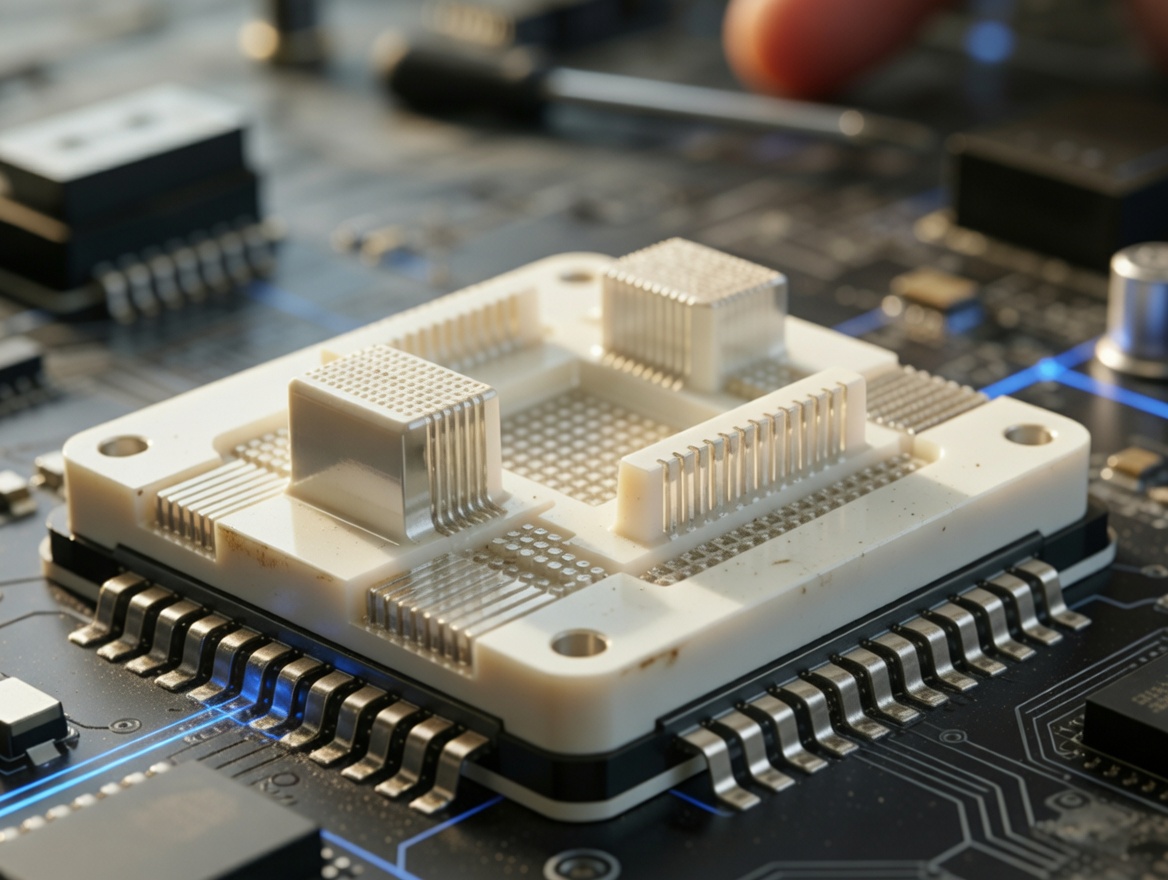
Zirconia Toughened Alumina (ZTA) is an advanced ceramic composite material that combines the hardness and thermal stability of alumina (Al₂O₃) with the fracture toughness of zirconia (ZrO₂). This engineered combination results in a material that is significantly more resistant to cracking and mechanical impact than traditional ceramic substrates.
In conventional ceramic PCB materials, such as pure alumina, brittleness is a limiting factor. While alumina offers excellent electrical insulation and thermal stability, it is prone to fracture under mechanical shock or stress concentration. ZTA addresses this limitation through a mechanism known as transformation toughening.
When a crack begins to propagate within the material, zirconia particles undergo a phase transformation that expands slightly, effectively “closing” the crack and preventing further propagation. This mechanism dramatically increases fracture toughness—often by 2–3 times compared to standard alumina ceramics.
For high-impact electronic environments, this property is critical. Applications exposed to vibration, shock loading, or mechanical stress require materials that maintain structural integrity under repeated stress cycles. ZTA ceramic substrates provide:
- High fracture toughness (6–10 MPa·m¹/²)
- Excellent wear resistance
- Stable thermal conductivity
- Strong mechanical strength under dynamic loads
In the context of Australian industries—where electronics are frequently deployed in mining operations, outdoor infrastructure, and remote energy systems—these characteristics are essential.
Additionally, ZTA maintains good electrical insulation properties, making it suitable for high-power and high-voltage applications. It bridges the gap between mechanical durability and electrical performance, enabling engineers to design ceramic PCBs that are both robust and reliable.
As electronic systems become more integrated and compact, materials like ZTA play a key role in ensuring long-term durability without sacrificing performance.
Technical Standards and Performance Benchmarks for ZTA in Australia
In Australia, electronic materials used in demanding environments must comply with a combination of international standards and industry-specific requirements. While ZTA ceramics are not governed by a single dedicated standard, their performance is evaluated based on established frameworks used in electronics, mining equipment, and industrial systems.
Mechanical performance standards
For high-impact electronics, ZTA substrates must meet strict mechanical benchmarks, including:
- Fracture toughness ≥ 6 MPa·m¹/²
- Flexural strength ≥ 400 MPa
- Impact resistance under dynamic loading
These metrics are critical in environments where equipment is exposed to vibration, shock, or mechanical stress—common in mining and industrial automation sectors across Australia.
Thermal performance requirements
ZTA ceramics typically offer thermal conductivity between 20–30 W/m·K, which is lower than aluminum nitride but sufficient for many rugged electronics applications. The key requirement is thermal stability under fluctuating temperatures, especially in outdoor environments.
Australian conditions often involve:
- High ambient temperatures
- Rapid temperature fluctuations
- Exposure to direct sunlight
ZTA must maintain consistent performance under these conditions without degradation.
Electrical insulation standards
ZTA substrates must provide:
- High dielectric strength (>10 kV/mm)
- Stable insulation under humidity and contamination
- Resistance to electrical breakdown in high-voltage systems
These properties are particularly important in power distribution and renewable energy systems.
Environmental and reliability testing
To ensure long-term reliability, ZTA ceramic PCBs are typically subjected to:
- Thermal cycling tests
- Vibration and shock testing
- Moisture resistance testing
- Long-term aging studies
Australian industries often adopt testing protocols aligned with IEC, IPC, and MIL standards, ensuring compatibility with global supply chains.
By meeting these benchmarks, ZTA ceramic substrates can be confidently deployed in high-impact electronic applications where failure is not an option.
Key Design Considerations for High-Impact Electronic Applications
Designing with ZTA ceramic substrates requires a multidisciplinary approach that balances mechanical robustness, electrical performance, and manufacturability.

Material selection and composition
The ratio of zirconia to alumina significantly affects material properties. Higher zirconia content improves toughness but may slightly reduce thermal conductivity. Engineers must optimize composition based on application requirements.
Structural design optimization
Mechanical stress distribution is a critical factor in high-impact environments. Designers should:
- Avoid sharp corners and stress concentration points
- Use rounded geometries
- Reinforce high-load regions
Proper structural design reduces the likelihood of crack initiation.
Metallization compatibility
ZTA substrates can be metallized using:
- DPC (Direct Plated Copper)
- Thick film processes
- AMB (Active Metal Brazing)
Each method must ensure strong adhesion between metal layers and ceramic surfaces, even under mechanical stress.
Thermal management strategy
Although ZTA is not as thermally conductive as AlN, effective heat management can be achieved through:
- Optimized copper layouts
- Heat spreading structures
- Integration with external heat sinks
Assembly considerations
During assembly, processes such as soldering or die bonding can introduce thermal and mechanical stress. Designers must ensure compatibility between ZTA substrates and assembly materials to prevent failure.
By carefully addressing these factors, engineers can maximize the performance and durability of ZTA-based electronic systems.
Industry Applications Across Australia’s Harsh Operating Environments
Australia presents some of the most challenging operating conditions for electronic systems, making ZTA an ideal material for specific applications.
Mining and heavy equipment
Mining operations expose electronics to:
- Extreme vibration
- Mechanical shock
- Dust and debris
ZTA ceramic PCBs provide the durability required to maintain functionality in such environments.
Renewable energy systems
Solar and wind energy systems often operate in remote locations with harsh environmental conditions. ZTA substrates offer:
- Long-term reliability
- Resistance to environmental stress
- Stable electrical performance
Defense and aerospace
High-impact resistance is critical in defense applications. ZTA’s toughness makes it suitable for ruggedized electronic systems used in military equipment.
Industrial automation
Automation systems in manufacturing environments require consistent performance despite mechanical stress. ZTA helps ensure system reliability and reduce maintenance costs.
Manufacturing and Reliability Optimization for ZTA Ceramic PCBs
Producing high-quality ZTA ceramic PCBs requires advanced manufacturing processes and strict quality control.
Key processes include:
- Precision ceramic sintering
- Controlled microstructure development
- High-accuracy metallization
- Surface finishing optimization
Inspection methods include:
- Optical inspection
- Mechanical strength testing
- Electrical testing
- Environmental simulation
Process consistency is essential to ensure that each substrate meets performance expectations.
Why BSTCERAMICPCB Is the Preferred ZTA Supplier for Global Clients
In high-impact electronic applications, material performance alone is not enough—manufacturing expertise and process control are equally important.
BSTCERAMICPCB provides:
Advanced material engineering
- Optimized ZTA compositions
- Application-specific material selection
- Engineering consultation support
Precision manufacturing
- High-accuracy ceramic processing
- Reliable metallization techniques
- Consistent product quality
Global supply capability
- Stable production capacity
- Efficient delivery timelines
- Support for international clients
Conclusion
Zirconia Toughened Alumina (ZTA) is emerging as a key material for high-impact electronics, especially in demanding environments like Australia. Its unique combination of toughness, stability, and electrical performance makes it an ideal choice for applications where reliability is critical.
As industries continue to push the limits of performance and durability, the role of advanced ceramic materials will only grow. By partnering with experienced manufacturers like BSTCERAMICPCB, engineers can ensure that their designs meet the highest standards of performance and reliability.
 Products
 About us
 Contact us