












































 HOME


-

Ceramic PCB for Humanoid Robot joint actuators
2026 04,07 -
LTCC PCB Surprises: What Most People Miss
2025 12,09 -
Step-by-Step Guide to DPC PCB Design for Sensor Systems
2025 12,03 -
Ceramic PCBs Essential Benefits and Applications
2025 12,01 -
How Al2O3 DPC Ceramic Substrate PCB Enhances Heat Dissipation in Modern Electronics?
2025 11,28 -
How to Choose Between Ceramic, FR4, and Metal Core PCBs
2025 11,27 -
DPC Ceramic PCB Materials: Surprising Science Inside
2025 11,26 -
Wire bondable 2-layer Alumina substrates PCB | Bstceramic PCB
2025 09,22 -
Silicon Nitride Substrate, Silicon Nitride Ceramic Substrate Formula
2025 05,08 -
What is thick film ceramic PCB?
2023 08,02
Custom Ceramic PCB Manufacturer Serving Canada
Published:
At BSTCeramicPCB, we are a custom ceramic PCB manufacturer serving Canada, supplying ceramic circuits from our manufacturing base in China. Ceramic PCBs for Canada medical and sensor systems should be selected around signal stability, component attachment and the operating environment. We support Canadian teams with design-for-manufacturing review, prototypes and assembly services, and coordinate FPC or rigid-flex requirements where the instrument needs a compact connection to its main electronics.
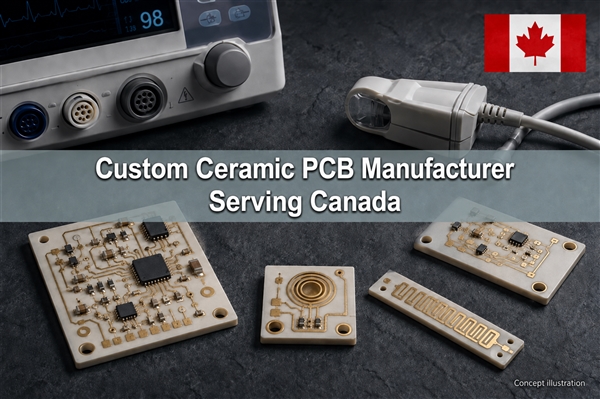
Custom Ceramic Circuits for Canadian Instrument Developers
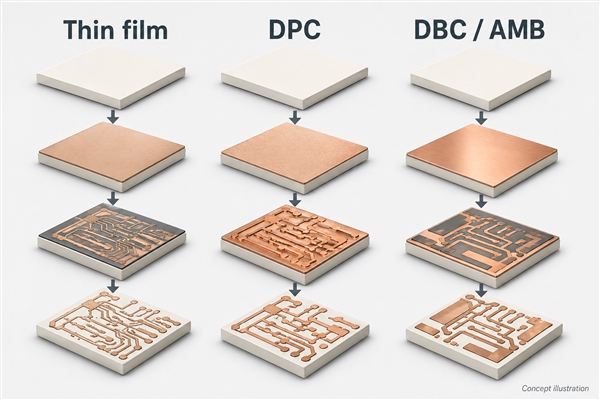
We manufacture the circuit substrate to the agreed layout and metal system, rather than treating ceramic as a drop-in replacement for every FR-4 board. Thick-film, thin-film and DPC routes can serve different sensing and instrumentation needs. DBC and AMB are more relevant when the same product contains a substantial power stage.
For a Canadian OEM developing a diagnostic instrument or measurement unit, separating those functions makes the manufacturing discussion more useful. A sensor interface, a heater controller and a main logic board do not necessarily belong on one ceramic substrate.
Choose Thin Film, Thick Film or DPC by Circuit Function
Our thin-film ceramic circuits for medical equipment are relevant when small features and controlled metal patterns matter. Our thick-film ceramic substrates for medical devices support another hybrid-circuit route using printed and fired functional layers. Neither process should be chosen solely because its name sounds more advanced.
| Circuit requirement | Route to evaluate | Key decision |
|---|---|---|
| Fine metal features | Thin film | Match film system and feature size to attachment and electrical needs. |
| Printed functional elements | Thick film | Specify conductor/resistor system, trimming and stability requirements. |
| Plated copper layout | DPC | Balance copper thickness with line width and spacing. |
| Power switching substrate | DBC or AMB | Review bonded copper, insulation and thermal cycling. |
Keep Sensor Signals Separate from Local Heat
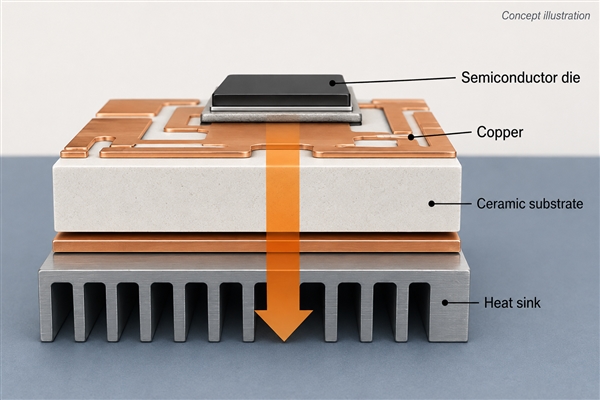
Our DPC ceramic PCB for sensors provide a ceramic platform for sensing circuits, but measurement stability still depends on the surrounding layout. A power component beside the sensing element can create a temperature gradient that changes the signal even when the board survives the operating temperature.
Place heat-generating parts deliberately, review the return path and keep the mechanical mounting repeatable. When alumina provides enough heat transfer and insulation, a higher-conductivity ceramic may add cost without solving the real source of drift. If the sensing assembly has a concentrated hot spot, evaluate the entire path to its housing or heat sink.
Medical Electronics Require Defined Assembly Boundaries
A ceramic circuit for medical equipment is an electronic component or subassembly, not a complete approved medical device. Material selection, cleaning, attachment and any protective coating must be considered within the actual instrument design.
We can discuss ceramic fabrication and agreed assembly services together. This helps identify conflicts between a fine metallized pad and the planned solder or bonding operation before the prototype build. Patient-contact suitability, sterilization exposure and finished-device qualification remain separate requirements; they cannot be inferred from the word ceramic.
Specify Metal Thickness Without Losing Fine-Feature Control
Our DPC sensor product example uses 35 um copper. Its application value is the combination of the copper pattern and an insulating ceramic base, not a universal copper thickness for all sensor circuits. The required current, pad finish and smallest conductor gap must be evaluated as a set.
For thinner metal structures, our thin-film capability lists 20 um minimum line width when film thickness is below 3 um, subject to engineering review of the complete design. Do not transfer that minimum directly to a thick-copper power circuit. Different processes require different design rules.
Use Prototypes to Validate the Measurement Assembly
The prototype should demonstrate the behavior that matters to the instrument: signal repeatability, mounting stability and performance through the intended temperature range. Bare-board electrical inspection and instrument-level validation are complementary, not substitutes.
For a sensor module, compare readings before and after the agreed assembly process and environmental exposure. For a medical instrument power section, monitor the component and substrate temperatures at the intended load. We can align fabrication and inspection requirements with the prototype plan without making an unsupported promise about the finished equipment.
Coordinate Ceramic, FPC and Rigid-Flex Interfaces
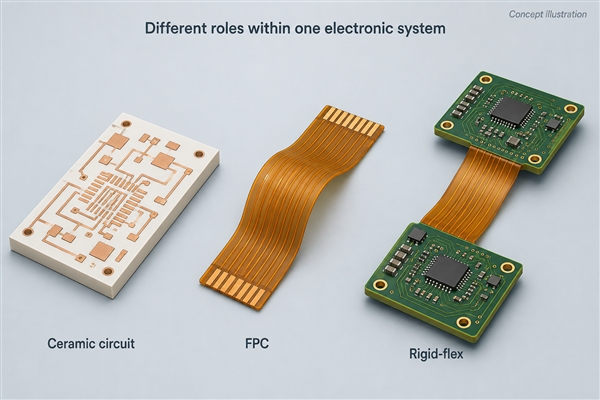
A compact instrument may need a rigid ceramic sensing circuit connected to an FPC, or rigid-flex electronics arranged around the enclosure. These are complementary constructions: FPC provides flexible routing, while the ceramic carries the circuit that benefits from the ceramic material.
We can coordinate the associated circuit requirements with the Canadian project team. Mechanical support, connection geometry and assembly access should be fixed before detailing the interconnect. Avoid transmitting flex-cable pull or repeated bending into a brittle ceramic edge or solder joint.
Confirm Lead Time Against the Actual Build Scope
Prototype scheduling should distinguish ceramic fabrication from component sourcing, assembly and delivery to Canada. A readily available bare substrate does not mean a custom circuit with a particular finish and inspection plan is ready to ship.
We review the required process and quantity before confirming the production schedule. Agree which inspection or validation steps are needed before dispatch, and leave international transport as a separate part of the plan. Keeping the prototype and production revisions clear also prevents a late design change from being mistaken for a manufacturing delay.
Match Quality Documentation to Medical and Sensor Requirements
Useful quality evidence identifies the supplied item, drawing revision, inspected features and acceptance criteria. The relevant records differ between a bare ceramic circuit and an assembled sensor module. We discuss the documentation scope together with the manufacturing scope.
If your project requires ISO 9001 or ISO 13485 evidence, confirm the current certificate, entity, validity and covered activity with our team. Product-level electrical and environmental validation is still needed even where an applicable quality-management certificate is available.
If you need a ceramic PCB manufacturer serving Canada, contact our team at sales@bstceramicpcb.com to discuss your ceramic circuit, prototype build, assembly scope and related FPC or rigid-flex requirements.
 Products
 About us
 Contact us