





































 HOME
HOME


-

Ceramic PCB for Humanoid Robot joint actuators
2026 04,07 -
LTCC PCB Surprises: What Most People Miss
2025 12,09 -
Step-by-Step Guide to DPC PCB Design for Sensor Systems
2025 12,03 -
Ceramic PCBs Essential Benefits and Applications
2025 12,01 -
How Al2O3 DPC Ceramic Substrate PCB Enhances Heat Dissipation in Modern Electronics?
2025 11,28 -
How to Choose Between Ceramic, FR4, and Metal Core PCBs
2025 11,27 -
DPC Ceramic PCB Materials: Surprising Science Inside
2025 11,26 -
Wire bondable 2-layer Alumina substrates PCB | Bstceramic PCB
2025 09,22 -
Silicon Nitride Substrate, Silicon Nitride Ceramic Substrate Formula
2025 05,08 -
What is thick film ceramic PCB?
2023 08,02
Ceramic Substrate for SiC Power Module: AMB, DBC and Material Selection
Published:
A ceramic substrate for SiC power module must carry high current, move heat away from SiC dies, provide electrical insulation and survive repeated thermal cycling. For most sourcing decisions, the real comparison is not only "which ceramic has the highest thermal conductivity"; it is whether Si3N4 AMB, AlN DBC or Al2O3 DBC best matches the module voltage, copper thickness, cycling profile, package size and cost target.
What Does a Ceramic Substrate Do in a SiC Power Module?
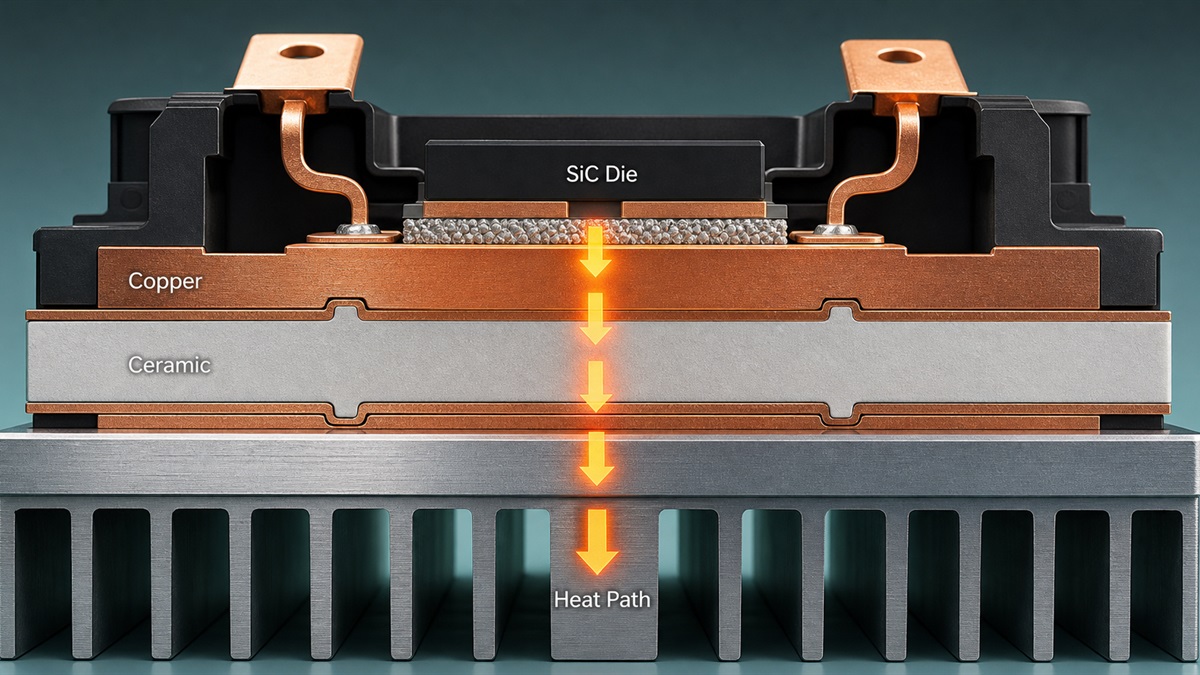
A ceramic substrate in a SiC power module forms the insulated circuit carrier between the semiconductor dies and the cooling structure. It supports copper conductors for current flow, provides dielectric isolation from the baseplate or heat sink, and becomes a major part of the thermal path from the SiC die to the outside cooling system.
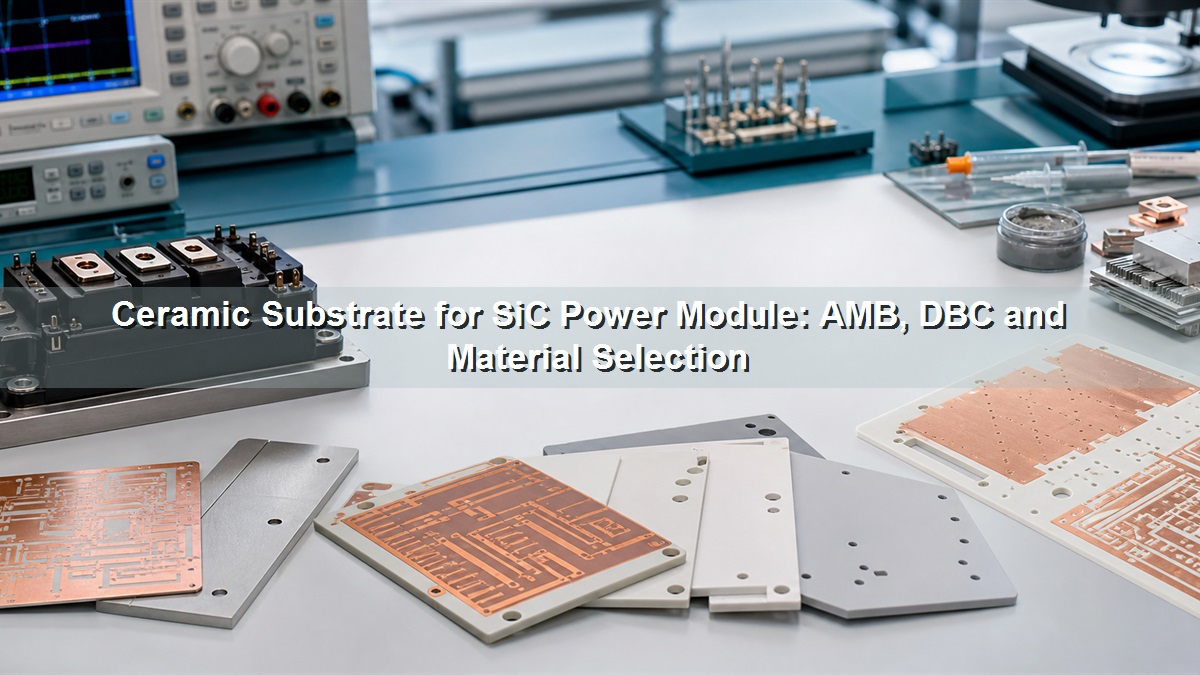
SiC devices are used because they can switch efficiently at high voltage, high frequency and high temperature. That advantage puts more stress on the package. If the substrate material, copper thickness or bonding process is not matched to the load profile, the module can suffer from cracking, delamination, solder fatigue, partial discharge risk or unstable thermal resistance.
Which Ceramic Substrate Options Are Commonly Compared?
The common options are Si3N4 AMB for cycling reliability, AlN DBC for high thermal conductivity, and Al2O3 DBC for cost-sensitive power modules. The right option depends on the failure risk the buyer is trying to reduce.
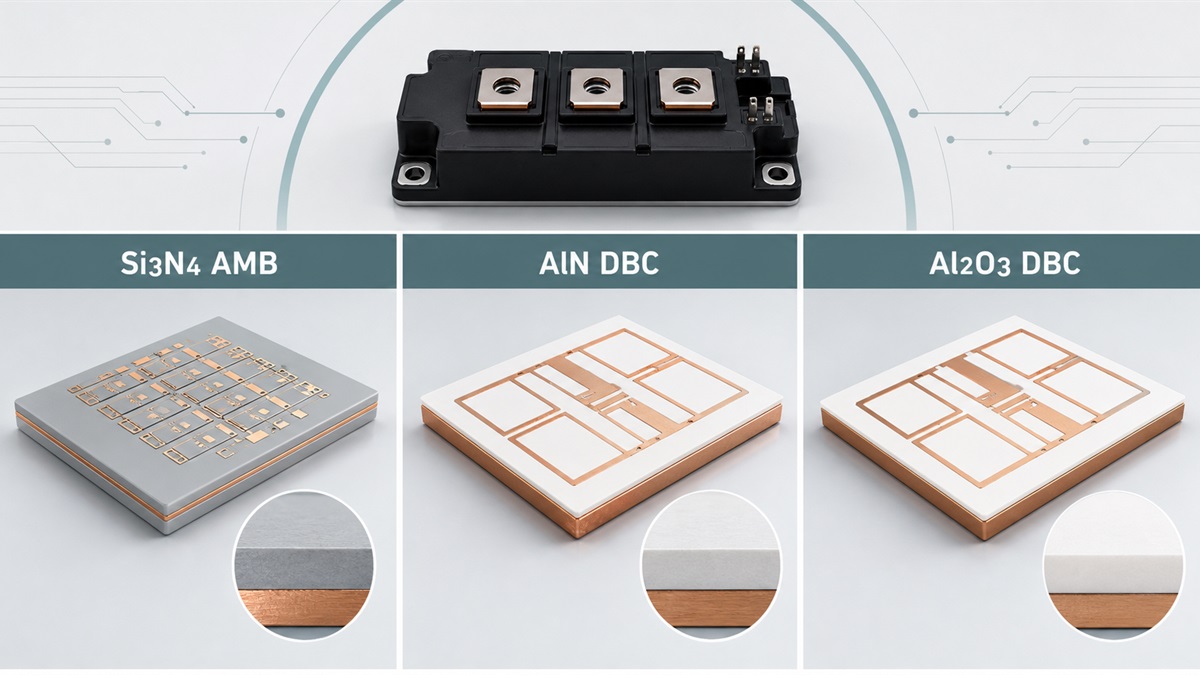
| Substrate Option | Best Fit | Strength | Limitation | Buyer Note |
| Si3N4 AMB | Automotive inverters, traction, high cycling power modules | Strong fracture toughness and cycling reliability | Higher process and material cost | Often considered when thermal cycling and mechanical stress are the main risks. |
| AlN DBC | High heat flux modules, laser drivers, compact high-power packages | High thermal conductivity with electrical insulation | More brittle than Si3N4 under severe stress | Useful when heat removal is more critical than cycling shock. |
| Al2O3 DBC | Cost-sensitive modules and moderate-power applications | Mature, economical and widely available | Lower thermal conductivity and lower mechanical margin | Suitable when thermal and cycling requirements are not extreme. |
Why Is Si3N4 AMB Often Chosen for SiC Power Modules?
Si3N4 AMB is often chosen when the module must survive repeated power cycling, vibration, copper stress and fast temperature changes. Silicon nitride is valued for mechanical strength and fracture toughness, while the AMB process uses active metal brazing to bond copper to the ceramic in high-reliability power substrate structures.
This does not mean every SiC module needs Si3N4 AMB. It is most useful when the expected failure mode is substrate cracking, copper-to-ceramic bond fatigue, or long-term reliability under cycling. For a stable industrial design with lower cycling severity, AlN DBC or even Al2O3 DBC may be commercially reasonable.
When Is AlN DBC a Better Choice?
AlN DBC is a better choice when the thermal bottleneck is through the ceramic layer and the module needs strong heat transfer in a compact package. Aluminum nitride is commonly used where high thermal conductivity and electrical insulation are required, especially when the heat path is short and copper layout is already optimized.
Buyers should not specify AlN only by name. The RFQ should define ceramic thickness, copper thickness, copper pattern, surface finish, dielectric requirement, operating temperature, heat load and mounting method. Without these details, two suppliers may quote very different DBC ceramic substrate PCB for power semiconductor structures while appearing to answer the same request.
Where Does Al2O3 DBC Still Make Sense?
Al2O3 DBC still makes sense when cost, availability and mature processing matter more than maximum thermal or cycling performance. Alumina has lower thermal conductivity than AlN and lower mechanical margin than Si3N4, but it remains useful for moderate-power modules, auxiliary power electronics, prototypes and designs where the heat source is less concentrated.
For sourcing teams, alumina should be considered when the thermal model has enough margin and the application is not exposed to severe cycling. It is also a practical baseline for early cost comparison before deciding whether the project truly needs AMB ceramic PCB or high-conductivity AlN DBC.
How Do AMB and DBC Processes Differ?
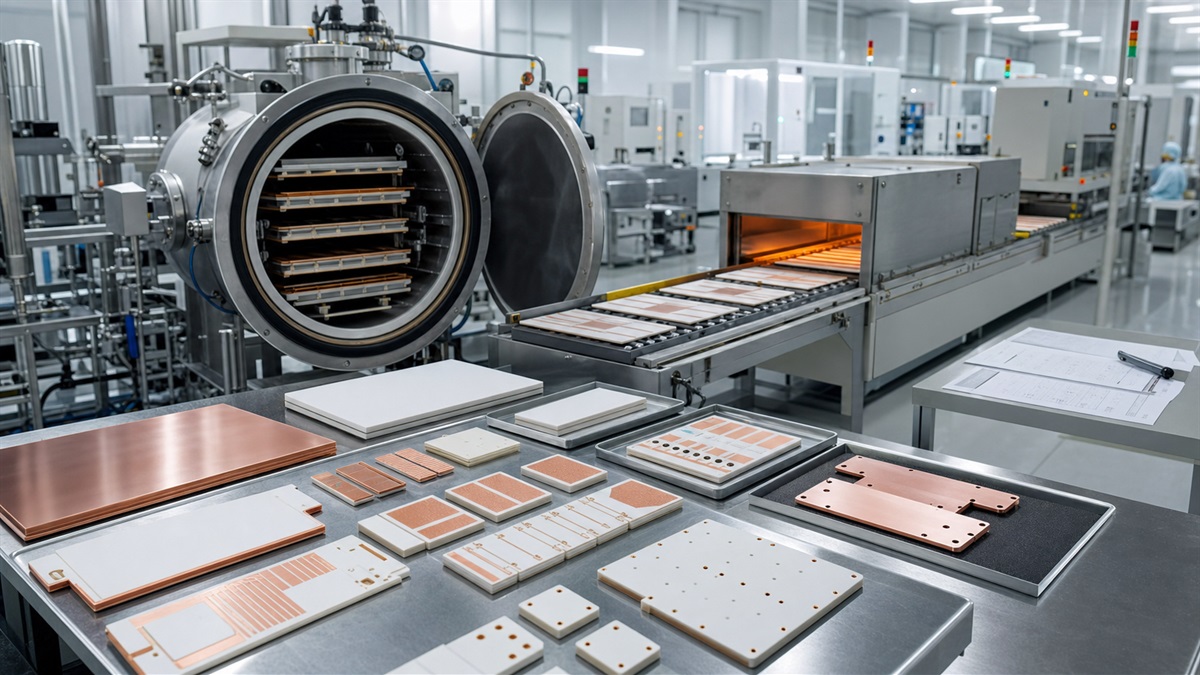
AMB and DBC both create copper-on-ceramic power substrates, but they use different bonding mechanisms and suit different reliability goals. DBC bonds copper to oxide-compatible ceramics through a high-temperature copper-oxygen bonding process. AMB uses active metal brazing, which is widely discussed for high-reliability ceramic substrates such as Si3N4 and AlN.
| Process | Typical Material Fit | Power Module Strength | Inspection Focus |
| AMB | Si3N4 and AlN | Strong option for cycling reliability and demanding modules | Braze layer quality, voids, peel strength, warpage and thermal cycling evidence. |
| DBC / DCB | Al2O3 and AlN | Mature power substrate route with good thermal spreading | Copper bond quality, ceramic cracks, copper etching, isolation and surface finish. |
| DPC | Al2O3 or AlN for fine circuits | Useful for fine-line ceramic circuits, not always ideal for heavy copper modules | Plating thickness, via reliability, trace adhesion and fine feature control. |
What Specifications Should Be Defined Before Quotation?
A useful quotation needs more than a material name. The supplier must know the electrical, thermal and mechanical requirements that control substrate selection and manufacturing risk.
- Module type, SiC die size, die count and estimated heat load.
- Target substrate material: Si3N4, AlN, Al2O3 or open-to-review.
- Process preference: AMB, DBC/DCB or supplier-recommended route.
- Ceramic thickness, copper thickness, copper coverage and minimum spacing.
- Isolation voltage, partial discharge requirement and creepage/clearance needs.
- Surface finish, soldering or sintering process, baseplate material and thermal interface method.
- Prototype quantity, annual forecast, inspection report needs and reliability test expectations.
If the design is still open, tell the supplier the power level, cooling method and reliability target instead of forcing a material too early. BSTCeramicPCB can review drawings for DBC ceramic board for automotive components, AMB substrates and related ceramic PCB structures before quoting.
What Quality Risks Should Buyers Check?
The most important quality risks are ceramic cracks, copper delamination, voids, excessive warpage, unstable isolation and thermal resistance drift after cycling. These risks are not visible from a price sheet, so the buyer should request inspection details before approving a prototype or production order.
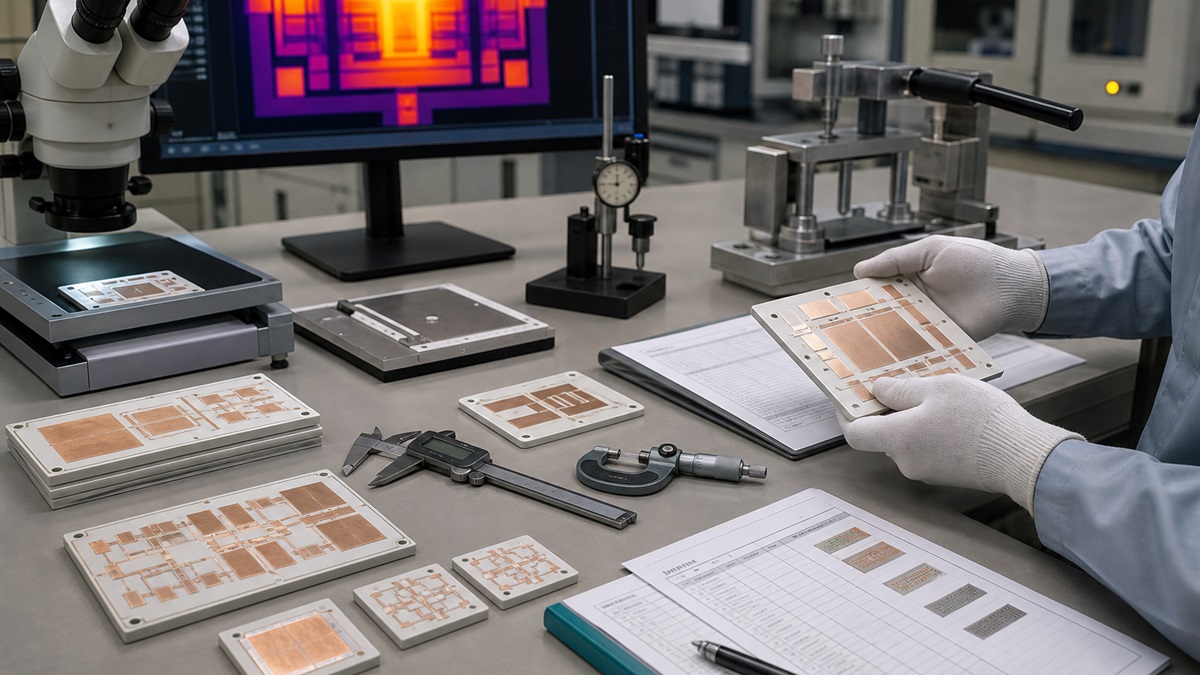
Useful checks include dimensional inspection, visual inspection under magnification, copper thickness measurement, peel or bond strength review, isolation testing, surface finish inspection, flatness/warpage control and thermal cycling evidence when the application is severe. For high-voltage SiC modules, dielectric and partial discharge requirements should be discussed early, not after the substrate layout is fixed.
How Should You Choose a Supplier for SiC Module Substrates?
Choose a supplier that can discuss material, process and inspection before giving a final price. A good supplier should ask whether the design is heat-limited, cycling-limited, voltage-limited or cost-limited, because each answer points to a different substrate route.
For a ceramic substrate for SiC power module, the buyer should compare supplier capability in AMB/DBC process review, copper design feedback, material sourcing, prototype communication and inspection documentation. A low price without process clarity can become expensive if the module fails during power cycling or assembly qualification.
FAQ
What is the best ceramic substrate for a SiC power module?
The best substrate depends on the dominant risk. Si3N4 AMB is often selected for cycling reliability, AlN DBC for heat transfer, and Al2O3 DBC for cost-sensitive moderate-power modules. The final choice should match voltage, copper thickness, heat load, package size and reliability target.
Is Si3N4 AMB always better than AlN DBC?
No. Si3N4 AMB can offer stronger mechanical reliability under cycling, but AlN DBC may be the better option when thermal conductivity is the primary requirement and cycling stress is manageable. Cost, availability and module qualification requirements also matter.
Why do SiC power modules need ceramic substrates?
SiC power modules need insulated substrates that can carry current, conduct heat and withstand high voltage. Ceramic substrates provide electrical insulation while allowing copper circuits to spread heat from the SiC die toward the baseplate or heat sink.
What causes ceramic substrate cracking in power modules?
Cracking can come from copper/ceramic CTE mismatch, high copper thickness, rapid thermal cycling, mechanical mounting stress, poor layout symmetry or assembly process stress. Material selection and copper pattern design should be reviewed together.
How thick should copper be on a SiC module substrate?
Copper thickness depends on current, heat spreading, bonding process and mechanical stress. Thicker copper can carry more current and spread heat better, but it also increases stress on the ceramic during temperature cycling.
Can DPC be used for SiC power modules?
DPC can be useful for fine-line ceramic circuits and compact layouts, but heavy-current SiC power modules often require DBC or AMB structures. The decision depends on copper thickness, current density, feature size and reliability requirements.
What should I send for a SiC power module substrate quote?
Send Gerber files, mechanical drawings, target material, process preference, ceramic thickness, copper thickness, voltage isolation, heat load, surface finish, mounting method, prototype quantity and reliability test expectations.
Is Al2O3 DBC suitable for SiC modules?
Al2O3 DBC can be suitable for moderate-power or cost-sensitive designs with enough thermal margin. It is usually not the first choice for severe thermal cycling or very high heat flux where Si3N4 AMB or AlN DBC may be more appropriate.
Why is partial discharge important for high-voltage SiC modules?
Partial discharge can degrade insulation in high-voltage assemblies. For SiC modules operating at high voltage, substrate layout, ceramic thickness, copper spacing, edge design and cleanliness should be reviewed against the application requirement.
Should the substrate supplier review the module design before mass production?
Yes. A supplier review can identify copper stress, spacing, warpage, surface finish, ceramic thickness and process risks before tooling or mass production. This is especially important when the material choice is still open.
Conclusion
The right ceramic substrate for a SiC power module is selected by balancing heat transfer, insulation, CTE stress, thermal cycling, copper thickness, package structure and cost. Si3N4 AMB is often preferred for demanding cycling reliability, AlN DBC for strong thermal performance, and Al2O3 DBC for practical cost control when the design has enough margin.
If you are evaluating an AMB, DBC or custom ceramic substrate for a SiC power module, send your drawings, electrical target, heat load, material preference and quantity plan to BSTCeramicPCB. Our team can review the substrate route and provide quotation guidance at sales@bstceramicpcb.com or through contact BSTCeramicPCB.
 Products
 About us
 Contact us