










































 HOME
HOME


-

Ceramic PCB for Humanoid Robot joint actuators
2026 04,07 -
LTCC PCB Surprises: What Most People Miss
2025 12,09 -
Step-by-Step Guide to DPC PCB Design for Sensor Systems
2025 12,03 -
Ceramic PCBs Essential Benefits and Applications
2025 12,01 -
How Al2O3 DPC Ceramic Substrate PCB Enhances Heat Dissipation in Modern Electronics?
2025 11,28 -
How to Choose Between Ceramic, FR4, and Metal Core PCBs
2025 11,27 -
DPC Ceramic PCB Materials: Surprising Science Inside
2025 11,26 -
Wire bondable 2-layer Alumina substrates PCB | Bstceramic PCB
2025 09,22 -
Silicon Nitride Substrate, Silicon Nitride Ceramic Substrate Formula
2025 05,08 -
What is thick film ceramic PCB?
2023 08,02
DPC vs DBC vs AMB: What Are the Differences?
Published:
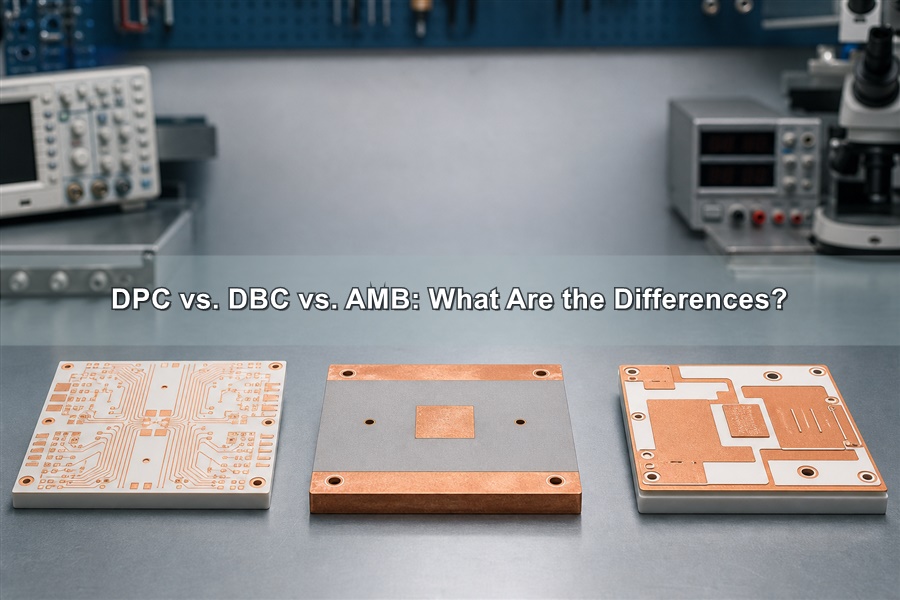
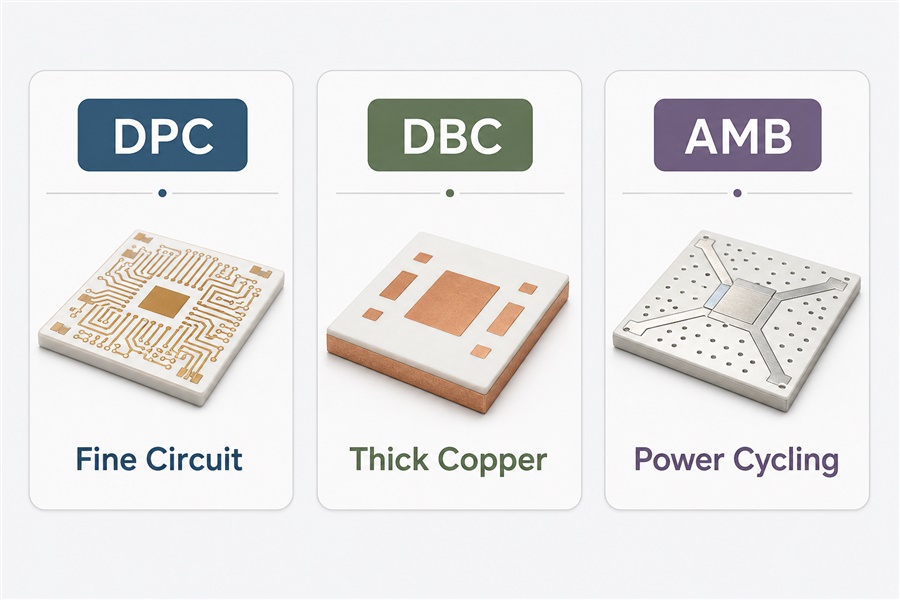
DPC vs DBC vs AMB is a practical comparison of three ceramic substrate technologies used when FR4, IMS, or ordinary metal-core boards cannot meet thermal, current, insulation, or reliability requirements. In short, DPC is usually chosen for fine circuits and plated features, DBC for thick copper and efficient heat spreading, and AMB for high-power modules that need stronger ceramic-to-copper bonding under thermal cycling.
The best choice depends on copper thickness, minimum line width, ceramic material, power density, operating temperature, expected cycling life, and the customer’s cost target. Buyers should avoid asking for “the best ceramic PCB” in general terms; a clearer RFQ states the device type, substrate material, copper thickness, isolation voltage, surface finish, thermal target, and prototype-to-production plan.
What Is the Short Answer in DPC vs DBC vs AMB?
DPC, DBC and AMB solve different engineering problems, so the fastest selection method is to match the process to the required copper structure and reliability risk. DPC supports finer circuit features because copper is built by deposition and plating. DBC bonds copper sheet to ceramic and is useful for power boards that need thick copper and low thermal resistance. AMB uses active brazing to improve the bond between copper and ceramic, making it attractive for demanding power modules.
| Technology | Best Fit | Main Strength | Common Limitation | Buyer Note |
| DPC | Fine-line ceramic circuits, sensors, LEDs, compact modules | Good pattern precision and plated features | Not usually the first choice for very thick copper power modules | Ask early about minimum line width, plating thickness and via feasibility |
| DBC | Power electronics, IGBT substrates, heat-spreading boards | Thick copper bonded to ceramic with efficient heat flow | Fine circuit density is more limited than DPC | Confirm copper thickness, ceramic material and etching tolerance |
| AMB | High-reliability power modules, automotive power cycling, Si3N4 substrates | Strong copper-to-ceramic bond for harsh cycling conditions | Higher process cost and more engineering review | Use when reliability risk justifies the cost, not as a default upgrade |
For readers comparing DPC vs DBC vs AMB during sourcing, the table above should be treated as a first filter. Final selection still requires drawings, ceramic material, copper thickness, power loss, assembly temperature, expected thermal cycling and inspection requirements.
How Do DPC, DBC and AMB Processes Work?
DPC, DBC and AMB differ mainly in how copper is formed or bonded on the ceramic substrate. DPC is often associated with seed layers, patterning and copper plating, which supports fine features and through-substrate connection options. DBC uses a high-temperature bonding process to join copper sheet to ceramic, then etches the copper into the required circuit. AMB uses an active braze material to create a stronger joint between copper and ceramic, especially when the substrate must survive severe thermal cycling.
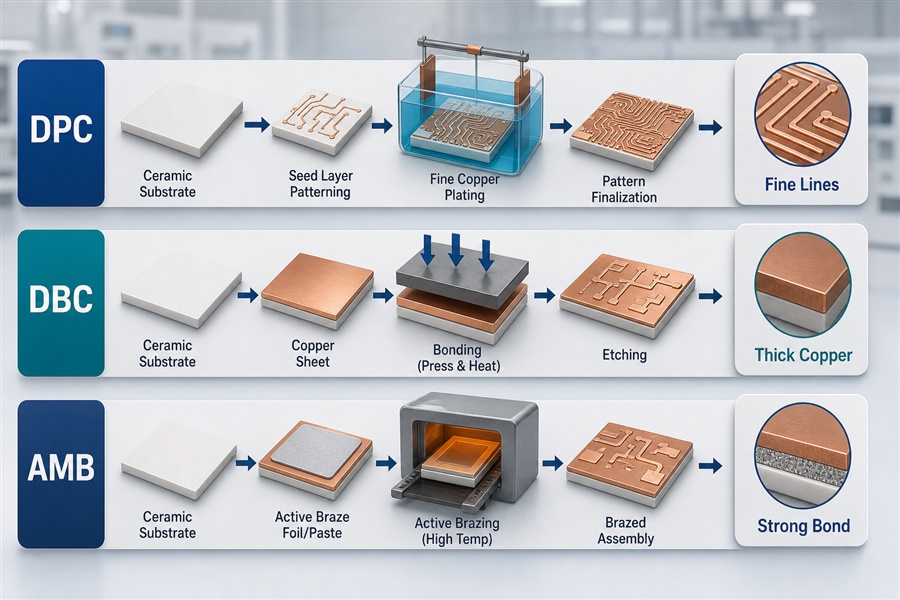
The process difference affects layout freedom, copper thickness, minimum spacing, mechanical stress, cost and quality inspection. A fine-pitch optical or sensor board may be better suited to a DPC ceramic substrate, while a high-current inverter or IGBT base often starts with DBC or AMB because the current path and heat path require heavier copper.
How Does DPC vs DBC Compare for Fine Circuits and Thermal Boards?
DPC vs DBC is mainly a choice between circuit precision and heavy-copper thermal capability. DPC is useful when the design needs finer tracks, tighter patterning, plated copper features, or compact ceramic circuit routing. DBC is stronger when the design needs thick copper, high current handling and a simple low-resistance heat path from the device into the ceramic and heat spreader.
| Decision Point | DPC Direction | DBC Direction |
| Circuit density | Better when the layout needs fine copper traces and compact routing | Better for simpler power layouts where copper area matters more than density |
| Copper thickness | Often selected for plated copper structures with controlled thickness | Often selected for thicker copper sheet bonded to ceramic |
| Thermal path | Good for small high-density devices when the thermal target is moderate | Strong fit for power devices that need broad copper heat spreading |
| Prototype review | Check minimum trace, spacing, vias, plating and surface finish | Check copper thickness, etching tolerance, isolation and ceramic flatness |
If a buyer only sends a Gerber file and asks whether DPC or DBC is cheaper, the supplier may not be able to answer correctly. The more useful question is whether the design risk comes from line density, current carrying, thermal resistance, isolation voltage, assembly process temperature, or cycling reliability.
How Does DBC vs AMB Compare for Power Modules?
DBC vs AMB is usually a reliability and cost trade-off for power module substrates. DBC is widely used because it offers good thermal conduction, electrical insulation and thick copper capability. AMB is considered when the ceramic-to-copper bond must handle stronger stress, higher cycling demand, or silicon nitride substrate requirements in automotive, traction, inverter or high-power semiconductor modules.
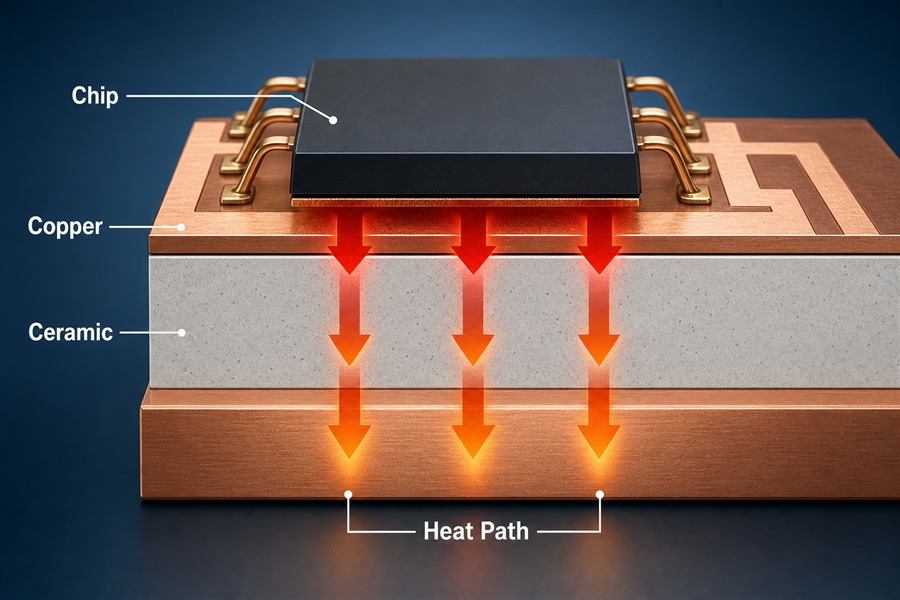
A DBC ceramic substrate can be a practical choice for many IGBT, inverter and thermal management designs. An AMB ceramic substrate becomes more compelling when the design has repeated power cycling, demanding mechanical stress, or a need for stronger copper bonding on ceramic. AMB should not be selected only because it sounds more advanced; it should solve a measurable reliability problem.
Which Ceramic Substrate Fits Your Application?
The right ceramic substrate is the one that meets the electrical, thermal and mechanical requirement without adding unnecessary process cost. DPC, DBC and AMB can all use ceramic materials such as alumina or aluminum nitride depending on the supplier’s process window. AMB is often discussed with silicon nitride in demanding power modules because mechanical strength and cycling resistance can matter as much as thermal conductivity.
| Application Need | Likely Starting Point | Why |
| High-density LED, sensor or compact ceramic circuit | DPC | Fine copper patterning and plated structures are often more useful than very thick copper |
| IGBT, power conversion, heating or broad heat-spreading board | DBC | Thick copper and a direct heat path are usually the main priorities |
| Automotive inverter, traction module or severe thermal cycling | AMB | Bond strength and cycling reliability can justify the higher process cost |
| Multilayer ceramic signal or RF module | LTCC, HTCC or thin-film ceramic | The design may need multilayer routing, controlled dielectric behavior or fine passive structures |
If the product also involves multilayer ceramic routing or compact module packaging, compare DPC/DBC/AMB with related ceramic options such as LTCC ceramic substrate designs. A product page alone may not answer the full selection question, so the RFQ should include the intended application and performance target.
What Design and Prototype Details Should Buyers Check?
Buyers should check the manufacturability details that affect yield before ordering prototypes. The most useful early review items are substrate material, ceramic thickness, copper thickness, minimum trace and spacing, outline tolerance, hole or via requirements, surface finish, isolation voltage, soldering profile, flatness, and expected thermal cycling.
- Send Gerber data, mechanical drawings and stack-up notes instead of only a PDF image.
- State whether the board is for prototype validation, pilot build or mass production.
- Define copper thickness and surface finish before asking for a price comparison.
- List thermal requirements such as power loss, heat sink interface and operating temperature.
- For DBC or AMB power modules, specify cycling expectations and insulation testing needs.
- Ask whether any line width, spacing, edge distance or copper balance needs adjustment.
For ceramic substrates, prototype review should focus on real constraints rather than only unit price. A lower-cost route can become expensive if copper thickness, substrate strength or test requirements are not aligned before tooling and sample production.
How Should You Choose a Supplier for DPC, DBC or AMB?
A qualified supplier should help translate the design requirement into a manufacturable ceramic substrate, not simply quote the cheapest process name. For DPC, the supplier should review fine traces, plating, vias and surface finish. For DBC, review copper thickness, ceramic material, etching tolerance and insulation. For AMB, review ceramic selection, active brazing, copper balance, thermal cycling risk and module assembly conditions.
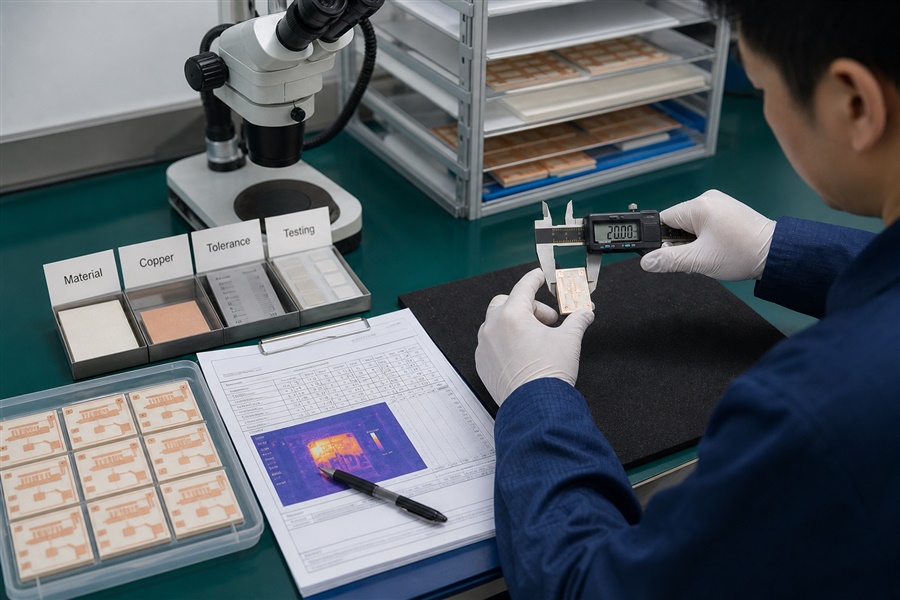
BSTCeramicPCB supports ceramic PCB discussions across design review, prototype quotation and production planning. When the requirement is still uncertain, start with the application, power level, ceramic material preference, copper thickness and target quantity. The engineering conversation will be more accurate if the supplier can compare ceramic PCB technologies according to the product’s real failure risks.
FAQ
What is the main difference between DPC, DBC and AMB?
DPC usually forms copper through deposition and plating, which helps fine circuits. DBC bonds copper sheet to ceramic for thick copper and heat spreading. AMB uses active brazing to strengthen the copper-to-ceramic joint for demanding power module reliability.
Is DPC better than DBC?
DPC is better when the design needs fine lines, compact routing or plated ceramic features. DBC is better when the design needs thicker copper, higher current and a broader thermal path. Neither process is universally better.
Is AMB better than DBC?
AMB can be better for severe thermal cycling and high-reliability power modules, especially when stronger bonding is required. DBC remains practical for many power electronics designs where its thermal and cost balance is sufficient.
Can DPC replace DBC in a power module?
DPC may replace DBC only when the current, copper thickness and thermal requirements are within the DPC process window. For high-current modules needing thick copper and broad heat spreading, DBC or AMB is usually reviewed first.
When should I choose AMB ceramic substrate?
Choose AMB when reliability under thermal cycling, copper bond strength, mechanical stress or silicon nitride substrate performance is more important than lowest process cost. It is often considered for automotive and high-power module applications.
Which ceramic material is best for DBC or AMB?
Alumina is cost-effective for many ceramic boards, aluminum nitride offers higher thermal conductivity, and silicon nitride is often reviewed for mechanical strength and cycling reliability. The best material depends on power density, reliability and budget.
What should I provide for a DPC, DBC or AMB quote?
Provide Gerber files, drawings, ceramic material, ceramic thickness, copper thickness, surface finish, order quantity, application, thermal target, voltage isolation requirement and any reliability test requirement. This prevents a misleading process-only quote.
Why is AMB usually more expensive?
AMB requires active brazing materials and tighter process control, and it is often used for demanding modules where reliability review is stricter. The higher cost is justified only when it reduces real module-level risk.
What is the best choice for fine-line ceramic circuits?
DPC is usually the first process to review for fine-line ceramic circuits because plated copper and patterning can support compact layouts. The supplier still needs to confirm line width, spacing, via and surface finish limits.
What is the best choice for IGBT substrates?
DBC and AMB are common starting points for IGBT substrates. DBC is often suitable for thick copper thermal paths, while AMB may be selected when thermal cycling and bonding reliability are more demanding.
Does DPC, DBC or AMB affect assembly?
Yes. Copper thickness, surface finish, flatness, ceramic strength and thermal expansion all affect soldering, die attach, wire bonding and module assembly. Assembly conditions should be shared before the substrate process is finalized.
Can one supplier make all three types?
Some ceramic PCB suppliers support multiple technologies, but capability varies by material, copper thickness, size, finish and testing. Buyers should confirm actual process windows rather than assume every DPC, DBC and AMB design is available.
Conclusion
DPC, DBC and AMB are not interchangeable labels. DPC is usually selected for fine ceramic circuits, DBC for thick copper heat spreading, and AMB for high-reliability power modules where bond strength and cycling performance matter. The safest sourcing path is to define the application first, then review material, copper thickness, thermal target, electrical isolation, testing and production volume with the supplier.
If you are evaluating ceramic PCB or ceramic substrate manufacturing for a new design, BSTCeramicPCB can help review the process direction, prototype risk and quotation details. Send your drawings, stack-up target, material preference and application requirements to sales@bstceramicpcb.com.
 Products
 About us
 Contact us