










































 HOME


-

Ceramic PCB for Humanoid Robot joint actuators
2026 04,07 -
LTCC PCB Surprises: What Most People Miss
2025 12,09 -
Step-by-Step Guide to DPC PCB Design for Sensor Systems
2025 12,03 -
Ceramic PCBs Essential Benefits and Applications
2025 12,01 -
How Al2O3 DPC Ceramic Substrate PCB Enhances Heat Dissipation in Modern Electronics?
2025 11,28 -
How to Choose Between Ceramic, FR4, and Metal Core PCBs
2025 11,27 -
DPC Ceramic PCB Materials: Surprising Science Inside
2025 11,26 -
Wire bondable 2-layer Alumina substrates PCB | Bstceramic PCB
2025 09,22 -
Silicon Nitride Substrate, Silicon Nitride Ceramic Substrate Formula
2025 05,08 -
What is thick film ceramic PCB?
2023 08,02
How to Choose a LED Lighting Ceramic Printed Circuit Boards Supplier?
Published:
Choose an LED lighting ceramic printed circuit boards supplier by checking manufacturing capability, quality records, total cost and delivery time. Use prototypes to verify installation, LED assembly and thermal performance before approving production.
Compare suppliers against the same drawings, materials and testing requirements. A lower quotation may otherwise represent a different board construction or a narrower service scope.
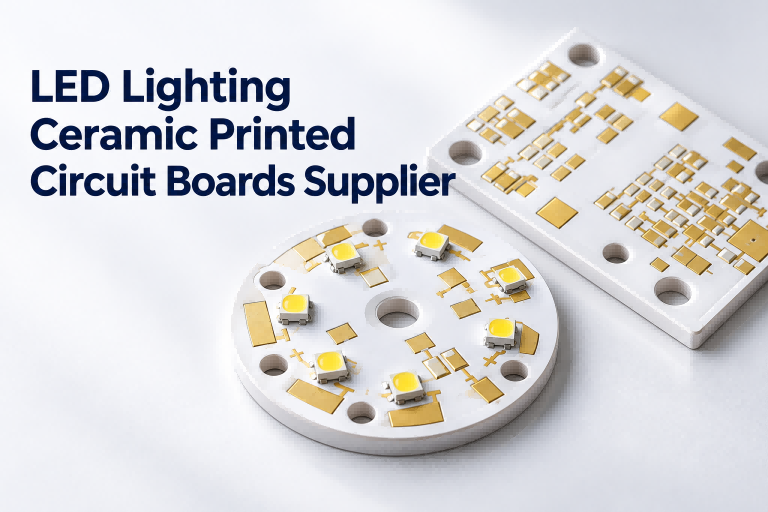
What Manufacturing Capabilities Should You Check for an LED Ceramic PCB Supplier?
Check the ceramic material, substrate thickness, copper thickness and circuit precision supported by the supplier. Ceramic PCB manufacturing capabilities vary by process, particularly between DPC, DBC, AMB and thick-film technologies.
Typical industry reference specifications include:
- Ceramic Materials: Alumina (Al₂O₃), aluminum nitride (AlN) and silicon nitride (Si₃N₄), depending on the manufacturing process.
- Ceramic Thickness: Approximately 0.25–1.0 mm for commonly used substrates, with thinner and thicker options available.
- Circuit Construction: Single-sided and double-sided metallization, with specialized processes available for multilayer ceramic circuits.
- Copper Thickness: Approximately 10–150 μm for DPC, 0.127–0.5 mm for DBC and 0.3–0.8 mm for AMB, depending on the construction.
- Line Width and Spacing: Fine DPC patterns may use trace widths around 0.075–0.15 mm. DBC and AMB generally require wider features, particularly with thicker copper.
- Board Dimensions: Maximum dimensions depend on the ceramic material, manufacturing process and available panel size.
- Hole Processing: Laser drilling, through-holes and metallized vias, subject to the substrate thickness and selected process.
- Surface Finishes: Nickel/gold, nickel/palladium/gold, silver plating and other finishes compatible with the selected assembly process.
Confirm that the required copper thickness, line spacing, ceramic material and board dimensions can be manufactured together. Individual capability limits do not necessarily apply to the same board construction.
How Can You Verify a LED Lighting Ceramic Printed Circuit Boards Supplier's Quality?
Request inspection records from comparable constructions and agree on the checks for your order. Certificates help assess the quality system; order-specific reports show what was inspected and whether it met the agreed requirements.
| Inspection Area | Evidence to Request |
|---|---|
| Material | Ceramic grade, thickness and batch identification |
| Appearance | Checks for cracks, edge damage, contamination and conductor defects |
| Dimensions | Measurements against the approved drawing |
| Electrical performance | Continuity and insulation results with test conditions |
| Metallization | Applicable adhesion verification |
| LED assembly (if included) | Component identity, polarity, placement and solder-joint inspection records |
| Traceability | Linked material, production, inspection and shipment records |
Agree on test methods and acceptance limits before production. For insulation testing, specify the voltage, duration and leakage limits. For assembled boards, distinguish a basic lighting check from functional testing under controlled drive conditions.
Confirm whether optical measurements, thermal characterization and environmental testing are included in the quotation or require separate arrangements.
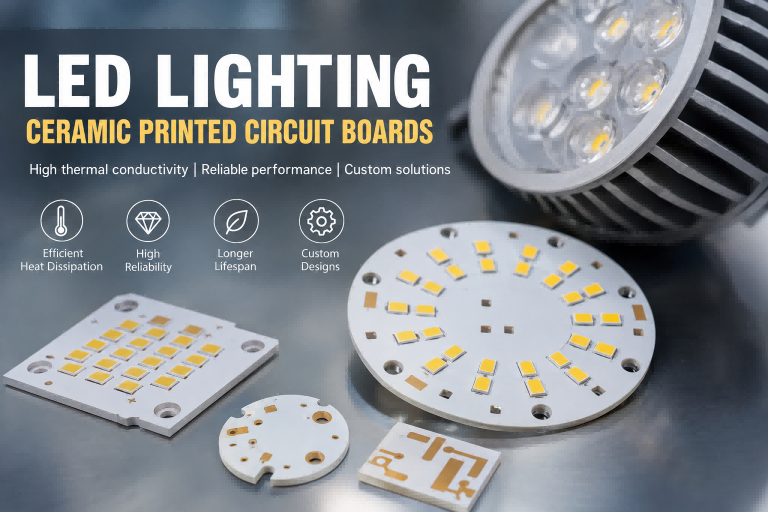
What Affects LED Ceramic PCB Lead Time and Cost?
Material, processing difficulty, quantity and component availability drive most price and schedule differences. Complete files and an established construction generally require less preparation than special materials or additional process trials.
- Ceramic Specification: Material grade, thickness and availability affect procurement and processing.
- Board Geometry: Size, outline and panel utilization influence material consumption and manufacturing effort.
- Conductor Requirements: Fine features, thick metal and demanding registration can increase processing difficulty.
- Order Quantity: Engineering and tooling charges account for more of the unit cost in small runs.
- LED Sourcing: Exact part numbers and restricted color or brightness bins can determine assembly timing.
- Testing Requirements: Fixtures, additional measurements and reliability evaluations add preparation time and cost.
Request lead times for fabrication, component procurement, assembly and shipping. Confirm whether the schedule starts after file approval, payment or material availability, and distinguish the dispatch date from the expected arrival date.
How Should You Compare Quotes from LED Lighting Ceramic Printed Circuit Boards Suppliers?
Compare complete quotations based on identical specifications. Give each supplier the same file revision and ask for written identification of any deviations.
| Quotation Item | Comparison Check |
|---|---|
| Construction | Same ceramic grade, thickness and metal structure |
| Finished board | Same artwork, outline and surface finish |
| Assembly | Same BOM, LED bins and procurement responsibility |
| Testing | Same methods, quantities and reports |
| One-time charges | Engineering, tooling, stencil and fixture fees |
| Delivery | Same packaging, shipment terms and quantities |
Separate unit prices from one-time charges. A prototype quotation may include tooling for later orders, while a low board price may exclude testing, assembly preparation or inspection reports.
If one quote is significantly lower, check whether it excludes testing, tooling, assembly or required inspections. Review any proposed material or component substitution before approving it.
What Should You Check in LED Ceramic PCB Prototypes Before Approving Production?
Test prototypes in the intended lighting assembly. Use the specified LEDs, drive settings, enclosure and cooling arrangement wherever practical.
Step 1: Verify Mechanical Fit
Check mounting holes, connector access, clearances and heatsink contact. Confirm that fastening does not apply excessive or uneven pressure to the ceramic substrate.
Step 2: Inspect Assembly
Verify LED part numbers, polarity, placement and attachment quality. Record the assembly materials and processes used so the approved configuration can be reproduced.
Step 3: Test Electrical and Lighting Functions
Check each LED string, channel and dimming function at defined current and voltage. Measure brightness, color or wavelength when these form part of the acceptance criteria.
Step 4: Measure Thermal Performance
Record temperatures after operating conditions stabilize, together with ambient temperature, LED drive current, power and heatsink configuration. Board surface temperature alone does not establish LED junction temperature, and ceramic thermal conductivity alone does not determine assembly cooling performance.
Step 5: Approve the Production Files
Resolve deviations and approve the drawings, BOM and test instructions. The production specification should include every accepted prototype change before volume manufacturing begins.
Why Choose BSTCeramicPCB as Your LED Lighting Ceramic Printed Circuit Boards Supplier?
Established in 2006, BSTCeramicPCB provides custom ceramic PCB manufacturing and assembly services from Shenzhen, China, supporting LED lighting projects from prototyping to volume production.
- Multiple Manufacturing Processes: DPC, DBC, AMB, thick-film and thin-film options support different circuit, current and thermal requirements.
- Custom LED Ceramic Substrates: Alumina and aluminum nitride options, with manufacturing review of board thickness, conductor patterns, dimensions and surface finish.
- One-Stop Fabrication and Assembly: Ceramic PCB fabrication, component sourcing, SMT assembly and testing help reduce coordination between separate suppliers.
- Prototype and Volume Production: Quick-turn prototype options are available for eligible projects, followed by manufacturing based on approved production specifications.
- Quality Control: Raw material checks, pre-production review, in-process inspection and final testing support consistent manufacturing quality.
Send your Gerber files, LED specifications and required quantities to sales@bstceramicpcb.com for a manufacturing review and quotation.
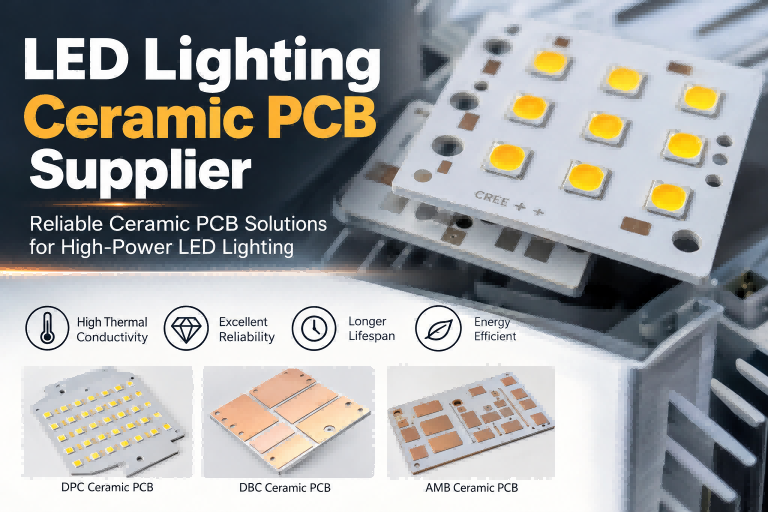
What Information Should You Send for an Accurate LED Ceramic PCB Quote?
Send the latest manufacturing files and clearly identify any specifications that still require confirmation.
- Fabrication Files: Gerber files, mechanical drawings and revision information.
- Board Specifications: Ceramic grade, substrate thickness, conductor thickness and surface finish.
- Order Quantities: Prototype quantity and expected production volumes.
- Assembly Files: BOM, placement data, assembly drawings and LED datasheets.
- LED Requirements: Approved brightness or color bins and component substitution restrictions.
- Acceptance Criteria: Required inspections, functional tests and inspection reports.
- Delivery Details: Target arrival date, destination and packaging requirements.
If the construction has not been finalized, include LED power, operating environment, installation space and cooling arrangement for manufacturing review.
FAQs About LED Lighting Ceramic Printed Circuit Boards Supplier
Q1: Can I sign an NDA before sharing PCB files?
A1: Request an NDA before transferring confidential documents. Confirm that it covers the information, parties and permitted external processing involved.
Q2: Can I supply my own LEDs?
A2: Confirm whether customer-supplied components are accepted and agree on packaging, quantities and assembly allowances. Keep original labels and bin information with each lot.
Q3: Who owns paid tooling and test fixtures?
A3: Define ownership, storage and transfer rights in the purchasing agreement, including charges for modifications or replacement.
Q4: Can different LED bins remain separate?
A4: Specify lot separation and package identification. State whether mixing is prohibited within a board, production batch or shipment.
Q5: Can I order ceramic PCBs without LED assembly?
A5: Yes, request bare ceramic PCB fabrication if you plan to assemble the LEDs separately. Confirm the surface finish, packaging and inspection requirements before ordering.
Q6: How should ceramic LED boards be packaged?
A6: Use packaging that prevents edge impact, board contact and movement, with suitable protection for exposed LEDs and ESD-sensitive components.
Q7: Can individual boards carry serial numbers?
A7: Confirm the marking location, method and traceability link during drawing review. Marking should not interfere with functional surfaces.
Q8: What if I revise files after ordering?
A8: Request a production hold and revision review. Approve any cost or schedule changes before manufacturing resumes.
Q9: Can I use different ceramic materials for prototype and production?
A9: Material changes require thermal, mechanical and electrical evaluation before production approval. A prototype made with alumina does not automatically validate an aluminum nitride version.
Q10: Which shipping documents should I request?
A10: Confirm the commercial invoice, packing list and required origin or compliance documents. List technical inspection reports separately.
Conclusion
Choose an LED lighting ceramic printed circuit boards supplier using verified manufacturing capability, order-specific quality evidence and comparable quotations. Approve production after prototypes meet the agreed installation, electrical and thermal requirements.
For custom ceramic PCB manufacturing, LED assembly, prototyping or volume production, send your project files to sales@bstceramicpcb.com for technical support and a quotation.
 Products
 About us
 Contact us