












 HOME
HOME


-

Ceramic PCB for Humanoid Robot joint actuators
2026 04,07 -
LTCC PCB Surprises: What Most People Miss
2025 12,09 -
Step-by-Step Guide to DPC PCB Design for Sensor Systems
2025 12,03 -
Ceramic PCBs Essential Benefits and Applications
2025 12,01 -
How Al2O3 DPC Ceramic Substrate PCB Enhances Heat Dissipation in Modern Electronics?
2025 11,28 -
How to Choose Between Ceramic, FR4, and Metal Core PCBs
2025 11,27 -
DPC Ceramic PCB Materials: Surprising Science Inside
2025 11,26 -
Wire bondable 2-layer Alumina substrates PCB | Bstceramic PCB
2025 09,22 -
Silicon Nitride Substrate, Silicon Nitride Ceramic Substrate Formula
2025 05,08 -
What is thick film ceramic PCB?
2023 08,02
Silicon Carbide (SiC) Substrates for 1200V+ EV Inverters: Driving India's 800V Revolution
Published:
Silicon Carbide (SiC) Substrates for 1200V+ EV Inverters: Driving India's 800V Revolution
Table of Contents
- Introduction: India's Electric Vehicle Leap and the 800V Imperative
- The Strategic Shift: Why India's EV Industry is Moving to 1200V SiC Technology
- Deep Analysis: How Indian Engineers and Procurement Teams Evaluate SiC Substrate Suppliers
- Why BSTCERAMICPCB is the Trusted Partner for India's High-Voltage EV Ecosystem
- FAQ: Navigating the SiC Substrate Landscape for 1200V+ EV Inverters
- Conclusion: Powering India's Sustainable Mobility Future with Advanced SiC Substrates
Introduction: India's Electric Vehicle Leap and the 800V Imperative
India is rapidly emerging as a global powerhouse in the electric vehicle (EV) revolution, driven by ambitious government policies, growing environmental consciousness, and a burgeoning domestic market. As the nation accelerates its transition towards sustainable mobility, the demand for high-performance, efficient, and reliable EV components is skyrocketing. Central to this transformation are the power electronics, particularly the inverters that convert DC battery power into AC for the electric motors. The industry is witnessing a significant shift from traditional 400V EV architectures to more advanced 800V systems, which promise faster charging, improved efficiency, and extended range. This transition, however, places unprecedented demands on power semiconductor devices and their packaging [1].
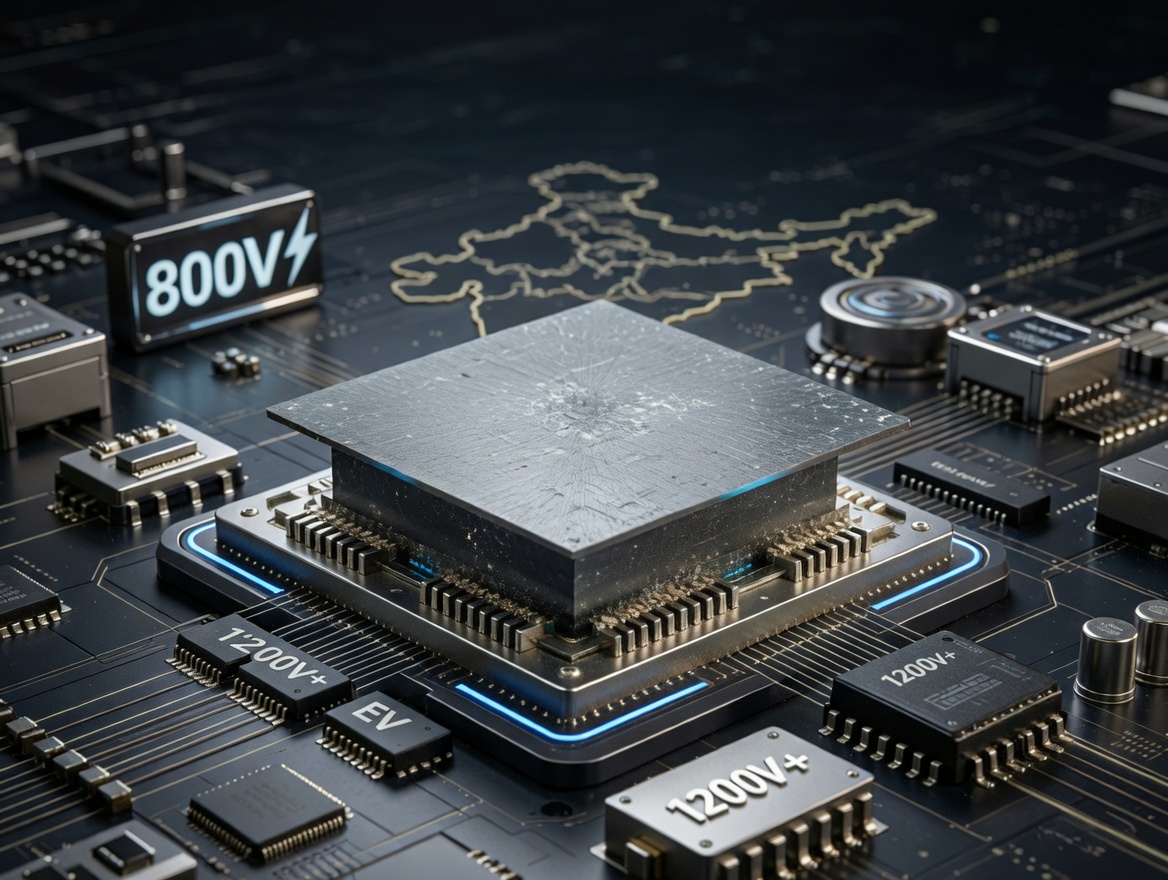
At the heart of these next-generation 800V EV inverters lies Silicon Carbide (SiC) technology. SiC power devices, especially those rated at 1200V and above, are becoming indispensable due to their superior performance characteristics compared to conventional silicon-based IGBTs. They offer higher switching frequencies, lower switching losses, and better thermal conductivity, all of which are critical for maximizing the efficiency and compactness of EV powertrains. However, the full potential of SiC devices can only be realized when paired with equally advanced packaging solutions – specifically, high-performance SiC substrates. These substrates are not merely mounting platforms; they are integral thermal and electrical components that dictate the overall reliability and performance of the entire power module. This article delves into the pivotal role of SiC substrates for 1200V+ EV inverters in India's burgeoning EV market, exploring the technical imperatives, the decision-making criteria for Indian engineers and procurement specialists, and how BSTCERAMICPCB is poised to be a key enabler in this exciting journey towards a sustainable and electrified future for India.
The Strategic Shift: Why India's EV Industry is Moving to 1200V SiC Technology
India's electric vehicle landscape is undergoing a profound transformation, driven by a confluence of factors including government incentives, rising fuel costs, and a growing awareness of environmental sustainability. A critical aspect of this evolution is the industry's strategic pivot towards higher voltage architectures, specifically 800V systems, which inherently demand advanced power semiconductor technologies. At the core of this shift is the adoption of 1200V+ Silicon Carbide (SiC) devices, which are rapidly replacing traditional silicon-based Insulated Gate Bipolar Transistors (IGBTs) in EV inverters. This transition is not merely an incremental upgrade but a fundamental re-engineering aimed at unlocking superior performance metrics crucial for the Indian market: extended range, faster charging times, and enhanced overall system efficiency [2]. The unique properties of SiC, such as its wider bandgap, higher thermal conductivity, and superior breakdown electric field, enable power devices to operate at much higher temperatures, frequencies, and voltages with significantly reduced losses. This directly translates into more compact, lighter, and more efficient inverter designs, which are paramount for EVs operating in India's diverse and often challenging climatic and road conditions. The ability of SiC to withstand higher temperatures also reduces the complexity and size of cooling systems, further contributing to weight and space savings within the vehicle. This strategic embrace of SiC technology is therefore not just about technological advancement but about delivering tangible benefits to Indian consumers and accelerating the mass adoption of EVs across the subcontinent.
Overcoming the Thermal Barrier in High-Voltage Traction Inverters
High-voltage traction inverters, operating at 1200V and above, are the workhorses of modern EVs, converting the battery's DC power into the AC power required by the electric motors. In doing so, they generate substantial amounts of heat, particularly during rapid acceleration, deceleration (regenerative braking), and sustained high-speed driving. This thermal load is exacerbated in India's often hot and humid climate, where ambient temperatures can push components to their limits. Traditional packaging solutions struggle to dissipate this heat effectively, leading to reduced efficiency, compromised reliability, and a shortened lifespan for the inverter module. This is where the superior thermal properties of SiC substrates become indispensable. Materials like Aluminum Nitride (AlN) and Silicon Nitride (Si3N4) offer thermal conductivities far exceeding conventional FR4 PCBs, enabling rapid and efficient heat transfer away from the sensitive SiC power dies [3].
Specifically, technologies like Active Metal Brazing (AMB) and Direct Bonded Copper (DBC) substrates, commonly used with SiC, provide an excellent thermal path. AMB substrates, for instance, utilize a thin layer of active metal to directly bond copper to a ceramic base (like AlN or Si3N4), creating a robust and highly thermally conductive interface. This direct bonding minimizes thermal resistance, allowing heat to flow quickly from the SiC chip through the substrate to the cooling system. The high dielectric strength of these ceramic materials also ensures electrical isolation at 1200V+ operating voltages, a critical safety and performance requirement for high-voltage EV systems. By effectively managing the thermal barrier, SiC substrates enable inverters to operate at peak performance even under extreme conditions, ensuring the longevity and reliability of EVs in India's demanding environment. This robust thermal management is a key differentiator for SiC-based inverters, contributing significantly to the overall efficiency and durability of the vehicle.
SiC vs. IGBT: The Efficiency Battle in Indian Urban Driving Cycles
The choice between Silicon Carbide (SiC) and Insulated Gate Bipolar Transistors (IGBTs) is a pivotal one for EV inverter design, particularly when considering the unique driving conditions prevalent in India. Indian urban driving cycles are characterized by frequent stop-and-go traffic, rapid acceleration, and often heavy loads, all of which place immense stress on power electronics. In this context, the efficiency advantages of SiC over IGBTs become strikingly clear. SiC MOSFETs exhibit significantly lower switching losses compared to IGBTs, especially at higher switching frequencies and temperatures [4]. This reduction in switching losses translates directly into less energy wasted as heat and more energy delivered to the electric motor, thereby improving the overall efficiency of the inverter and, consequently, the EV's range.
For a typical 1200V+ EV inverter, SiC devices can reduce switching losses by as much as 70% compared to equivalent IGBTs [5]. This efficiency gain is particularly impactful in urban driving, where frequent switching operations occur. Furthermore, SiC devices can operate at much higher junction temperatures (up to 175°C or even 200°C) without significant performance degradation, allowing for more aggressive thermal designs and smaller, lighter cooling systems. This is a crucial advantage in India, where ambient temperatures can be high, and space and weight optimization are critical for vehicle design. While IGBTs have been the workhorse of power electronics for decades, their limitations in terms of switching speed, thermal performance, and reverse recovery losses make them less ideal for the demands of next-generation 800V EV architectures. The superior efficiency and thermal characteristics of SiC technology are therefore not just a technical preference but a strategic imperative for EV manufacturers aiming to deliver competitive and high-performing vehicles to the Indian market. The enhanced efficiency directly contributes to a longer driving range and reduced battery size requirements, both of which are highly valued by Indian consumers.
Deep Analysis: How Indian Engineers and Procurement Teams Evaluate SiC Substrate Suppliers
For India's rapidly expanding electric vehicle industry, the selection of Silicon Carbide (SiC) substrate suppliers for 1200V+ EV inverters is a decision of immense strategic importance. It directly impacts the performance, reliability, cost-effectiveness, and ultimately, the market competitiveness of their EV offerings. Indian engineers and procurement teams approach this selection process with a meticulous eye, weighing a complex array of technical specifications, supply chain considerations, and alignment with national manufacturing initiatives. The unique challenges and opportunities presented by the Indian market necessitate a supplier who can offer not just cutting-edge technology but also robust support and a deep understanding of local requirements. This section delves into the critical evaluation criteria from both the engineering and procurement perspectives, highlighting the attributes that define a preferred partner in this high-stakes environment.
Engineering Priorities: Thermal Cycling Reliability and Dielectric Strength
From an engineering standpoint, the primary concerns when evaluating SiC substrates for 1200V+ EV inverters revolve around thermal cycling reliability and dielectric strength. EV inverters, especially those operating at 800V architectures, experience significant temperature fluctuations during operation, from cold starts to peak power demands. This constant thermal cycling can induce mechanical stress at the interfaces between the SiC dies, the substrate, and the copper layers, potentially leading to fatigue failures such as delamination or cracking. Indian engineers, operating in a climate that can range from extreme heat to monsoonal humidity, demand substrates that demonstrate exceptional resistance to thermal fatigue. This requires materials with a Coefficient of Thermal Expansion (CTE) closely matched to that of SiC and copper, as well as robust bonding technologies like Active Metal Brazing (AMB) or Direct Bonded Copper (DBC) that can withstand repeated stress cycles [6]. The supplier's ability to provide detailed thermal simulation data, reliability test reports (e.g., power cycling, thermal shock), and a proven track record in high-temperature applications is therefore crucial.
Equally critical is the dielectric strength of the substrate. Operating at 1200V and above, the substrate must provide impeccable electrical isolation between high-voltage components and the vehicle chassis, preventing arcing and ensuring safety. Materials like Silicon Nitride (Si3N4) are highly favored for their superior dielectric properties and mechanical strength, offering a robust barrier against electrical breakdown even under extreme conditions [7]. Engineers also scrutinize the substrate's partial discharge inception voltage (PDIV) and breakdown voltage (BDV) to ensure it meets the stringent safety and performance standards for automotive applications. Furthermore, the ability to achieve high-density interconnects and precise patterning on the ceramic surface is vital for minimizing parasitic inductances and capacitances, which can degrade inverter performance at high switching frequencies. BSTCERAMICPCB, with its expertise in advanced ceramic materials like Si3N4 and its proven AMB/DBC technologies, directly addresses these engineering priorities, offering solutions that guarantee both the thermal and electrical integrity required for India's next-generation EV inverters.
Procurement Strategy: Localizing the SiC Supply Chain for India's "Make in India" Initiative
For procurement teams in the Indian EV sector, the evaluation of SiC substrate suppliers is heavily influenced by strategic considerations beyond mere technical specifications. The Indian government's "Make in India" initiative places a strong emphasis on local manufacturing and reducing dependence on foreign supply chains. This translates into a procurement strategy that prioritizes suppliers who can offer not only competitive pricing and high quality but also supply chain resilience and, ideally, a pathway towards localized production or strong regional support. The global semiconductor supply chain has demonstrated its vulnerabilities in recent years, making supply security a paramount concern for Indian OEMs and Tier 1 suppliers. Procurement professionals are actively seeking partners who can guarantee consistent supply, manage lead times effectively, and demonstrate flexibility in scaling production to meet India's rapidly growing EV volumes.
Cost-effectiveness, while always a factor, is viewed through the lens of total cost of ownership (TCO) rather than just upfront price. This includes the long-term reliability of the components, which reduces warranty claims and maintenance costs, as well as the efficiency gains that contribute to a more competitive final product. Suppliers who can offer comprehensive technical support, including design assistance and post-sales service, are highly valued as they reduce the internal burden on engineering teams and accelerate product development cycles. Furthermore, adherence to international quality standards (e.g., IATF 16949 for automotive) and environmental compliance (e.g., RoHS, REACH) is non-negotiable. BSTCERAMICPCB, as an established global supplier with a strong track record, understands these procurement imperatives. Our commitment to quality, reliable delivery, and competitive value proposition makes us an attractive partner for Indian companies looking to secure a robust and future-proof supply chain for their 1200V+ EV inverter needs, aligning perfectly with India's vision for self-reliant and technologically advanced mobility.
Why BSTCERAMICPCB is the Trusted Partner for India's High-Voltage EV Ecosystem
As India charges ahead with its ambitious EV targets and the adoption of 800V architectures, the demand for reliable, high-performance Silicon Carbide (SiC) substrates for 1200V+ EV inverters is unprecedented. In this critical juncture, BSTCERAMICPCB emerges as a strategic and trusted partner for Indian automotive manufacturers and power electronics developers. Our extensive experience and specialized capabilities in advanced ceramic substrates directly address the complex technical and logistical requirements of India's high-voltage EV ecosystem. We understand that the success of India's EV revolution hinges on robust, efficient, and locally supported supply chains, and we are committed to being a pivotal part of that success.
BSTCERAMICPCB specializes in the manufacturing of high-quality ceramic substrates, including Active Metal Brazing (AMB) and Direct Bonded Copper (DBC) technologies, which are indispensable for packaging 1200V+ SiC power modules. These technologies provide the superior thermal management and electrical isolation crucial for the extreme operating conditions within EV inverters. Our substrates are engineered to minimize thermal resistance, ensuring efficient heat dissipation from SiC MOSFETs and diodes, thereby enhancing the overall efficiency and lifespan of the inverter. Furthermore, our commitment to using high-purity ceramic materials, such as Aluminum Nitride (AlN) and Silicon Nitride (Si3N4), guarantees exceptional dielectric strength and mechanical robustness, vital for the safety and reliability of high-voltage systems in demanding automotive environments. We offer tailored solutions that meet the precise CTE matching requirements for SiC dies, mitigating thermal stress and ensuring long-term reliability under severe thermal cycling conditions, a key concern for Indian engineers.
Beyond technical excellence, BSTCERAMICPCB offers a partnership built on reliability and responsiveness. We recognize the importance of a secure and agile supply chain for India's rapidly growing EV industry. Our global presence and efficient manufacturing processes enable us to provide competitive lead times and consistent product quality, reducing supply chain risks for our Indian partners. We are dedicated to supporting the "Make in India" initiative by offering high-quality components that empower local manufacturing and innovation. Our team of experts is available to collaborate with Indian engineers from the design phase, providing valuable insights and customized solutions that optimize performance and cost. By choosing BSTCERAMICPCB, Indian EV manufacturers gain access to world-class SiC substrate technology, a reliable supply chain, and a partner committed to driving the future of electric mobility in India. Our proven track record, coupled with our focus on innovation and customer satisfaction, makes us the ideal choice for companies seeking to build the next generation of 1200V+ EV inverters that are efficient, reliable, and perfectly suited for the Indian market.
Ready to Power Your Next-Gen EV Inverter?
Partner with BSTCERAMICPCB for cutting-edge SiC substrate solutions tailored to India's 800V EV revolution. Our expert team is ready to support your project from concept to production.
Get Your Custom Quote TodayFAQ: Navigating the SiC Substrate Landscape for 1200V+ EV Inverters
Here are some frequently asked questions regarding Silicon Carbide (SiC) substrates for 1200V+ EV inverters, addressing common concerns from Indian engineers and procurement specialists.
Conclusion: Powering India's Sustainable Mobility Future with Advanced SiC Substrates
India's journey towards a fully electrified automotive future is gaining unprecedented momentum, with 800V EV architectures and 1200V+ SiC inverters at the vanguard of this transformation. The superior efficiency, thermal performance, and reliability offered by Silicon Carbide technology are not just technological advancements; they are fundamental enablers for extended EV range, faster charging, and enhanced durability, all of which are crucial for widespread adoption in the diverse Indian market. The strategic selection of high-performance SiC substrates is paramount to unlocking the full potential of these advanced power electronics.
BSTCERAMICPCB stands ready as a dedicated partner to India's burgeoning EV industry. Our expertise in cutting-edge AMB and DBC SiC substrates, coupled with our unwavering commitment to quality, reliability, and customer collaboration, positions us as the ideal supplier for manufacturers seeking to innovate and excel in the high-voltage EV landscape. By choosing BSTCERAMICPCB, Indian engineers and procurement teams are not just acquiring components; they are securing a strategic advantage – a partnership that delivers world-class technology, robust supply chain support, and a shared vision for a sustainable and electrified India. Together, we can accelerate the transition to cleaner, more efficient mobility, driving India's EV revolution forward with unparalleled power and precision.
Transform Your EV Power Electronics with BSTCERAMICPCB
Don't let thermal or electrical limitations hinder your EV inverter innovation. Contact our expert team today to discuss your SiC substrate requirements for 1200V+ EV applications.
Start Your Project Today Products
 About us
 Contact us