
















































 HOME
HOME


-

Ceramic PCB for Humanoid Robot joint actuators
2026 04,07 -
LTCC PCB Surprises: What Most People Miss
2025 12,09 -
Step-by-Step Guide to DPC PCB Design for Sensor Systems
2025 12,03 -
Ceramic PCBs Essential Benefits and Applications
2025 12,01 -
How Al2O3 DPC Ceramic Substrate PCB Enhances Heat Dissipation in Modern Electronics?
2025 11,28 -
How to Choose Between Ceramic, FR4, and Metal Core PCBs
2025 11,27 -
DPC Ceramic PCB Materials: Surprising Science Inside
2025 11,26 -
Wire bondable 2-layer Alumina substrates PCB | Bstceramic PCB
2025 09,22 -
Silicon Nitride Substrate, Silicon Nitride Ceramic Substrate Formula
2025 05,08 -
What is thick film ceramic PCB?
2023 08,02
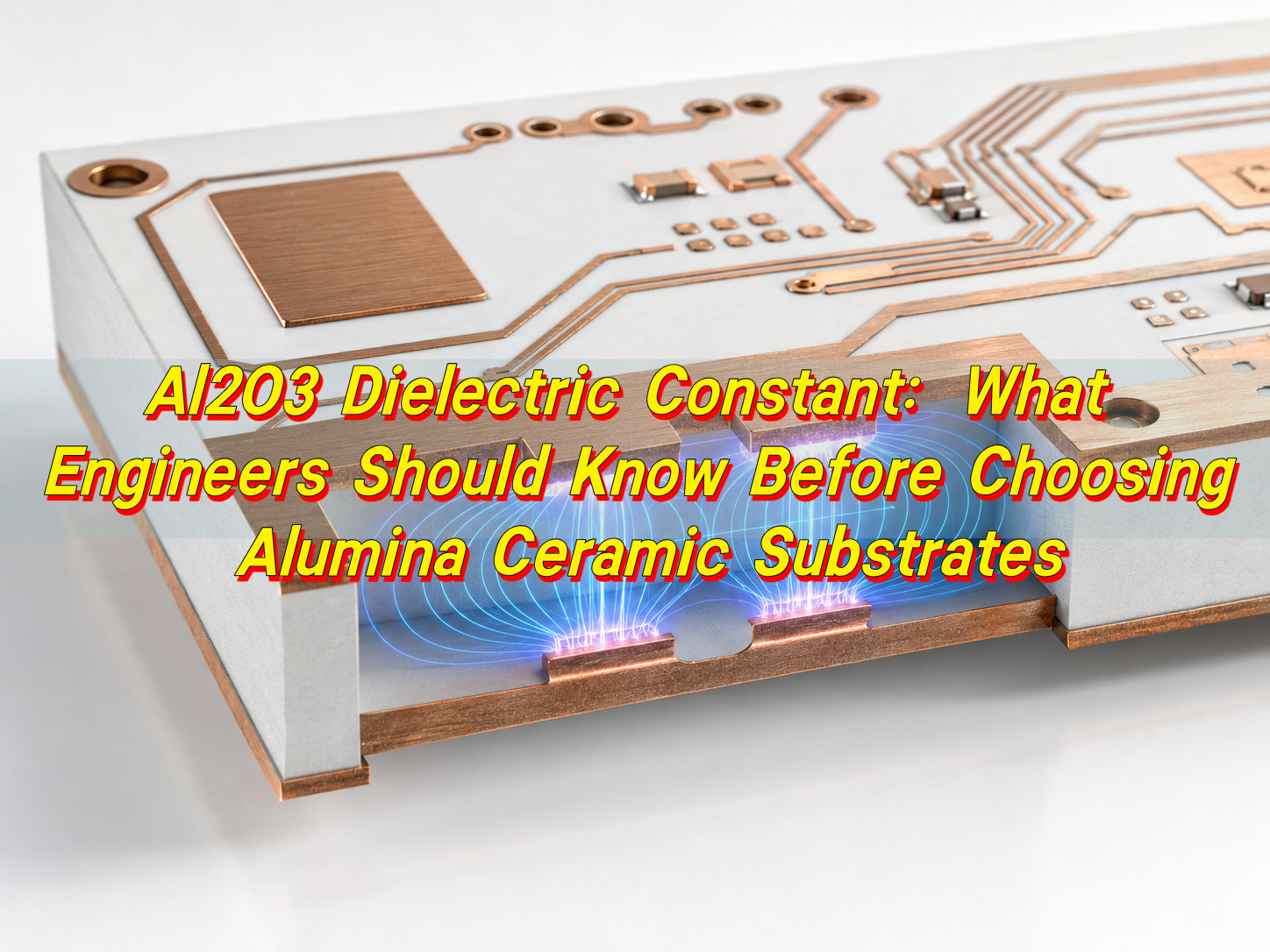
Al2O3 Dielectric Constant: What Engineers Should Know Before Choosing Alumina Ceramic Substrates
Published:
Al2O3 dielectric constant is usually around 9.0 to 10.0 at room temperature, depending on alumina purity, test frequency, density, glass phase, and supplier formulation. For ceramic PCB, thick-film circuits, DPC substrates, RF modules, power electronics, sensors, and high-reliability packages, this value is not only a material number. It affects impedance, signal delay, capacitance, insulation behavior, substrate size, copper layout, and long-term electrical stability.
What Is Al2O3 Dielectric Constant?
Al2O3 dielectric constant describes how much electric energy aluminum oxide ceramic can store compared with air or vacuum. It is also called relative permittivity or Dk.
In practical ceramic PCB design, this value tells engineers how the substrate will influence electric field distribution, capacitance, impedance, and signal propagation. A higher dielectric constant means the material stores more electric field energy. A lower value usually supports faster signal propagation and wider trace geometry for the same impedance.
For alumina ceramic, the common engineering range is much higher than FR4. Many alumina datasheets list dielectric constant values near 9.1, 9.3, 9.5, or slightly higher, depending on grade and test condition.
For buyers, the key point is simple: do not treat “alumina” as one fixed material. Always confirm the exact grade, frequency, tolerance, and test method before using the value in an RF, high-voltage, or impedance-sensitive design.
Why Does Al2O3 Dielectric Constant Matter in Ceramic PCB Design?
Al2O3 dielectric constant matters because it changes how electrical signals, electric fields, and parasitic capacitance behave inside the substrate.
In a ceramic PCB, the substrate is not only a mechanical carrier. It is part of the electrical system. When copper traces, pads, vias, electrodes, and ground planes are placed on alumina, the dielectric constant influences coupling, impedance, propagation delay, and capacitance. This becomes especially important in RF circuits, hybrid modules, high-voltage boards, sensor circuits, LED power modules, and compact ceramic packages.
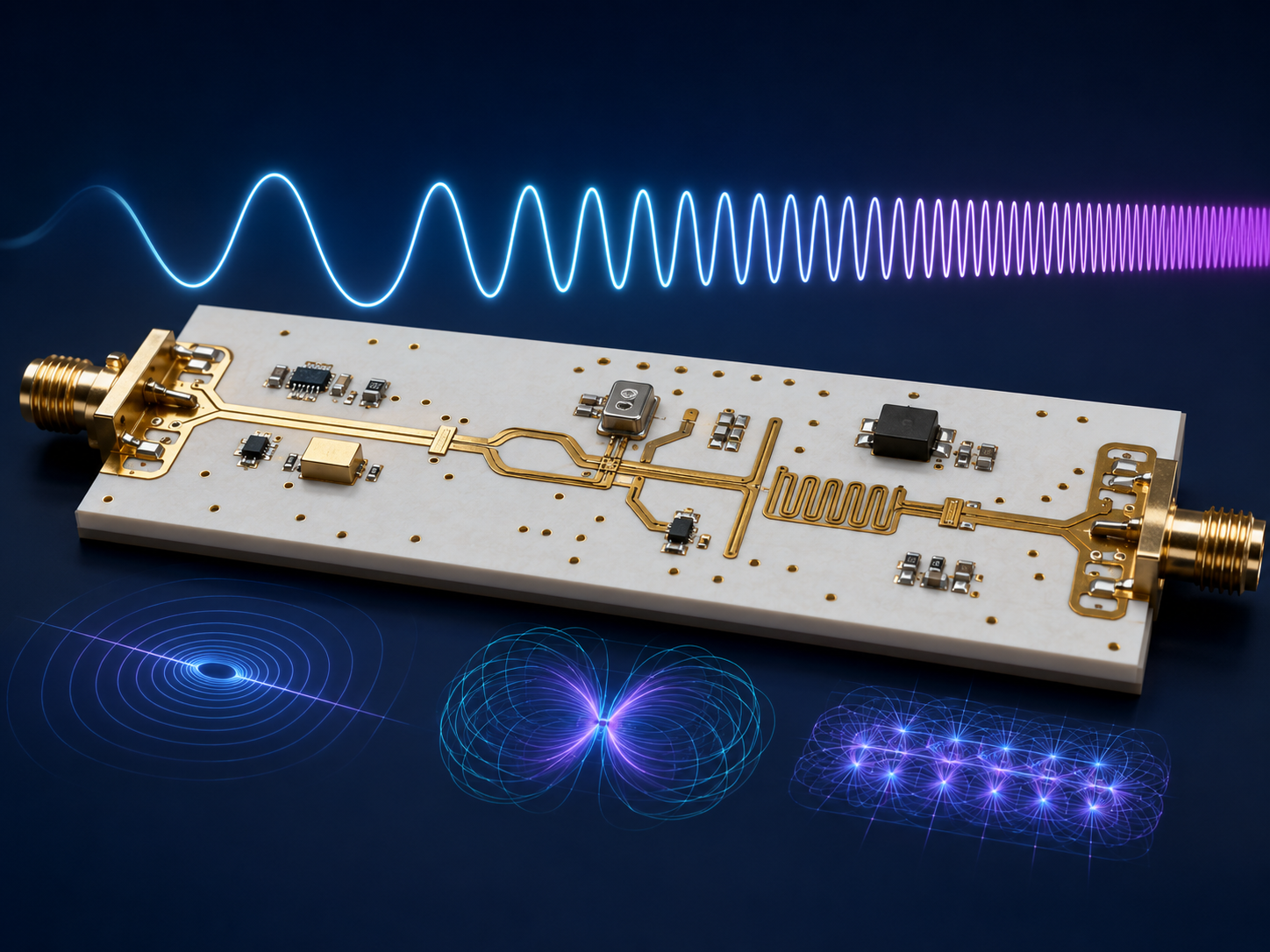
For example, a higher Dk allows smaller circuit dimensions in some RF and microwave layouts. It can help miniaturize resonators, filters, antennas, and matching networks. At the same time, it can increase parasitic capacitance if the layout is not controlled.
In power electronics, Al2O3 offers electrical insulation, thermal transfer, and mechanical support in one substrate. Its dielectric constant is part of the insulation design, but it should always be reviewed together with dielectric strength, creepage distance, copper thickness, thermal conductivity, surface finish, and working voltage.
A good ceramic PCB design does not choose alumina only because “the dielectric constant is high.” It chooses alumina because the electrical, thermal, mechanical, and cost requirements match the real operating condition.
How Does Al2O3 Dielectric Constant Work?
Dielectric constant works through polarization. When an electric field passes through alumina ceramic, charged particles inside the material slightly shift from their balanced position. This microscopic response stores electrical energy.
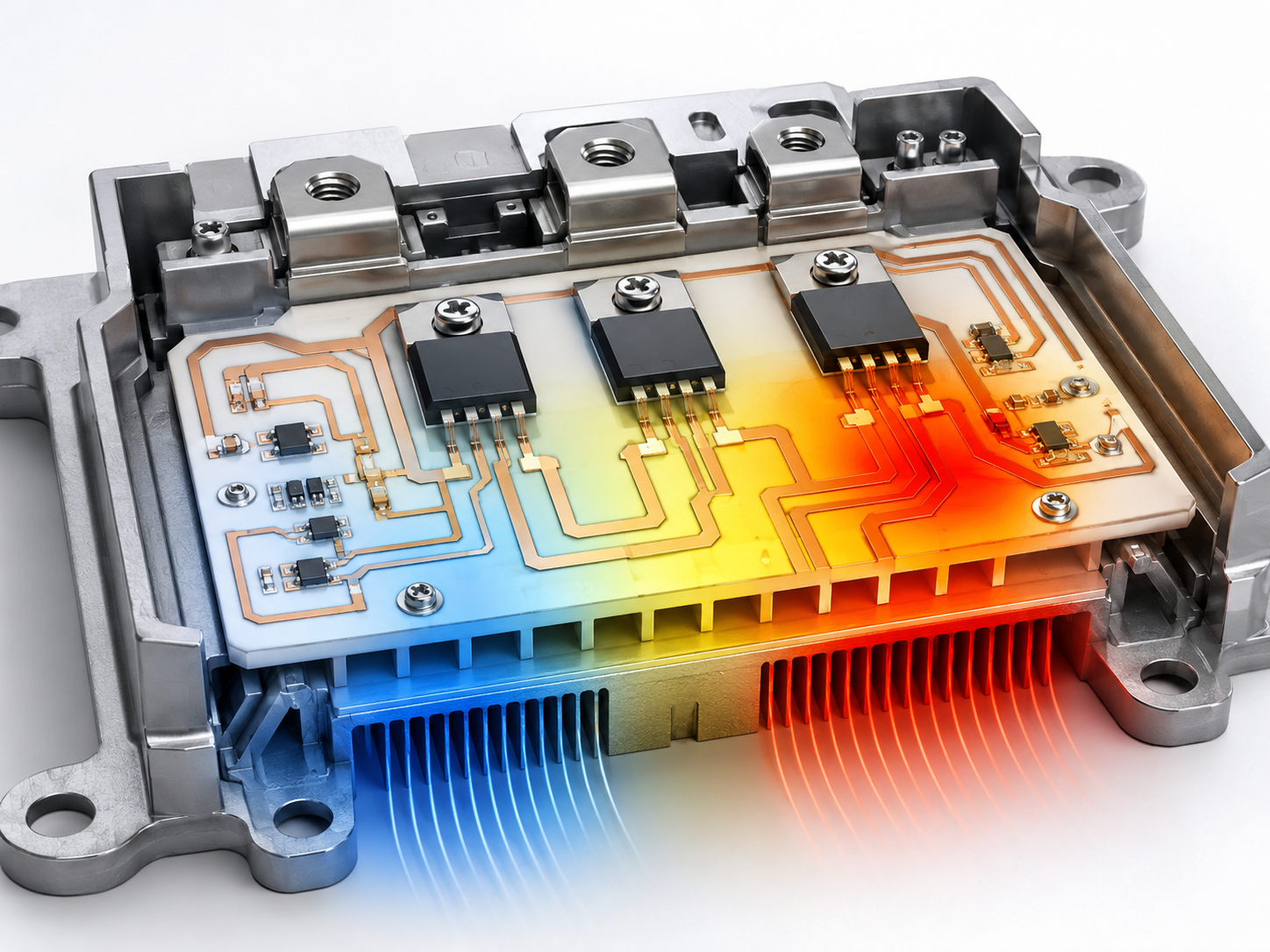
In circuit terms, this changes capacitance. The basic relationship is:
| Design Relationship | Meaning for Alumina Ceramic PCB |
|---|---|
| Higher dielectric constant | More capacitance between conductors |
| Lower dielectric constant | Less capacitance and usually faster signal propagation |
| Thinner substrate | Higher capacitance and stronger coupling |
| Larger copper area | Higher capacitance |
| Closer signal and ground layers | Lower impedance |
| Higher frequency | Dk may shift depending on material grade and test method |
| Higher temperature | Dk and loss may change, especially in harsh environments |
Alumina is generally stable compared with many polymer-based PCB materials. However, Dk is still not perfectly constant under all conditions. Frequency, temperature, porosity, sintering quality, purity, and metallization process can all create small but meaningful differences.
This is why engineering teams should avoid using a random online value when building controlled-impedance ceramic circuits. A supplier datasheet and stack-up confirmation are more reliable than a generic material table.
What Is the Typical Dielectric Constant of 96% and 99% Alumina?
The typical Al2O3 dielectric constant range is often close to 9.0–10.0 at room temperature, but different grades show different values. 96% alumina is widely used in thick-film ceramic substrates and cost-sensitive ceramic PCBs. Higher-purity alumina, such as 99%, 99.5%, or 99.6%, is often used when better electrical stability, lower impurity content, finer surface quality, or thin-film compatibility is required.
| Alumina Grade | Typical Dielectric Constant Range | Common Use |
|---|---|---|
| 92% alumina | Around 8.0–9.0 | Mechanical ceramic parts, wear-resistant parts |
| 95% alumina | Around 9.0 | General ceramic insulation parts |
| 96% alumina | Around 9.0–9.5 | Thick-film circuits, ceramic PCB substrates, power modules |
| 99% alumina | Around 9.5–10.0 | Higher-reliability ceramic substrates |
| 99.5% / 99.6% alumina | Around 9.8–10.1 | Thin-film circuits, RF modules, precision ceramic packages |
| 99.7%+ alumina | Around 10.0 or higher | High-purity technical ceramic applications |
These values should be treated as typical references, not universal specifications. A ceramic PCB manufacturer may use different powder, sintering conditions, surface roughness, thickness tolerance, and metallization process. For controlled impedance or RF design, always ask for the actual material datasheet used in production.
How Does Frequency Affect Al2O3 Dielectric Constant?
Frequency can affect the measured dielectric constant of Al2O3. Many datasheets provide Dk at 1 MHz because it is a common material characterization point. RF and microwave engineers may need values at much higher frequencies, such as 1 GHz, 5 GHz, 10 GHz, or application-specific bands.
At low frequency, polarization mechanisms have more time to respond. At higher frequency, some polarization mechanisms respond less effectively. For high-frequency ceramic circuits, the practical dielectric behavior depends not only on alumina purity but also on loss tangent, surface roughness, conductor type, substrate thickness, and ground structure.
This is important for RF ceramic PCB and microwave modules. A design calculated with a 1 MHz Dk value may not perfectly match performance at GHz frequency. The difference may look small on paper, but in filters, matching networks, antennas, and high-frequency sensors, it can shift resonance, impedance, or insertion loss.
For precision RF design, engineers should request frequency-specific dielectric data or build a test coupon. For standard power ceramic PCB, the 1 MHz value is often enough for material comparison, but it should still be paired with insulation and voltage testing.
How Does Temperature Change Al2O3 Dielectric Constant?
Temperature can change dielectric constant, dielectric loss, insulation resistance, and conductivity. Alumina is more thermally stable than many organic PCB materials, but it is not immune to electrical drift under high temperature.
For ceramic PCB applications, this matters in:
| Application | Why Temperature-Dependent Dk Matters |
|---|---|
| Power modules | Heat can change insulation behavior and leakage current |
| LED substrates | Junction heat may influence local electrical and thermal stress |
| Automotive electronics | Temperature cycling can affect long-term reliability |
| Aerospace sensors | Stable electrical behavior is needed over wide temperature ranges |
| High-voltage ceramic boards | Dk, dielectric strength, and surface insulation must be reviewed together |
| RF modules | Thermal drift may shift resonance or impedance |
A safe design should not rely on room-temperature dielectric constant alone. Engineers should review operating temperature, thermal cycling, humidity, voltage, copper adhesion, and encapsulation together.
What Material Factors Influence Al2O3 Dielectric Constant?
Al2O3 dielectric constant is influenced by more than alumina percentage. Two suppliers can both offer “96% alumina,” yet the actual electrical behavior may not be identical.
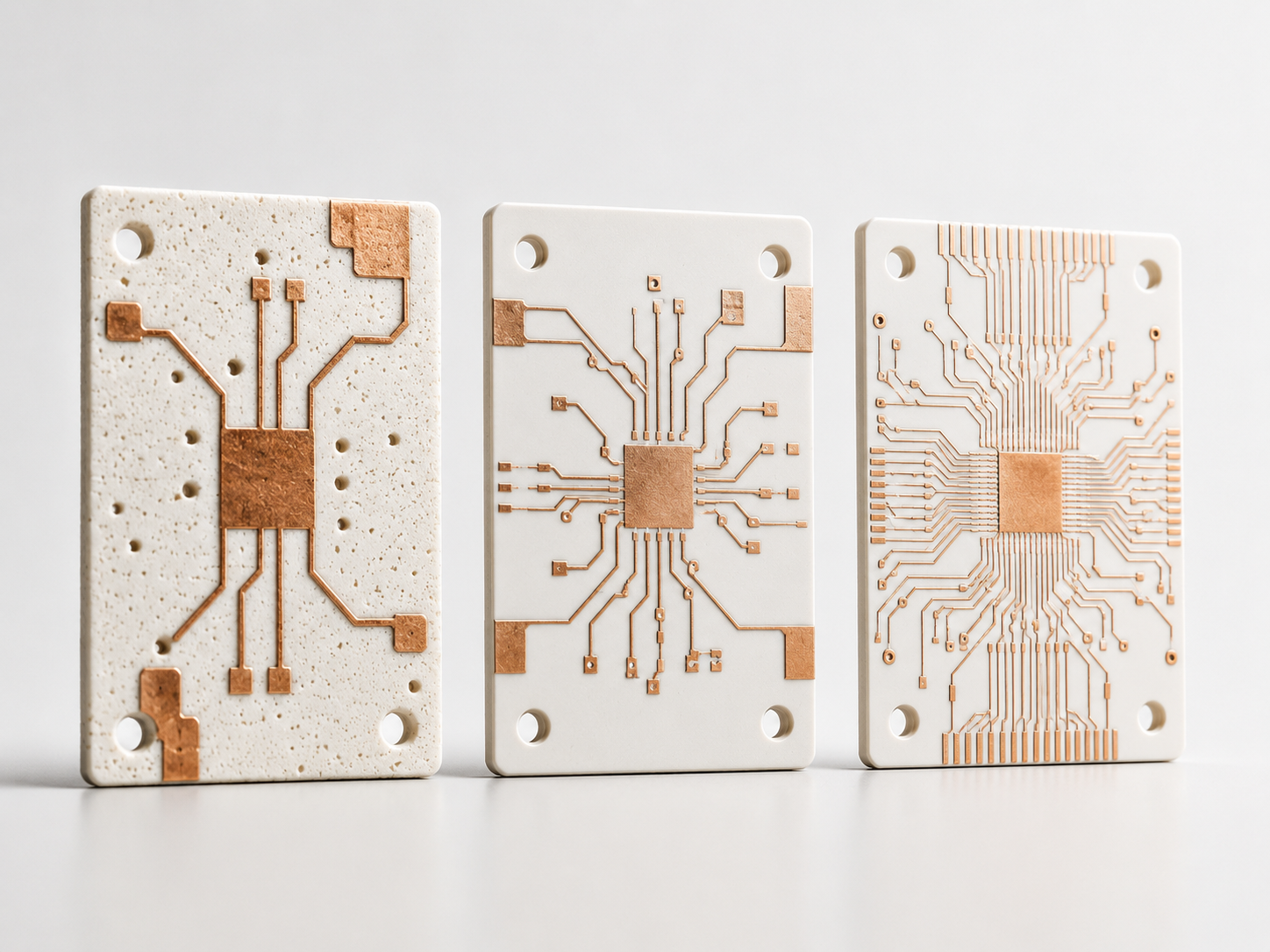
Key material factors include:
| Factor | Effect on Dielectric Behavior |
|---|---|
| Alumina purity | Higher purity often increases Dk and improves electrical consistency |
| Glass phase content | Can affect dielectric loss, strength, and stability |
| Porosity | Higher porosity may reduce effective dielectric constant and weaken insulation |
| Density | Higher density usually improves repeatability |
| Grain size | Influences mechanical strength, surface finish, and electrical consistency |
| Sintering process | Affects density, shrinkage, and microstructure |
| Surface roughness | Important for thin film, RF, and fine-line metallization |
| Thickness tolerance | Directly affects capacitance and impedance |
| Metallization process | Thick film, DPC, DBC, and thin film create different conductor-substrate interfaces |
For ceramic PCB sourcing, this is where real factory experience matters. A buyer may ask for “96% alumina,” but the actual project may need controlled thickness, stable dielectric value, strong copper bonding, fine line capability, or high-voltage insulation. Material name alone is not enough.
How Does Al2O3 Compare with FR4, AlN, BeO, and Rogers Materials?
Al2O3 sits between low-cost organic PCB laminates and high-performance ceramic or RF materials. It offers good insulation, moderate thermal conductivity, stable mechanical strength, and practical cost control.
| Material | Typical Dk Range | Thermal Behavior | Cost Level | Common Use |
|---|---|---|---|---|
| FR4 | Around 4.0–4.7 | Low thermal conductivity | Low | Standard PCB, control boards |
| Al2O3 alumina | Around 9.0–10.0 | Better heat transfer than FR4 | Medium | Ceramic PCB, power modules, thick film |
| AlN aluminum nitride | Around 8.5–9.0 | Much higher thermal conductivity | High | High-power modules, laser, RF power |
| BeO beryllium oxide | Around 6.5–7.0 | Excellent thermal conductivity | High and restricted | Special high-power applications |
| Rogers RF laminates | Varies by grade | Designed for RF stability | Medium to high | Antenna, microwave, high-speed RF |
Compared with FR4, alumina has a higher dielectric constant, better thermal resistance, stronger dimensional stability, and better insulation in demanding environments. Compared with AlN, alumina is usually more cost-friendly but has lower thermal conductivity. Compared with Rogers materials, alumina offers ceramic stability but may require different manufacturing processes and design rules.
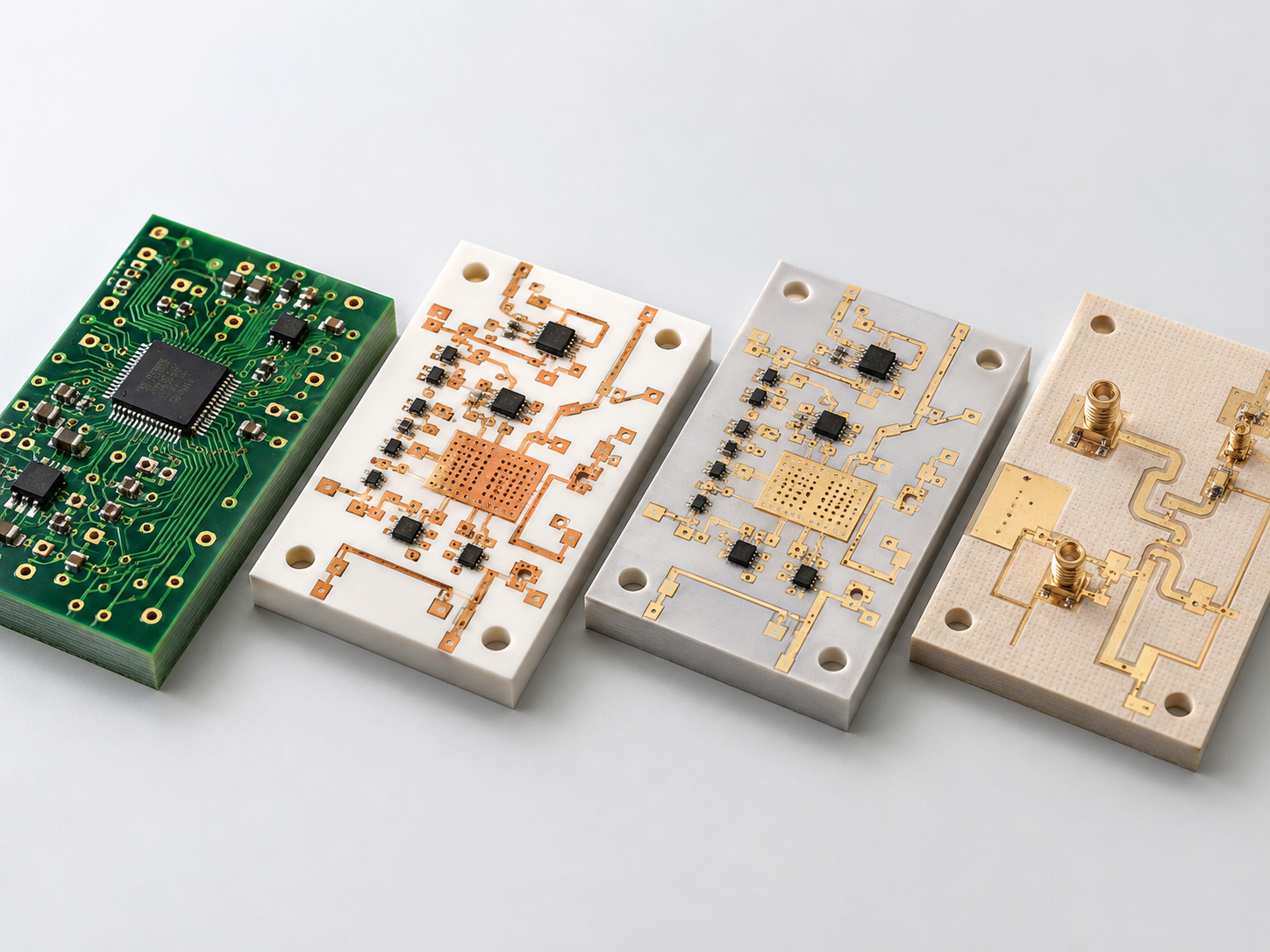
The best choice depends on the project. If thermal conductivity is the main bottleneck, AlN may be better. If cost, insulation, and ceramic stability need balance, Al2O3 is often a strong option. If controlled RF loss and PCB-style processing are the priority, a dedicated RF laminate may still be preferred.
Which Alumina Grade Should You Choose for Ceramic PCB?
The correct alumina grade depends on the electrical, thermal, mechanical, and cost requirements of the design.
96% alumina is the most common choice for ceramic PCB and thick-film circuits. It provides a practical balance between cost, manufacturability, dielectric performance, mechanical strength, and availability. For many LED modules, heater circuits, power control boards, sensors, and industrial ceramic substrates, 96% Al2O3 is enough.
99% or higher-purity alumina is better when the project needs improved electrical consistency, smoother surface, better thin-film compatibility, lower contamination, or tighter performance control. It is often selected for RF modules, precision sensors, high-reliability packages, and fine-line ceramic circuits.
| Project Requirement | Suggested Direction |
|---|---|
| Cost-sensitive ceramic PCB | 96% alumina |
| Thick-film conductor printing | 96% alumina |
| Fine-line thin-film circuit | 99.5% / 99.6% alumina |
| RF or microwave precision circuit | High-purity alumina with frequency-specific Dk data |
| High-voltage insulation | Confirm dielectric strength, creepage, thickness, and surface treatment |
| Better thermal conductivity than alumina | Consider AlN |
| Automotive or industrial reliability | Use stable grade with traceable test records |
| Prototype before mass production | Use the same grade planned for production |
A practical rule is to avoid over-specification. Higher purity may improve some properties, but it also increases cost and may require tighter process control. For many commercial ceramic PCB applications, 96% alumina remains the most economical and reliable option.
Where Is Al2O3 Dielectric Constant Important in Real Applications?
Al2O3 dielectric constant becomes important wherever the ceramic substrate is part of the electrical path, not just a mechanical base.
Ceramic PCB for Power Electronics
Power electronics use alumina ceramic PCB because the substrate can provide insulation and heat transfer at the same time. The dielectric constant affects capacitance between copper areas, especially in compact layouts with high voltage or fast switching.
In motor drives, MOSFET modules, IGBT drivers, DC-DC converters, and solid-state relays, engineers should review Dk together with dielectric strength, partial discharge risk, copper thickness, and thermal path.
Thick-Film Ceramic Circuits
Thick-film circuits often use 96% alumina because it works well with screen-printed conductors, resistors, and dielectric pastes. The dielectric constant influences conductor spacing, resistor networks, hybrid modules, and capacitive coupling.
For stable production, paste compatibility and firing profile are just as important as the substrate Dk number.
RF and Microwave Ceramic Substrates
RF circuits can use alumina because its higher dielectric constant helps reduce circuit size. However, impedance and resonance depend on actual Dk at the operating frequency.
A small mismatch in dielectric value may shift filter response, antenna tuning, or phase behavior. For RF applications, suppliers should provide material data, thickness tolerance, surface roughness, and sample verification.
Sensor and Medical Electronics
Alumina is used in pressure sensors, oxygen sensors, medical modules, and high-stability sensor packages. In these applications, electrical insulation, dimensional stability, and long-term reliability are often more important than the lowest possible price.
For medical and sensor-related projects, traceability, process consistency, and clean manufacturing control should be included in the supplier review.
LED and Thermal Substrates
LED ceramic substrates use alumina for insulation and better heat transfer than FR4. The dielectric constant may not be the first design concern, but it still affects insulation and capacitance between conductive areas.
For high-power LED modules, thermal conductivity, copper thickness, solderability, and ceramic thickness often carry more design weight than Dk alone.
What Design Rules Should Engineers Consider When Using Al2O3 Substrates?
Designing with alumina ceramic is different from designing with FR4. The substrate is harder, more brittle, and processed through ceramic-specific metallization methods.
Important design considerations include:
| Design Item | Engineering Recommendation |
|---|---|
| Substrate thickness | Confirm electrical insulation, mechanical support, and thermal path |
| Trace width and spacing | Match metallization process and voltage requirement |
| Copper thickness | Choose based on current, heat, and bonding strength |
| Via design | Confirm laser drilling, filling, plating, or ceramic via process |
| Edge clearance | Avoid cracks and copper peeling near brittle edges |
| Controlled impedance | Use actual Dk, thickness tolerance, and conductor geometry |
| High voltage | Review creepage, clearance, dielectric strength, and contamination risk |
| Thermal cycling | Check copper-ceramic CTE stress |
| Surface finish | Select based on soldering, wire bonding, or assembly method |
| Panel size | Confirm ceramic shrinkage and flatness control |
The most common mistake is treating alumina like a high-temperature version of FR4. It is not. Ceramic PCB requires earlier communication between the circuit designer, substrate manufacturer, metallization process engineer, and assembly team.
How Is Al2O3 Ceramic PCB Manufactured?
Al2O3 ceramic PCB can be manufactured through different processes. Each process affects cost, conductor thickness, line width, adhesion, thermal behavior, and final reliability.
| Process | Main Feature | Typical Use |
|---|---|---|
| Thick-film ceramic PCB | Conductive paste is screen printed and fired | Hybrid circuits, sensors, heaters, LED modules |
| Thin-film ceramic PCB | Metal film is deposited and patterned | Fine-line circuits, RF, precision electronics |
| DPC ceramic PCB | Copper is plated on ceramic after via and seed-layer processing | Fine lines, vertical interconnects, LED, power modules |
| DBC ceramic substrate | Copper is directly bonded to ceramic at high temperature | Power modules, high-current applications |
| AMB ceramic substrate | Active metal brazing bonds copper to ceramic | High-reliability power modules |
| HTCC | Ceramic and metal are co-fired at high temperature | Ceramic packages, multilayer modules |
| LTCC | Low-temperature co-fired ceramic with embedded conductors | RF modules, filters, compact multilayer circuits |
For Al2O3 ceramic PCB, thick-film and DPC are common choices. Thick film is practical for mature hybrid circuits. DPC supports finer patterns, better copper control, and plated vias. DBC is more common when thick copper and high current are required, although AlN and Si3N4 are often considered for more demanding power substrates.
How Should Al2O3 Dielectric Constant Be Tested and Verified?
Dielectric constant should be verified under controlled test conditions. A value without test frequency, temperature, sample thickness, and method is incomplete.
Common verification items include:
| Test Item | Purpose |
|---|---|
| Dielectric constant | Confirms relative permittivity for electrical design |
| Dielectric loss / dissipation factor | Measures energy loss under AC field |
| Dielectric strength | Confirms breakdown resistance |
| Insulation resistance | Checks leakage behavior |
| Volume resistivity | Evaluates bulk insulation |
| Surface resistivity | Evaluates surface leakage risk |
| Thermal conductivity | Confirms heat transfer capability |
| CTE | Checks thermal expansion match |
| Warpage and flatness | Supports assembly yield |
| Copper adhesion | Confirms metallization reliability |
| Thermal cycling | Verifies long-term stress performance |
For ceramic PCB production, quality control should also include visual inspection, dimensional measurement, metallization thickness measurement, solderability check, microscope inspection, electrical testing, and reliability testing when required.
If the project is used in automotive, medical, aerospace, power electronics, or high-voltage systems, incoming material control and batch traceability become very important.
What Quality Standards and Compliance Points Should Buyers Check?
Alumina ceramic PCB buyers should review both material quality and PCB manufacturing control. Standards vary by product type and application, but the following items are commonly relevant.
| Quality Area | What to Check |
|---|---|
| Quality management | ISO 9001 for general quality control |
| Medical projects | ISO 13485 manufacturing system, if applicable |
| Automotive projects | IATF 16949-related process discipline, PPAP-style documentation when required |
| PCB acceptability | IPC-A-600 visual acceptance guidance |
| Rigid PCB performance | IPC-6012 may be referenced for board performance requirements |
| Assembly | IPC-A-610 and J-STD-001 for PCBA workmanship |
| Environmental compliance | RoHS and REACH declarations |
| Material data | Ceramic grade, Dk, dielectric strength, thermal conductivity, CTE |
| Traceability | Batch number, incoming inspection, process records |
| Reliability | Thermal cycling, solderability, adhesion, insulation test |
IPC-4101 is mainly used for rigid and multilayer PCB base materials such as laminates and prepregs, while ceramic substrates require project-specific material datasheets and ceramic process controls. IPC-6012 and IPC-A-600 are often referenced in PCB quality discussions, but ceramic PCB projects should define acceptance criteria clearly before production.
For cross-border procurement, buyers should also confirm export documentation, RoHS/REACH files, HS code support, packaging method, moisture protection, and shipment protection for brittle ceramic substrates.
What Failure Problems Are Related to Al2O3 Dielectric Constant and Ceramic Substrate Selection?
Most field failures are not caused by dielectric constant alone. They usually happen when Dk, voltage, thermal stress, ceramic thickness, copper adhesion, contamination, and process capability are not reviewed together.
Common failure modes include:
| Failure Mode | Possible Cause | Prevention Method |
|---|---|---|
| Impedance mismatch | Wrong Dk value or uncontrolled thickness | Use actual substrate data and controlled stack-up |
| Excess parasitic capacitance | Copper areas too close or substrate too thin | Adjust layout, spacing, and ground design |
| High-voltage breakdown | Insufficient thickness or poor surface insulation | Confirm dielectric strength and creepage |
| Leakage current | Surface contamination or humidity exposure | Improve cleaning, coating, and packaging |
| Copper peeling | Poor metallization adhesion or thermal stress | Verify adhesion and thermal cycling |
| Ceramic cracking | Mechanical stress, poor panel design, or assembly pressure | Add edge clearance and handling control |
| Solder joint fatigue | CTE mismatch and thermal cycling | Optimize pad design and assembly profile |
| RF frequency shift | Dk variation or thickness tolerance | Build RF coupons and validate actual batch |
| Burn marks or carbonization on surface | Overvoltage, contamination, arc path | Increase spacing and surface protection |
| Warpage-related assembly defect | Poor flatness control | Define flatness tolerance before production |
A useful failure-analysis approach is to separate material issues from design and process issues. For example, if only one batch shows abnormal leakage, incoming ceramic quality or cleaning may be involved. If all batches show the same impedance shift, the design model may be using the wrong Dk or thickness value.
What Affects the Cost of Al2O3 Ceramic PCB?
The cost of Al2O3 ceramic PCB depends on material grade, ceramic thickness, production process, copper structure, dimensional tolerance, inspection level, and order quantity.
| Cost Factor | Why It Matters |
|---|---|
| Alumina purity | Higher purity usually costs more |
| Substrate thickness | Special thickness may require custom stock |
| Metallization process | Thin film, DPC, DBC, and thick film have different costs |
| Copper thickness | More copper increases material and processing cost |
| Line width and spacing | Fine lines require tighter process control |
| Via structure | Laser vias, filled vias, and plated vias add cost |
| Surface finish | ENIG, silver, gold, and bondable finishes differ in price |
| Tolerance | Tight flatness, thickness, and outline tolerances increase inspection demand |
| Reliability testing | Thermal cycling, high-voltage testing, and adhesion testing add cost |
| Quantity | Prototype and mass production have different unit costs |
For cost-sensitive projects, 96% alumina with a mature thick-film or DPC process often provides the best balance. For precision RF or thin-film designs, higher-purity alumina may be justified because the performance risk of using a lower-grade substrate can be more expensive than the material price difference.
How Should Global Buyers Source Al2O3 Ceramic PCB from a China Manufacturer?
Global buyers often choose China-based ceramic PCB manufacturers for custom engineering support, prototype flexibility, scalable production, and cost control. The right approach is not to buy only by the lowest quotation. It is to confirm whether the supplier can control the substrate, metallization, inspection, and delivery process consistently.
For buyers in the United States and Europe, documentation, repeatability, RoHS/REACH compliance, and engineering communication are usually high priorities. For Southeast Asian projects, lead time, small-batch customization, logistics efficiency, and cost control often receive more attention. For industrial and automotive customers, traceability and process discipline are essential.
A practical sourcing checklist should include:
| Before Ordering | What to Confirm |
|---|---|
| Application | RF, power, LED, sensor, heater, high voltage, or package |
| Material grade | 96%, 99%, 99.5%, or 99.6% alumina |
| Dielectric value | Dk, frequency, temperature, tolerance |
| Ceramic thickness | Nominal value and tolerance |
| Metallization | Thick film, thin film, DPC, DBC, AMB, HTCC, or LTCC |
| Copper thickness | Current, heat, and adhesion requirement |
| Surface finish | Soldering, wire bonding, or connector requirement |
| Test requirement | Electrical test, insulation, dielectric strength, adhesion |
| Compliance | RoHS, REACH, quality system documents |
| Packaging | Anti-crack protection, moisture control, clean packing |
| Production plan | Prototype, pilot run, batch order, long-term supply |
A professional supplier should be able to review Gerber files, material requirements, working voltage, operating temperature, assembly method, and production quantity before giving a final recommendation.
Practical Engineering Case: Why the Same Al2O3 Dk Value Can Still Produce Different Results
A customer may specify 96% Al2O3 with Dk 9.4 for a compact ceramic control module. The prototype works well, but the second supplier’s version shows small signal deviation and higher leakage after thermal cycling.
At first glance, the dielectric constant looks similar. The real cause may be different ceramic thickness tolerance, surface roughness, glass phase content, conductor width after firing, or cleaning residue after metallization. In this type of case, the Dk number is only one part of the investigation.
The correct engineering response is to compare:
| Check Point | Why It Helps |
|---|---|
| Ceramic datasheet | Confirms grade and typical properties |
| Actual thickness measurement | Reveals impedance and capacitance change |
| Metallization width | Checks fired conductor shrinkage |
| Surface cleanliness | Finds leakage path risk |
| Insulation resistance | Confirms electrical safety |
| Thermal cycling result | Finds stress-related defects |
| Cross-section | Shows copper adhesion and ceramic interface |
This is why experienced ceramic PCB manufacturers do not quote only by material name. They ask about the electrical function, operating environment, assembly method, and reliability target.
How to Choose the Right Al2O3 Ceramic PCB Supplier?
A reliable Al2O3 ceramic PCB supplier should understand both ceramic material behavior and PCB production requirements. The supplier should not only say “we can make alumina PCB.” They should be able to explain which alumina grade fits the design, which process is suitable, and which inspection items are needed before shipment.
Key supplier evaluation points include:
| Supplier Capability | Why It Matters |
|---|---|
| Material traceability | Reduces batch variation risk |
| Ceramic PCB process options | Supports different applications |
| Engineering review | Helps prevent design mistakes before production |
| Dk and dielectric data support | Useful for RF, high-voltage, and controlled designs |
| In-house inspection | Improves quality consistency |
| Prototype and batch capability | Supports product development and scaling |
| Surface finish control | Supports soldering, bonding, and assembly |
| Reliability testing | Helps validate demanding applications |
| Export experience | Reduces communication and delivery risk |
| Honest factory positioning | Avoids false local claims and procurement confusion |
For OEM and ODM projects, the supplier should also support design-for-manufacturing review, sample development, engineering feedback, and stable repeat orders. A strong supplier helps reduce risk before production, not only after defects appear.
FAQs About Al2O3 Dielectric Constant
What is the dielectric constant of Al2O3?
The dielectric constant of Al2O3 is commonly around 9.0 to 10.0 at room temperature. The exact value depends on alumina purity, test frequency, temperature, density, and supplier formulation. For ceramic PCB design, engineers should use the actual datasheet from the selected substrate supplier.
Is 96% alumina different from 99% alumina in dielectric constant?
Yes. 96% alumina often has a dielectric constant around 9.0 to 9.5, while 99% or higher-purity alumina may be closer to 9.8 or above. The difference may affect RF tuning, capacitance, and impedance-sensitive ceramic circuit layouts.
Why do different datasheets show different Al2O3 dielectric constant values?
Different datasheets may use different alumina purity, frequency, temperature, density, surface condition, and test methods. Some values are measured at 1 MHz, while others may be measured at higher frequencies. Always compare values under the same test condition.
Is a higher dielectric constant better for ceramic PCB?
Not always. A higher dielectric constant can help reduce circuit size in some RF layouts, but it may also increase parasitic capacitance. The best value depends on impedance, voltage, frequency, spacing, substrate thickness, and the final application.
Does Al2O3 dielectric constant change with frequency?
Yes, it can change with frequency. The shift may be small in many standard applications, but it can matter in RF and microwave circuits. For high-frequency designs, engineers should request frequency-specific dielectric data or validate the circuit with test coupons.
Does temperature affect alumina dielectric constant?
Yes. Alumina is relatively stable, but high temperature can still influence dielectric constant, dielectric loss, insulation resistance, and conductivity. High-temperature electronics should verify material performance under the actual operating temperature, not only at room temperature.
Is Al2O3 suitable for high-frequency circuits?
Al2O3 can be suitable for some high-frequency and microwave circuits because it offers stable ceramic behavior and a relatively high dielectric constant. However, RF design should also consider loss tangent, thickness tolerance, metallization roughness, conductor geometry, and frequency-specific data.
Is Al2O3 better than FR4 for dielectric performance?
Al2O3 has better thermal stability, higher dielectric constant, stronger insulation behavior, and better high-temperature resistance than standard FR4. However, FR4 is cheaper and easier to process. The better choice depends on heat, voltage, frequency, cost, and reliability requirements.
Is alumina better than aluminum nitride?
Alumina is usually more cost-effective and widely used. Aluminum nitride offers much higher thermal conductivity, so it is better for demanding heat dissipation. If thermal management is critical, AlN may be preferred. If cost and stable insulation are important, Al2O3 is often suitable.
What alumina grade is best for thick-film circuits?
96% alumina is commonly used for thick-film ceramic circuits because it balances cost, printability, electrical insulation, and manufacturing stability. It works well with many conductive, resistive, and dielectric pastes used in fired ceramic circuits.
What alumina grade is best for thin-film circuits?
High-purity alumina, such as 99.5% or 99.6%, is often preferred for thin-film circuits. It usually offers better surface quality, lower impurity content, and improved consistency for fine-line patterning, precision RF circuits, and high-reliability ceramic modules.
Can Al2O3 ceramic PCB be used for high-voltage applications?
Yes, Al2O3 ceramic PCB can be used for high-voltage applications when substrate thickness, dielectric strength, creepage distance, clearance, surface cleanliness, and coating are properly designed. Buyers should not judge high-voltage suitability by dielectric constant alone.
What should buyers ask before ordering alumina ceramic PCB?
Buyers should confirm alumina grade, dielectric constant, frequency condition, ceramic thickness, metallization process, copper thickness, surface finish, inspection items, voltage requirement, operating temperature, compliance documents, and packaging method before placing an order.
Why does an alumina ceramic PCB fail even when the material Dk is correct?
Failure may come from thickness tolerance, copper adhesion, contamination, thermal stress, poor layout spacing, wrong firing profile, surface leakage, or assembly stress. Dielectric constant is important, but ceramic PCB reliability depends on the full design and manufacturing process.
Can a China ceramic PCB factory support global Al2O3 PCB projects?
Yes. A qualified China ceramic PCB manufacturer can support prototype development, OEM/ODM production, custom alumina substrates, batch manufacturing, engineering review, RoHS/REACH documentation, and global delivery. Buyers should verify real factory capability and avoid suppliers making false local claims.
Conclusion:
Al2O3 dielectric constant is a key property for ceramic PCB, RF modules, thick-film circuits, power electronics, sensors, and high-reliability electronic substrates. In most engineering references, alumina dielectric constant is around 9.0 to 10.0, but the exact value depends on purity, frequency, temperature, thickness, density, and manufacturing process.
If your project requires alumina ceramic PCB substrates, Al2O3 ceramic circuits, thick-film ceramic boards, DPC ceramic PCB, or customized ceramic electronic modules, choosing the right material grade and manufacturing process will directly affect reliability, cost, and production stability. We can support prototype development, OEM manufacturing, ODM production, batch orders, and custom engineering solutions for global customers. Email:sales@bstceramicpcb.com
 Products
 About us
 Contact us