





















 HOME


-

4-Layer Alumina PCB: Stackup, Design Rules & Manufacturing Guide
2026 10,29 -
Aluminum Nitride Thermal Conductivity vs Temperature
2026 10,21 -
Wire Bonding EPIG Thickness: Selecting Pd/Au for Ceramic Bond Pads
2026 10,19 -
When Does a Thin-Film Circuit Need a Polished Alumina Substrate?
2026 10,18 -
Ceramic PCB for Humanoid Robot joint actuators
2026 04,07 -
LTCC PCB Surprises: What Most People Miss
2025 12,09 -
Step-by-Step Guide to DPC PCB Design for Sensor Systems
2025 12,03 -
Ceramic PCBs Essential Benefits and Applications
2025 12,01 -
How Al2O3 DPC Ceramic Substrate PCB Enhances Heat Dissipation in Modern Electronics?
2025 11,28 -
How to Choose Between Ceramic, FR4, and Metal Core PCBs
2025 11,27 -
DPC Ceramic PCB Materials: Surprising Science Inside
2025 11,26 -
Wire bondable 2-layer Alumina substrates PCB | Bstceramic PCB
2025 09,22 -
Silicon Nitride Substrate, Silicon Nitride Ceramic Substrate Formula
2025 05,08 -
What is thick film ceramic PCB?
2023 08,02
Can Ceramic PCB Suppliers in Denmark Deliver a Finished Circuit?
Published:
Ceramic PCB suppliers in Denmark can serve different stages of a project. Laser Tech in Allerød laser-cuts, drills and scribes ceramic substrates for thick- and thin-film work. A finished ceramic PCB also needs a conductor pattern, metallization and a finish suitable for assembly. We supply custom finished circuits from China, either as bare boards for a Danish assembler or with assembly included.
Which Danish Supplier Handles Ceramic Substrates?
Laser Tech is a Danish specialist in precision laser processing of ceramic substrates. Its service range includes profiling, drilling and scribing alumina panels, including snapstrates for thick-film printing. It lists stocked alumina grades and offers work on customer-supplied printed hybrids. For a design that already has a metallization or thick-film partner, this local processing capability can be valuable.
We are BSTCeramicPCB, based in China. We supply patterned ceramic circuits and can discuss the ceramic material, conductor route, finish and optional assembly as one order. A Danish customer can therefore use Laser Tech for a shaped substrate in an existing print process or order a completed circuit from us for its assembly line.
Laser Tech vs BSTCeramicPCB
Laser Tech's published specialty is precision processing of ceramic substrates. We supply patterned ceramic circuits with a specified conductor and finish. The choice depends on whether the next production step needs a shaped blank or a finished electrical board.
| Project requirement | Laser Tech, Denmark | BSTCeramicPCB, China |
|---|---|---|
| Ceramic shape, holes and scribe lines | Laser profiling, drilling and scribing are its stated specialty | We define the outline and holes as part of a custom ceramic circuit build |
| Conductive circuit | Confirm a separate printing or metallization route for the ordered part | We supply patterned DPC, DBC/DCB, AMB and thick-film circuit options |
| Finished surface for joining | Depends on the subsequent circuit process | We review the finish against soldering, bonding or other planned attachment |
| Bare board or populated circuit | Its published service focuses on processed substrates | We can quote a bare circuit or review ceramic PCB assembly |
| Local contact and delivery | Danish site in Allerød | Direct production communication and shipment from China to Denmark |
If your own thick-film line needs accurately scribed alumina, Laser Tech fits that stage. If the order calls for copper traces or fired conductors on the ceramic and an assembly-ready finish, send us the circuit specification so we can define the completed board.
Where Does a Denmark Ceramic PCB Order Get Stuck?
The first mismatch is between a substrate and a circuit. A laser-cut alumina panel may have the correct outline and holes but still need conductor deposition, patterning, firing or plating, and final finish. A Danish assembly house expecting ready-to-place boards cannot start with a blank substrate, even when its mechanical dimensions are correct.
The second mismatch is at the assembly handoff. A board intended for a Danish SMT or hybrid line needs the right pad finish, panel or individual-piece format, orientation marks and protective packaging. A bare-board drawing alone may leave these details unresolved. We discuss the board and the receiving process together so the delivered part can enter the planned line.
The third is continuity after a trial build. If a prototype changes from one conductor thickness or finish to another, a repeat order can behave differently during bonding or soldering. We tie the new revision to the approved construction and inspection points before producing the next batch. Cross-border transit and import handling then have to be included in the Danish production schedule.
When Does Local Laser Processing Solve the Job?
Local laser processing is useful when the circuit-making step is already assigned elsewhere. A Danish hybrid manufacturer may need alumina snapstrates with repeatable score lines, small drilled holes or a particular edge profile before printing thick-film conductors. Laser Tech publishes exactly that type of laser work and lists stocked alumina sizes and thicknesses. The ceramic grade, panel size and cut geometry can therefore be discussed with a specialist close to the assembly or printing site.
It is also a sensible route for a replacement substrate in an established process. If the printed circuit design and firing recipe are controlled by the customer, sourcing the shaped blank separately can preserve that workflow. The order must still identify who will make the conductor pattern and who will inspect the finished electrical circuit; those activities are outside the laser-cut blank itself.
Which Finished Circuit Processes Can We Supply?
We supply patterned ceramic boards in several conductor constructions. DPC uses plated copper patterns; thick-film printing forms fired conductors and can incorporate resistor functions; DBC/DCB and AMB use bonded or brazed copper for power paths. The pad geometry, current, thermal load and joining method decide which construction belongs on a particular Danish device drawing.
The following three products show what changes between those routes. Each is a finished electrical circuit example from our catalog, with its own conductor and application. A laser-shaped ceramic blank would still require those circuit-making steps before it could serve the same role.
What Does Our DPC Laser-Equipment Board Deliver?
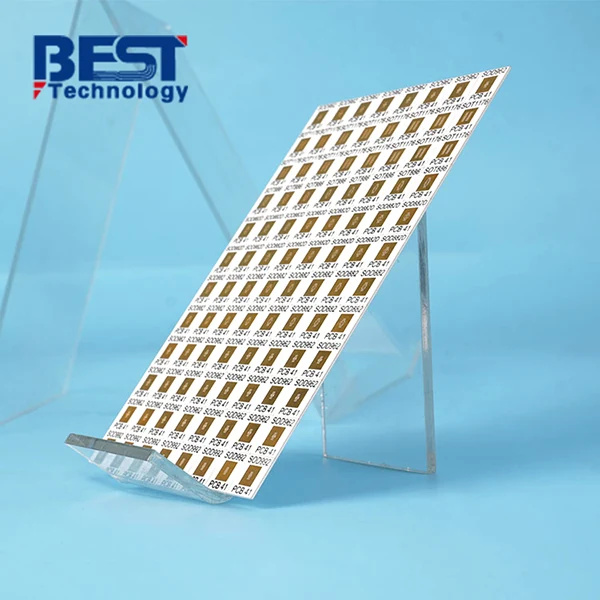
Our double-sided DPC circuit for laser equipment uses 96% alumina at a nominal 1.0 mm thickness, with 70 µm copper on one side, 35 µm on the other and an ENIG finish. It arrives as a patterned board rather than only a profiled substrate. A Danish laser-device assembler can use this construction as a reference for discussing pad pattern, copper build and solderable surface together.
For a new package, we check whether the pad layout, copper thickness or joining surface needs to change. We also agree the panel or single-board format that enters the Danish line. The actual drawing, rather than the example's dimensions, defines the new order.
What Does Our Thick-Film Sensor Board Add?
Our thick-film alumina sensor board uses one layer of 96% alumina with a 10–15 µm AgPd conductor. Fired thick-film metal serves a different circuit function from the plated copper on the DPC example. A Danish hybrid producer can decide whether to retain its own printing and firing process after buying a local blank, or receive the completed thick-film circuit from us.
If the design needs printed resistor features or particular attachment pads, we review those features with the conductor process. We can leave component assembly and final calibration with the customer's Danish team while supplying the finished bare circuit.
When Does an AMB Power Substrate Make More Sense?
Our AMB ceramic circuit for IGBT applications represents a power-oriented route. For a Danish module build, we review the current path, copper footprint, isolation distance and expected thermal cycling before proposing AMB. Its copper geometry and joining process differ from a fine-pattern DPC laser board or a thick-film sensor board.
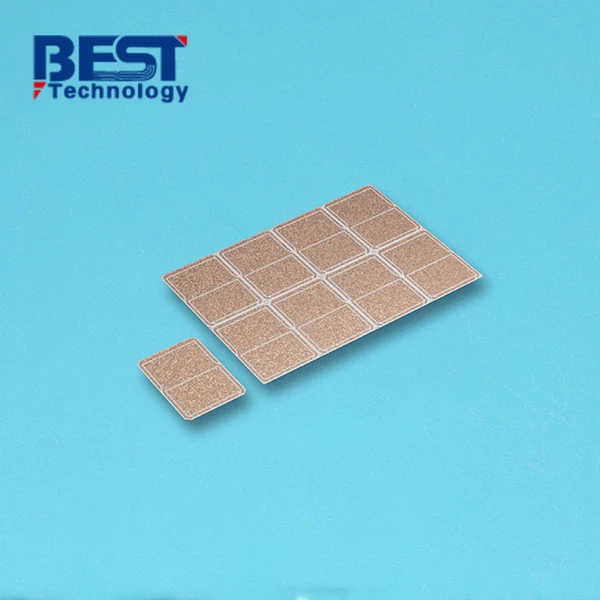
The board must also arrive in a condition suitable for die attach, soldering or the module's other joining operation. We agree the finish, handling and inspection criteria with the receiving assembly site before production.
How Can Our Boards Enter a Danish Assembly Flow?
We can ship finished bare circuits to a qualified assembler in Denmark. Before fabrication, we confirm its preferred orientation, panel or single-piece format, tooling features and pad finish. We also agree packaging that protects finished pads and ceramic edges in transit. The Danish assembler can keep component procurement, placement, final test and local production control.
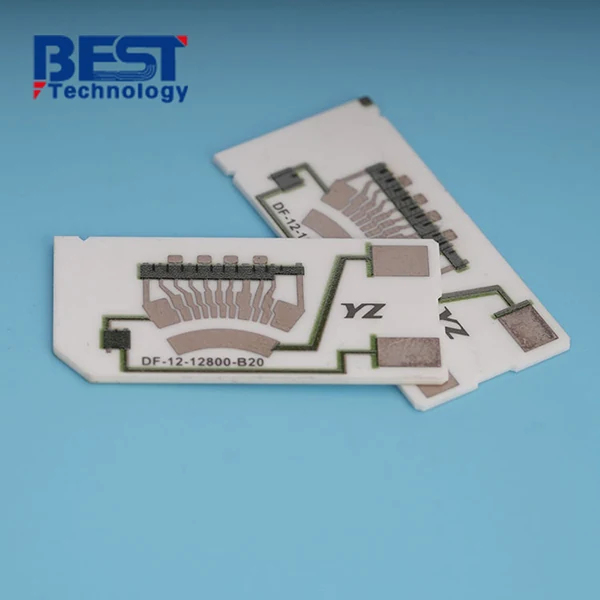
We can alternatively review an assembled ceramic circuit. Our assembly scope includes SMT and mixed assembly options, with sourcing and inspection agreed for the design. A bare-board electrical check and a functional test after component placement answer different questions, so the order identifies which checks belong to each stage.
Who Checks the Board Before Danish Production Release?
The board acceptance criteria should match the process that follows. For a DPC laser-device circuit, conductor geometry and pad finish matter before soldering or bonding. For a thick-film sensor, the fired conductor and any resistor function need the checks specified by its design. For an AMB power board, copper pattern, isolation and visible ceramic damage matter before module assembly.
We agree the applicable drawing revision and inspection points before production, then identify the board and revision on shipment. The Danish receiving team can compare the delivered part with those same criteria. If a prototype reveals a joining issue, the change enters a new approved revision before the repeat build.
How Do Repeat Builds and China-to-Denmark Deliveries Stay Aligned?
We carry the approved ceramic grade, thickness, conductor process, finish, outline and inspection criteria into repeat production. A revised component package, pad design or panel format is recorded before fabrication so the next shipment still fits the Danish assembly fixture and joining process.
Dispatch is planned against the receiving date. The order should state the board or assembly scope, delivery term and freight responsibility; manufacturing, transit, import handling and local receiving are separate parts of the schedule. We confirm the actual route and dates for each order instead of promising one fixed Denmark lead time.
Why Choose BSTCeramicPCB for This Project?
Choose us when the ordered item is a custom ceramic circuit rather than only a laser-shaped substrate. We can discuss plated DPC, fired thick-film and heavier-copper DBC/DCB or AMB options against the same device drawing, then supply the selected board from China. Our laser-equipment DPC, sensor thick-film and IGBT AMB product examples show specific constructions that can start a useful engineering discussion.
We can deliver bare boards to a Danish assembler or review component assembly with the board. We also carry the agreed material, conductor, finish and inspection details from prototype into repeat orders, subject to the approved drawing and project requirements. Laser Tech remains a practical local choice when precision ceramic laser processing is the work you need; we are the direct option when your next production step requires a patterned, finished board.
FAQ
Is a laser-cut ceramic substrate already a ceramic PCB?
Not necessarily. Cutting and drilling define the ceramic shape. An electrical circuit also needs its conductor pattern, suitable metallization and a finish matched to the planned joining process.
Can you supply only the bare ceramic circuit to Denmark?
Yes. We can supply a finished bare board for an existing Danish assembly partner, with its finish, panel format and packaging agreed before production.
Can DPC and AMB be quoted against the same drawing?
We can review both routes, but a design may need changes because fine plated DPC conductors and heavy AMB copper use different geometry and serve different loads. We assess the current path, pad size, thermal cycling and ceramic material before recommending a route.
Conclusion
For a Danish project, the key supplier choice is the deliverable: a processed ceramic blank, a finished circuit or an assembled module. Laser Tech offers local ceramic laser processing; we supply custom patterned ceramic boards and optional assembly from China. If you are comparing ceramic PCB suppliers in Denmark for a defined circuit, contact us at sales@bstceramicpcb.com to discuss the board and delivery scope.
 Products
 About us
 Contact us