










































 HOME


-

Interdigitated Electrodes on Alumina: How to Specify a Sensor Prototype
2026 11,04 -
Does Your Thin Film RTD Need a Custom Ceramic Circuit?
2026 11,04 -
4-Layer Alumina PCB: Stackup, Design Rules & Manufacturing Guide
2026 10,29 -
Aluminum Nitride Thermal Conductivity vs Temperature
2026 10,21 -
Wire Bonding EPIG Thickness: Selecting Pd/Au for Ceramic Bond Pads
2026 10,19 -
When Does a Thin-Film Circuit Need a Polished Alumina Substrate?
2026 10,18 -
Ceramic PCB for Humanoid Robot joint actuators
2026 04,07 -
LTCC PCB Surprises: What Most People Miss
2025 12,09 -
Step-by-Step Guide to DPC PCB Design for Sensor Systems
2025 12,03 -
Ceramic PCBs Essential Benefits and Applications
2025 12,01 -
How Al2O3 DPC Ceramic Substrate PCB Enhances Heat Dissipation in Modern Electronics?
2025 11,28 -
How to Choose Between Ceramic, FR4, and Metal Core PCBs
2025 11,27 -
DPC Ceramic PCB Materials: Surprising Science Inside
2025 11,26 -
Wire bondable 2-layer Alumina substrates PCB | Bstceramic PCB
2025 09,22 -
Silicon Nitride Substrate, Silicon Nitride Ceramic Substrate Formula
2025 05,08 -
What is thick film ceramic PCB?
2023 08,02
Ceramic PCB Suppliers in Egypt: Material Availability and Prototype Routes
Published:
Ceramic PCB suppliers in Egypt offer different routes for an electronics project. Nile Circuits says it can manufacture on ceramic materials and assemble prototypes in Egypt, although it does not keep ceramic material in stock. We manufacture custom ceramic circuits in China, with DPC, DBC and thick-film examples that can be delivered as bare boards for an Egyptian assembly line or reviewed for assembly with us. The better route depends on the actual substrate, conductor and assembly requirements.
Which Ceramic PCB Orders Are Hard to Place in Egypt?
An ordinary rigid PCB, a metal-core LED board and a patterned ceramic circuit are different orders. Nile Circuits makes rigid, flexible and metal-core boards in Egypt and says it can manufacture on ceramic materials. It does not stock ceramic or high-frequency materials. A prototype that depends on a particular alumina grade therefore needs a material availability check before its build date can be confirmed.
The conductor process is the other decision. A customer needing a defined DPC copper pattern, DBC power path or fired thick-film conductor needs the supplier to confirm that construction on the drawing and in the quotation. We work from that finished-circuit specification; an Egyptian customer can then decide whether to receive the bare circuit for local assembly or ask us to review the assembly as well.
Nile Circuits vs BSTCeramicPCB
Nile Circuits offers Egyptian prototype fabrication and assembly. We manufacture custom ceramic circuits in China and can supply a finished board for an Egyptian assembly line.
| Order question | Nile Circuits, Egypt | BSTCeramicPCB, China |
|---|---|---|
| Local prototype | Accepts very small PCB orders, including a one-piece prototype | We review a custom ceramic prototype against its material and conductor design |
| Ceramic material | Says it can manufacture on ceramic materials; does not stock them | We quote the ceramic grade as part of a specific circuit build |
| Published standard PCB range | Rigid, flex and metal-core PCB; component assembly is available | Finished DPC, DBC/DCB and thick-film ceramic circuit examples are published |
| Assembly handoff | Board and component assembly can be handled in Egypt | We can supply bare circuits to an Egyptian assembler or review assembly with our team |
| Delivery point | Local Egyptian supplier | Production and shipment from China; delivery terms are agreed for the order |
If the required board is a local rigid or metal-core prototype, Nile's established PCB process may be the shortest discussion. If a design calls for a particular ceramic conductor construction, our product examples give the engineering conversation a concrete starting point. The final process and availability still depend on the drawing.
Nile's One-Piece Policy and Ceramic Material Availability
Nile accepts PCB prototypes as small as one piece and says it can work with ceramic materials, which it does not keep in stock. For a one-piece ceramic order, material sourcing and the requested metallization must therefore be confirmed along with the prototype quantity.
For a single-piece Egyptian prototype, confirm the material grade, thickness, conductor construction and finish with Nile before setting the build schedule. If the material or process is not available for that job, we can review a finished ceramic circuit design from China. A local assembly team can still place and test components after it receives the bare board.
When Is a Local Metal-Core Board Enough?
Metal-core PCB can be a sound choice for an LED assembly that needs a practical heat path but does not require the electrical insulation, small patterned pads or package geometry of a ceramic circuit. Nile lists metal-core boards among its standard offerings. Retaining that local board route can simplify a prototype if it meets the electrical and thermal design.
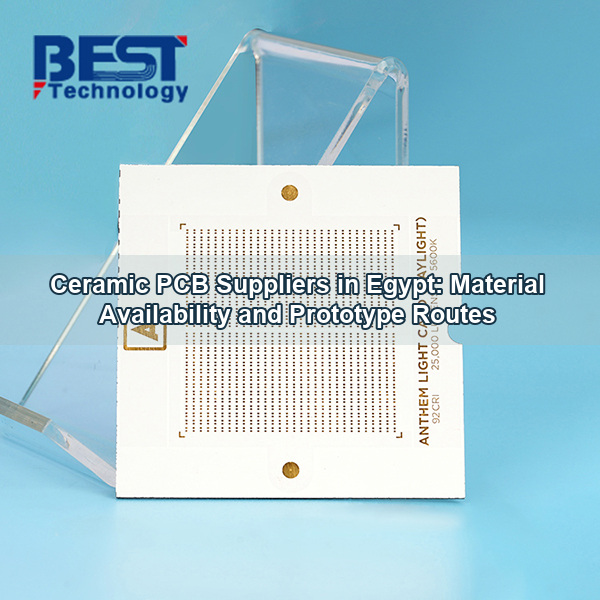
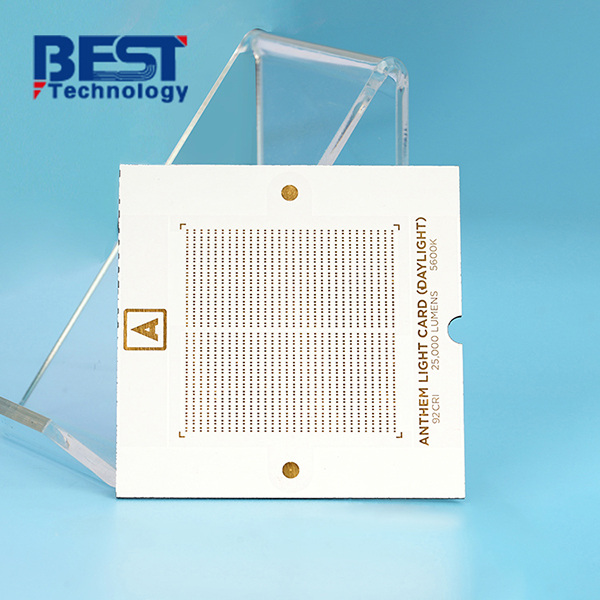
The comparison changes when the LED package needs a ceramic die carrier with a specified conductor pattern. Our alumina DPC LED circuit uses 96% Al₂O₃, a nominal 1.0 mm board and 18 µm copper with an ENEPIG finish. We review a new LED package's pad geometry and joining method before proposing its construction.
What Does Our Finished DPC LED Board Include?
The DPC LED example is a patterned ceramic electrical part, not just a white alumina plate cut to outline. The copper conductor, solderable finish and board geometry are defined together. An Egyptian LED assembler can order that type of finished bare board and keep emitter placement, optics, enclosure work and final test in Egypt.
We can also review whether component placement belongs with the board order. That decision affects the pad finish, handling format and the tests performed before dispatch. The Egyptian team's LED module drawing and assembly plan determine that scope.
Which Power-Circuit Projects Need a DBC Build?
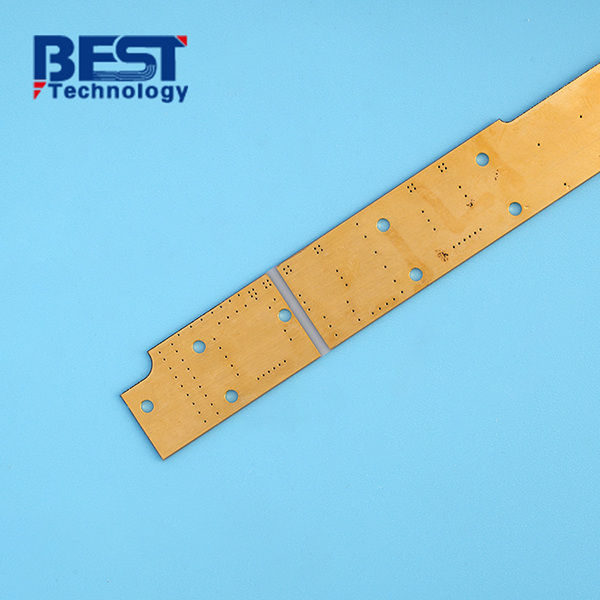
For a power module with a much heavier current path, a DBC/DCB construction may be more appropriate than the thin copper in the LED DPC example. Our AlN DBC substrate for an IGBT application uses a nominal 1.6 mm board and 300 µm copper. We review the current path and attachment process for each new module.
We review the module footprint, isolation spacing, current path and joining operation before selecting a copper-bonded ceramic route. If the project also has a metal-core control board, Nile can supply that separate board while we make the ceramic substrate for the power stage.
Where Can Thick-Film Conductors Fit?
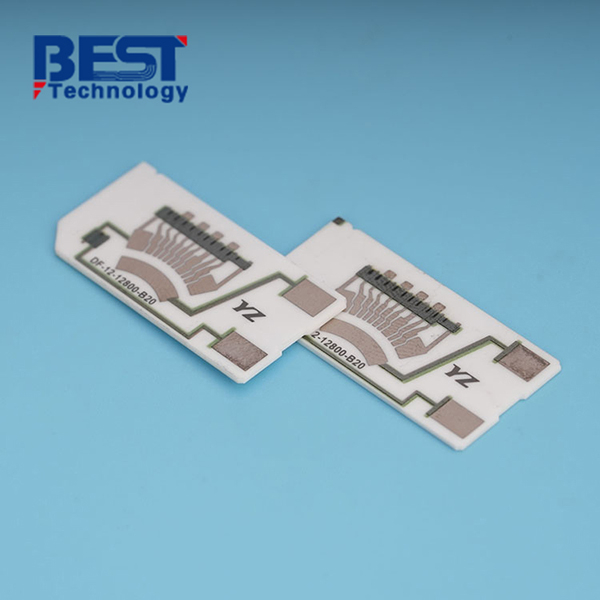
Thick-film printing is relevant when the ceramic circuit needs fired conductor patterns or integrated resistor features. Our alumina thick-film circuit example uses a 96% Al₂O₃ substrate and a 10–15 µm AgPd conductor. We review the conductor geometry, electrical function and attachment surface for a new project.
An Egyptian instrument maker can retain calibration and final equipment assembly locally while receiving the finished printed circuit. If the design only needs ordinary copper tracks on an FR4 control board, thick-film ceramic would add a process without solving that job.
Should the Ceramic Board Be Assembled in Egypt or China?
Assembly in Egypt is useful when the finished product is already being built and tested there. We can provide the finished bare ceramic board, and the Egyptian assembly team can manage its component supply, placement, enclosure and final equipment test. Before fabrication, we agree the board format, orientation, handling of exposed ceramic edges and pad finish required by that assembly operation.
Assembly with us is an alternative when the project benefits from reviewing the ceramic board and component placement together. We support SMT and mixed assembly options and can discuss component sourcing, inspection and testing for the actual design. Nile also offers assembly locally, so the choice is about the location and scope of work the project needs, not an assumed absence of Egyptian assembly capability.
What Must Be Agreed Before Shipping to Egypt?
A China-to-Egypt board shipment should arrive in the format the receiving line can use. The order needs an agreed quantity per pack, protection for ceramic edges and finished pads, identification of the approved drawing revision, and delivery terms. If boards are supplied as panels, the panel layout and separation method should fit the Egyptian assembler's process.
We can review these requirements with the fabrication drawing and shipment plan, then agree the transport route and delivery schedule for the Egyptian destination.
How Are First Articles Checked Against Repeat Orders?
The first accepted build should establish the material, conductor construction, surface finish, outline and inspection criteria for later lots. A repeat order that changes one of these items may behave differently during soldering, bonding or thermal operation even when its outline is unchanged.
For ceramic boards we make, we tie the repeat build to the approved drawing and agreed process details. The Egyptian team can then compare incoming boards with its accepted first article before assembly. If the design revision changes, we review the new features rather than treating the previous approval as covering them automatically.
Our Advantages Beyond a Bare Ceramic Board
We can discuss several ceramic circuit routes within one project: DPC for a fine copper pattern, DBC/DCB for a heavier power path, and thick film for printed conductor functions. This matters when an Egyptian product contains different ceramic parts, or when its first material choice needs to be reconsidered against package geometry. Each route is assessed against its own drawing and receiving process.
We can also review component sourcing and ceramic PCB assembly. The value is a defined handoff between the bare circuit and populated part, including pad finish, placement and inspection requirements. A customer that already has an Egyptian assembly line can use only the bare-board service; the rest is optional.
Why Choose BSTCeramicPCB for an Egyptian Project?
Choose us when the difficult part of the order is the custom ceramic electrical circuit: its material, conductor route, finish and possible assembly. We have published finished DPC LED, DBC power and thick-film circuit examples, and we review a new design against the product and joining requirements before quoting. We manufacture in China and can supply a bare circuit for assembly in Egypt or evaluate an assembled version.
If a standard locally made rigid or metal-core PCB meets the project, an Egyptian supplier remains a sensible option. If the design specifies a ceramic circuit and its material availability or conductor route needs specialist review, contact us at sales@bstceramicpcb.com with the intended construction and application.
FAQ
What Must Be Confirmed for a One-Piece Ceramic Order with Nile Circuits?
Nile states that it accepts one-piece PCB prototypes and ceramic-material inquiries, but ceramic is not stocked. Confirm the exact material and process for the one-piece job before planning the build.
Can BSTCeramicPCB ship bare boards for Egyptian assembly?
Yes. We can review a finished bare ceramic circuit for shipment from China to an Egyptian assembly operation. The board format, finish, packaging and delivery terms are set for the project.
Is DPC always better than a metal-core PCB for Egyptian LED products?
No. A local metal-core board may meet the thermal and electrical requirements. DPC becomes relevant when the package needs the ceramic carrier, conductor geometry and joining surface that the design specifies.
Conclusion
Ceramic PCB suppliers in Egypt can support local prototypes and assembly, while a custom patterned ceramic circuit may call for a more specific material and conductor route. Nile Circuits offers a local path, subject to ceramic material availability. We can manufacture the finished ceramic board in China and define its handoff to an Egyptian assembly line. For a project review, contact sales@bstceramicpcb.com.
 Products
 About us
 Contact us