
































 HOME
HOME

-

Aluminum Nitride (AlN) Circuit Boards: Revolutionizing Thermal Management in UK Energy Storage Systems
2026 01,10 -
Top Tips for Advanced Semiconductor Packaging Substrate Design
2026 01,05 -
Automotive electronic ceramic circuits make cars smarter and safer
2026 01,05 -
The Ultimate Guide to Ceramic PCB Air Tightness: Ensuring Hermetic Reliability for High-Performance Electronics in North America
2025 12,29 -
Ceramic PCB for Power Modules (IGBT): The Ultimate High-Thermal Management Guide
2025 12,27 -
Ceramic Substrate or Aluminum PCB for High-Power LEDs
2025 12,24 -
The Ultimate Guide to Alumina Circuit Board (Al2O3): High-Performance Ceramic PCB Solutions for Global Electronics
2025 12,22 -
DBC Welding Strength Compared to Other Materials
2025 12,19 -
LTCC PCB Surprises: What Most People Miss
2025 12,09 -
Comparison of DBC PCBs and MCPCBs for Cooling Performance
2025 12,03 -
Step-by-Step Guide to DPC PCB Design for Sensor Systems
2025 12,03 -
Ceramic PCBs Essential Benefits and Applications
2025 12,01 -
How Al2O3 DPC Ceramic Substrate PCB Enhances Heat Dissipation in Modern Electronics?
2025 11,28 -
How to Choose Between Ceramic, FR4, and Metal Core PCBs
2025 11,27 -
DPC Ceramic PCB Materials: Surprising Science Inside
2025 11,26 -
Wire bondable 2-layer Alumina substrates PCB | Bstceramic PCB
2025 09,22 -
Silicon Nitride Substrate, Silicon Nitride Ceramic Substrate Formula
2025 05,08 -
How to choose the appropriate substrate for ceramic circuit boards?
2023 11,16 -
Laser Cutting or Water Saw Cutting? How To Choose the Best Cutting Solution for Ceramic Circuit Boards
2023 11,13 -
Why Ceramic PCB Is So Expensive?
2023 11,10 -
Which Process Ceramic Circuit Board Is A Better Solution For Semiconductor Refrigerator Chips?
2023 11,06 -
Silicon Printing Circuit Boards For Advancing Electronics
2023 10,27 -
What is the Difference Between HTCC and LTCC Ceramic PCB
2023 10,06 -
What is the Difference Between 96% and 99% Aluminum Oxide in Ceramic PCBs?
2023 09,20 -
Why thick film ceramic PCB is good for oil level sensor in automotive industry?
2023 08,25 -
Statistical analysis of ceramic PCB application fields
2023 08,16 -
Notice of anti-static requirements for PCBA processing and production
2023 08,16 -
Silver Paste: The Best Conductor Material for Via Holes in Thick Film Ceramic Boards
2023 08,16 -
Testing Circuit Board Ceramic Diode Fuses: A Complete Guide
2023 08,07 -
Why DBC is replaced by DPC in ceramic PCB manufacturing?
2023 08,01 -
What is thick film ceramic PCB?
2023 08,02
High Thermal Conductivity Ceramic PCB for Photovoltaic Applications
Table of Contents
- What Is a High Thermal Conductivity Ceramic PCB?
- Why Thermal Management Matters in Photovoltaic Systems
- Ceramic PCB Materials for High Heat Dissipation
- Flexible PCB and Rigid-Flex PCB Integration in Solar Applications
- Manufacturing Process and Quality Control Standards
- Typical Applications in Colombia’s Solar Energy Market
- How to Choose the Right Ceramic PCB Supplier
What Is a High Thermal Conductivity Ceramic PCB?
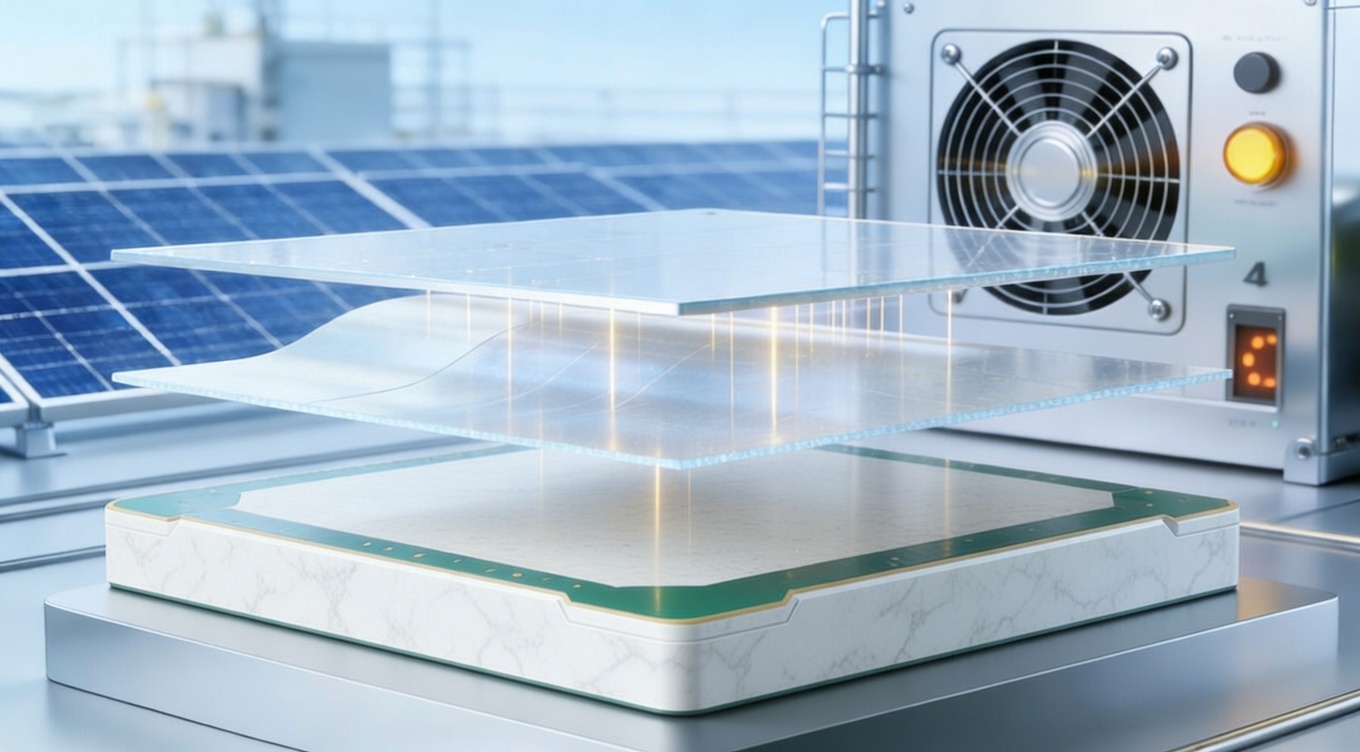
A high thermal conductivity ceramic PCB is a circuit board that uses a ceramic substrate instead of traditional FR4. Ceramic materials offer significantly higher heat dissipation, electrical insulation, and mechanical stability under extreme operating conditions.
Compared with metal-core PCBs or standard fiberglass boards, ceramic PCBs are designed to:
- Transfer heat efficiently from power components
- Maintain stable electrical performance
- Operate reliably in high-voltage and outdoor environments
Typical thermal conductivity values range from 24 W/m·K to over 170 W/m·K, depending on the ceramic material used.
Why High Thermal Conductivity Ceramic PCBs Are Critical for Photovoltaic Systems
Photovoltaic systems operate under continuous thermal stress. Solar inverters, IGBT modules, MOSFETs, and rectifiers generate substantial heat during power conversion.
Thermal Challenges in Solar Applications
- Continuous high current operation
- Outdoor temperature fluctuations
- UV exposure and humidity
- Long-term reliability requirements (10–25 years)
Without effective heat dissipation, traditional PCB materials can lead to:
- Component failure
- Delamination
- Reduced conversion efficiency
- Shortened system lifespan
High thermal conductivity ceramic PCBs address these issues by creating a direct thermal path from heat-generating components to heat sinks or cooling systems.
Material Selection: Ceramic PCB Substrates for Solar Power Applications
Choosing the right ceramic material is essential for photovoltaic systems.
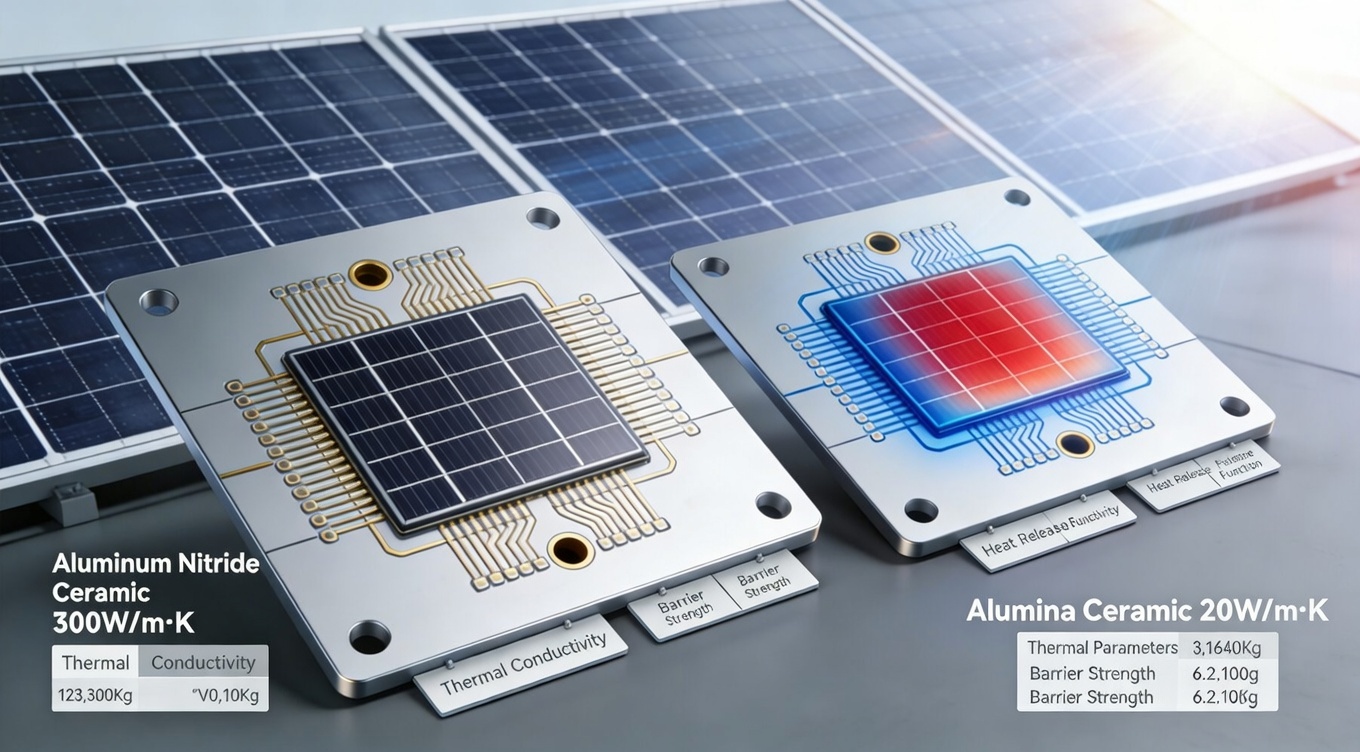
Aluminum Oxide (Al₂O₃) Ceramic PCB
- Thermal conductivity: ~24 W/m·K
- Cost-effective
- Suitable for medium-power PV applications
Aluminum Nitride (AlN) Ceramic PCB
- Thermal conductivity: 150–170 W/m·K
- Ideal for high-power solar inverters
- Excellent thermal expansion match with copper
Silicon Nitride (Si₃N₄) Ceramic PCB
- High mechanical strength
- Superior thermal shock resistance
- Used in demanding outdoor solar installations
Flexible PCB and Rigid-Flex PCB Solutions in High-Power Photovoltaic Designs
Modern photovoltaic systems increasingly require compact, lightweight, and complex interconnections. This is where flexible PCB and rigid-flex PCB solutions complement ceramic substrates.
Flexible PCB in Solar Applications
Flexible PCBs are commonly used for:
- Sensor connections
- Control signal transmission
- Compact module interconnections
Their ability to bend and fold allows designers to optimize internal layouts without sacrificing reliability.
Rigid-Flex PCB Integration
Rigid-flex PCBs combine ceramic rigid sections with flexible interconnects, offering:
- Reduced connectors and solder joints
- Improved vibration resistance
- Higher assembly reliability
In photovoltaic inverters and power control units, rigid-flex ceramic PCB assemblies help maintain electrical stability while simplifying system architecture.
Manufacturing Process and Quality Control Standards
High thermal conductivity ceramic PCB manufacturing requires precise control at every stage.
Key Manufacturing Steps
- Ceramic substrate preparation
- Thick-film or DBC (Direct Bonded Copper) processing
- Precision etching and drilling
- Surface finishing (ENIG, silver, gold plating)
Quality and Reliability Testing
- Thermal cycling tests
- Dielectric withstand voltage testing
- Peel strength and solderability evaluation
- X-ray and AOI inspection
Compliance with ISO, IPC, and RoHS standards is essential for photovoltaic applications targeting international markets, including Colombia.
Typical Applications in Colombia’s Solar Energy Market
Colombia’s renewable energy sector has experienced steady growth in recent years, particularly in:
- Utility-scale solar farms
- Commercial rooftop systems
- Off-grid solar solutions
High thermal conductivity ceramic PCBs are widely used in:
- Solar inverters
- Power conversion modules
- Battery energy storage systems (BESS)
- DC-DC converters
Their durability and thermal performance make them suitable for Colombia’s diverse climate conditions.
How to Choose the Right Ceramic PCB Supplier
When sourcing ceramic PCBs for photovoltaic applications, buyers should consider:
- Proven experience in ceramic PCB manufacturing
- Material options and thermal performance data
- Flexible PCB and rigid-flex integration capability
- Engineering support and DFM review
- Consistent quality and lead-time control
Working with a manufacturer that understands both thermal management and solar industry requirements ensures long-term system reliability.
 Products
 About us
 Contact us