






































 HOME
HOME

-

Top Tips for Advanced Semiconductor Packaging Substrate Design
2026 01,05 -
Automotive electronic ceramic circuits make cars smarter and safer
2026 01,05 -
The Ultimate Guide to Ceramic PCB Air Tightness: Ensuring Hermetic Reliability for High-Performance Electronics in North America
2025 12,29 -
Ceramic PCB for Power Modules (IGBT): The Ultimate High-Thermal Management Guide
2025 12,27 -
Ceramic Substrate or Aluminum PCB for High-Power LEDs
2025 12,24 -
The Ultimate Guide to Alumina Circuit Board (Al2O3): High-Performance Ceramic PCB Solutions for Global Electronics
2025 12,22 -
DBC Welding Strength Compared to Other Materials
2025 12,19 -
LTCC PCB Surprises: What Most People Miss
2025 12,09 -
Comparison of DBC PCBs and MCPCBs for Cooling Performance
2025 12,03 -
Step-by-Step Guide to DPC PCB Design for Sensor Systems
2025 12,03 -
Ceramic PCBs Essential Benefits and Applications
2025 12,01 -
How Al2O3 DPC Ceramic Substrate PCB Enhances Heat Dissipation in Modern Electronics?
2025 11,28 -
How to Choose Between Ceramic, FR4, and Metal Core PCBs
2025 11,27 -
DPC Ceramic PCB Materials: Surprising Science Inside
2025 11,26 -
Wire bondable 2-layer Alumina substrates PCB | Bstceramic PCB
2025 09,22 -
Silicon Nitride Substrate, Silicon Nitride Ceramic Substrate Formula
2025 05,08 -
How to choose the appropriate substrate for ceramic circuit boards?
2023 11,16 -
Laser Cutting or Water Saw Cutting? How To Choose the Best Cutting Solution for Ceramic Circuit Boards
2023 11,13 -
Why Ceramic PCB Is So Expensive?
2023 11,10 -
Which Process Ceramic Circuit Board Is A Better Solution For Semiconductor Refrigerator Chips?
2023 11,06 -
Silicon Printing Circuit Boards For Advancing Electronics
2023 10,27 -
What is the Difference Between HTCC and LTCC Ceramic PCB
2023 10,06 -
What is the Difference Between 96% and 99% Aluminum Oxide in Ceramic PCBs?
2023 09,20 -
Why thick film ceramic PCB is good for oil level sensor in automotive industry?
2023 08,25 -
Statistical analysis of ceramic PCB application fields
2023 08,16 -
Notice of anti-static requirements for PCBA processing and production
2023 08,16 -
Silver Paste: The Best Conductor Material for Via Holes in Thick Film Ceramic Boards
2023 08,16 -
Testing Circuit Board Ceramic Diode Fuses: A Complete Guide
2023 08,07 -
Why DBC is replaced by DPC in ceramic PCB manufacturing?
2023 08,01 -
What is thick film ceramic PCB?
2023 08,02
Thermal Shock Resistance of Ceramic Circuit Boards: The Ultimate Guide for Kiwi Innovators
In the fast-paced world of electronics, reliability is not just a luxury; it is the backbone of innovation. From the rugged alpine ranges of the South Island to the geothermal fields of Rotorua, New Zealand’s technology sector operates in some of the most diverse and demanding environments on Earth. For Kiwi engineers working in AgriTech, aerospace, and renewable energy, the thermal shock resistance of ceramic circuit boards is becoming a critical topic of conversation.
As electronics shrink in size but grow in power, managing heat generation is the "number 8 wire" challenge of the modern age—it requires ingenuity and the right materials. Traditional FR4 boards often struggle when faced with rapid temperature fluctuations, leading to catastrophic failures. This article delves deep into why ceramic substrates are the superior choice for high-reliability applications and how BST Ceramic PCB is helping New Zealand industries beat the heat.
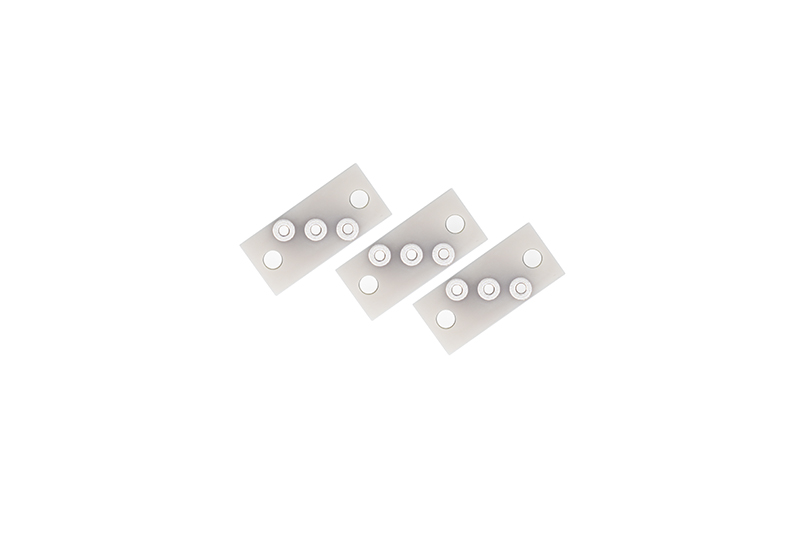
Understanding Thermal Shock in Modern Electronics
Thermal shock occurs when a material undergoes a rapid change in temperature, creating internal stress. If this stress exceeds the material's strength, it cracks. In the context of Printed Circuit Boards (PCBs), this usually happens during:
-
Operation: Power cycling (turning a device on and off) causes rapid heating and cooling.
-
Environment: Devices moving from a warm factory to a freezing outdoor environment (common in NZ agriculture).
-
Manufacturing: The soldering process involves extreme heat spikes.
For standard epoxy-glass boards (FR4), the mismatch in the Coefficient of Thermal Expansion (CTE) between the copper traces, components, and the substrate itself is a major failure point. However, ceramic materials offer a robust solution.
Why Traditional Boards Fail the "She’ll Be Right" Test
While the "she’ll be right" attitude is great for optimism, it doesn't apply to thermal dynamics. FR4 has a very low thermal conductivity (approx. $0.25~W/m\cdot K$). When a high-power component heats up, the heat gets trapped locally, creating a "hotspot." When this hotspot is rapidly cooled, the mechanical stress tears the copper traces apart.
In contrast, ceramic substrates like Alumina ($Al_2O_3$) and Aluminium Nitride ($AlN$) handle these stresses differently. They don't just survive the heat; they manage it.
The Science of Durability: Ceramic vs. FR4
To understand the thermal shock resistance of ceramic circuit boards, we must look at the physics. The secret lies in two key properties: Thermal Conductivity and Thermal Expansion matching.
Thermal Conductivity: The Heat Highway
Ceramics act as a superhighway for heat. instead of trapping thermal energy, they distribute it rapidly across the entire surface of the board.
-
Alumina ($Al_2O_3$): Offers thermal conductivity around $24~W/m\cdot K$ to $28~W/m\cdot K$.
-
Aluminium Nitride ($AlN$): The heavy hitter, boasting $170~W/m\cdot K$ to $230~W/m\cdot K$.
This rapid dissipation prevents the formation of destructive thermal gradients that cause shock fractures.
Matching the CTE of Silicon
The components mounted on your board (chips, LEDs, sensors) are typically made of silicon. Silicon has a CTE of approximately $2.6~ppm/^\circ C$.
-
FR4 CTE: $14-17~ppm/^\circ C$ (A large mismatch).
-
Ceramic CTE: $4-7~ppm/^\circ C$ (A near-perfect match).
Because the ceramic board expands and contracts at roughly the same rate as the silicon chips, the solder joints are not pulled apart during thermal cycling. This is crucial for BST Ceramic PCB clients who require longevity in their designs.
Technical Note: The bond strength in our Direct Plated Copper (DPC) and Direct Bonded Copper (DBC) technologies further enhances this resilience, creating a substrate that is essentially monolithic in its thermal response.
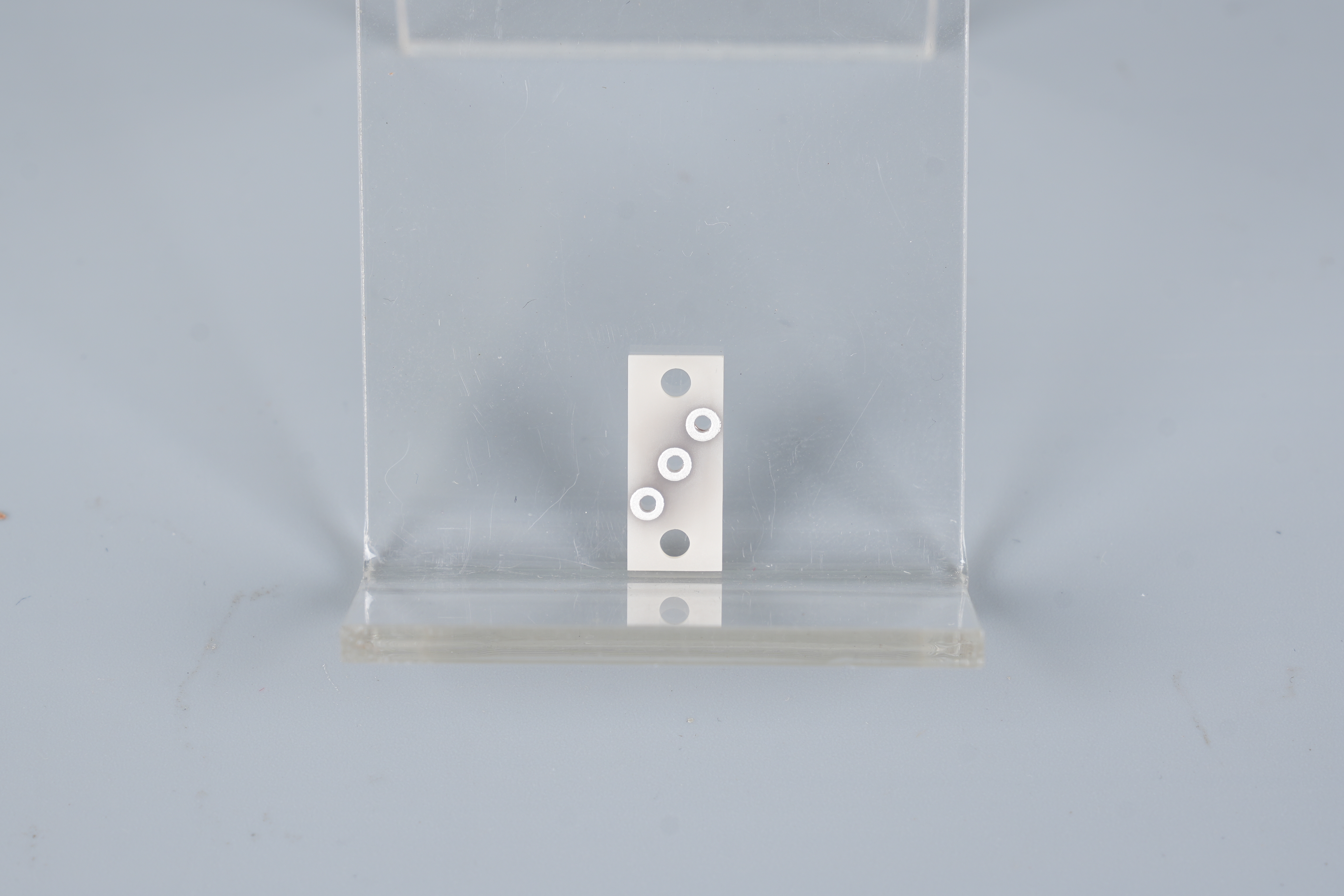
Applications in the New Zealand Context
New Zealand is not just a consumer of electronics; it is a hub for specialized, high-value manufacturing. The demand for high thermal shock resistance is driving the adoption of ceramic PCBs in several key Kiwi sectors.
AgriTech and Outdoor Sensors
NZ is a world leader in AgriTech. Sensors placed in vineyards in Marlborough or dairy farms in Waikato are exposed to scorching sun during the day and freezing frosts at night. This daily cycle is a textbook thermal shock scenario.
By utilizing boards from manufacturers like BST Ceramic PCB, Kiwi engineers ensure that automated milking systems and soil moisture sensors don't fail when the weather turns.
Geothermal and Renewable Energy
With significant operations in the Taupo Volcanic Zone, electronics used in geothermal monitoring face extreme ambient temperatures. Standard boards delaminate under these conditions. Ceramic circuits maintain structural integrity even when ambient temperatures soar well above $150^\circ C$.
Aerospace and Rocketry
With the Mahia Peninsula hosting regular orbital launches, NZ's aerospace industry is booming. Electronics in this sector face the ultimate thermal shock: the cold vacuum of space followed by the intense heat of operation or re-entry. The stability of Aluminium Nitride substrates is non-negotiable here.
Material Breakdown: Choosing the Right Substrate
When sourcing from www.bstceramicpcb.com, it is essential to select the right material for your specific thermal load.
Alumina ($Al_2O_3$) – The Cost-Effective Workhorse
For most LED lighting, general automotive sensors, and standard power modules, Alumina is the industry standard. It offers a significant upgrade over metal-core PCBs (MCPCB) and FR4 at a reasonable price point. Its thermal shock resistance is sufficient for temperature swings typically seen in consumer and industrial electronics.
Aluminium Nitride ($AlN$) – The High-Performance Beast
If you are designing high-frequency RF applications (like 5G towers) or high-power laser diodes, $AlN$ is the requirement. While more expensive, its ability to withstand rapid thermal pulses without cracking is unmatched. It effectively mimics the thermal performance of BeO (Beryllium Oxide) but without the toxicity.
| Feature | FR4 | Alumina (96%) | Aluminium Nitride (AlN) |
| Thermal Conductivity ($W/m\cdot K$) | $0.25$ | $24$ | $170+$ |
| CTE ($ppm/^\circ C$) | $14-17$ | $6.8$ | $4.5$ |
| Moisture Absorption | High | $0.00\%$ | $0.00\%$ |
| Thermal Shock Rating | Low | High | Very High |
How BST Ceramic PCB Ensures Quality
At BST Ceramic PCB, we don't just manufacture; we validate. Ensuring thermal shock resistance requires rigorous testing protocols that meet international standards.
The Thermal Cycling Test
Our quality assurance process involves subjecting sample batches to extreme thermal cycling chambers.
-
Low Dwell: The boards are cooled to $-55^\circ C$ or lower.
-
Transition: They are rapidly moved to a high-temperature zone (often $<10$ seconds).
-
High Dwell: The boards are heated to $+125^\circ C$ or $+150^\circ C$.
-
Repetition: This cycle is repeated hundreds or thousands of times (e.g., 1000 cycles).
After testing, we use acoustic scanning and electrical continuity tests to check for micro-cracks or delamination between the copper and the ceramic base. Only boards that pass these stringent checks are shipped to our clients in New Zealand and worldwide.
Surface Treatment and Protection
To further enhance resistance to environmental factors (like the salty air in coastal NZ cities such as Auckland or Wellington), we offer various surface finishes including ENIG (Electroless Nickel Immersion Gold) and ENEPIG. These finishes protect the copper traces from oxidation, which can be accelerated by thermal stress.
Best Practices for Kiwi Engineers
If you are designing a PCB that requires high thermal shock resistance, consider these "pro tips":
-
Avoid Sharp Corners: When designing copper traces, use curved angles rather than 90-degree bends. Sharp corners concentrate stress during thermal expansion.
-
Balance the Copper: Ensure the copper thickness is balanced on both sides of the ceramic plate. Uneven copper can cause the board to bow or warp during heating.
-
Consult Early: Don't wait until the prototype fails. Reach out to the engineering team at BST Ceramic PCB during the design phase. We can advise on whether DPC, DBC, or AMB (Active Metal Brazing) is the right technology for your thermal load.
Conclusion: Future-Proofing with Ceramics
As New Zealand continues to carve out its niche in the global high-tech economy, the reliability of our hardware must match the ingenuity of our software and engineering. The thermal shock resistance of ceramic circuit boards provides the durability required for the next generation of Kiwi tech—whether that’s in deep-sea sensors, orbital satellites, or smart farming grids.
Don't let thermal failure be the bottleneck in your next project. By leveraging the superior properties of Alumina and Aluminium Nitride, you ensure your devices stand the test of time (and temperature). Ready to upgrade your thermal management strategy?
Visit www.bstceramicpcb.com today to explore our range of ceramic substrates or contact our technical team to discuss your specific requirements. Let’s build something that lasts.
 Products
 About us
 Contact us