













































 HOME
HOME

-

Ceramic PCB for Humanoid Robot joint actuators
2026 04,07 -
LTCC PCB Surprises: What Most People Miss
2025 12,09 -
Step-by-Step Guide to DPC PCB Design for Sensor Systems
2025 12,03 -
Ceramic PCBs Essential Benefits and Applications
2025 12,01 -
How Al2O3 DPC Ceramic Substrate PCB Enhances Heat Dissipation in Modern Electronics?
2025 11,28 -
How to Choose Between Ceramic, FR4, and Metal Core PCBs
2025 11,27 -
DPC Ceramic PCB Materials: Surprising Science Inside
2025 11,26 -
Wire bondable 2-layer Alumina substrates PCB | Bstceramic PCB
2025 09,22 -
Silicon Nitride Substrate, Silicon Nitride Ceramic Substrate Formula
2025 05,08 -
What is thick film ceramic PCB?
2023 08,02
Ceramic PCB for Power Modules (IGBT) in Australia — Technical Standards, Thermal Solutions, and Supplier Strategy
As Australia accelerates investment in renewable energy, industrial electrification, and high-efficiency power conversion systems, IGBT-based power modules have become a core component across multiple sectors. From solar inverters and industrial motor drives to EV charging infrastructure, these systems operate under high current, high voltage, and continuous thermal stress.
In this context, ceramic PCB for power modules (IGBT) is no longer a niche solution. It is a critical enabling technology that directly determines system reliability, thermal performance, and service life — especially under Australia’s demanding operating environments.
This article provides an in-depth, engineering-driven analysis of ceramic PCBs used in IGBT power modules for the Australian market, covering technical requirements, material and process choices, application scenarios, and why BSTCERAMICPCB is a reliable partner for Australian power electronics projects.
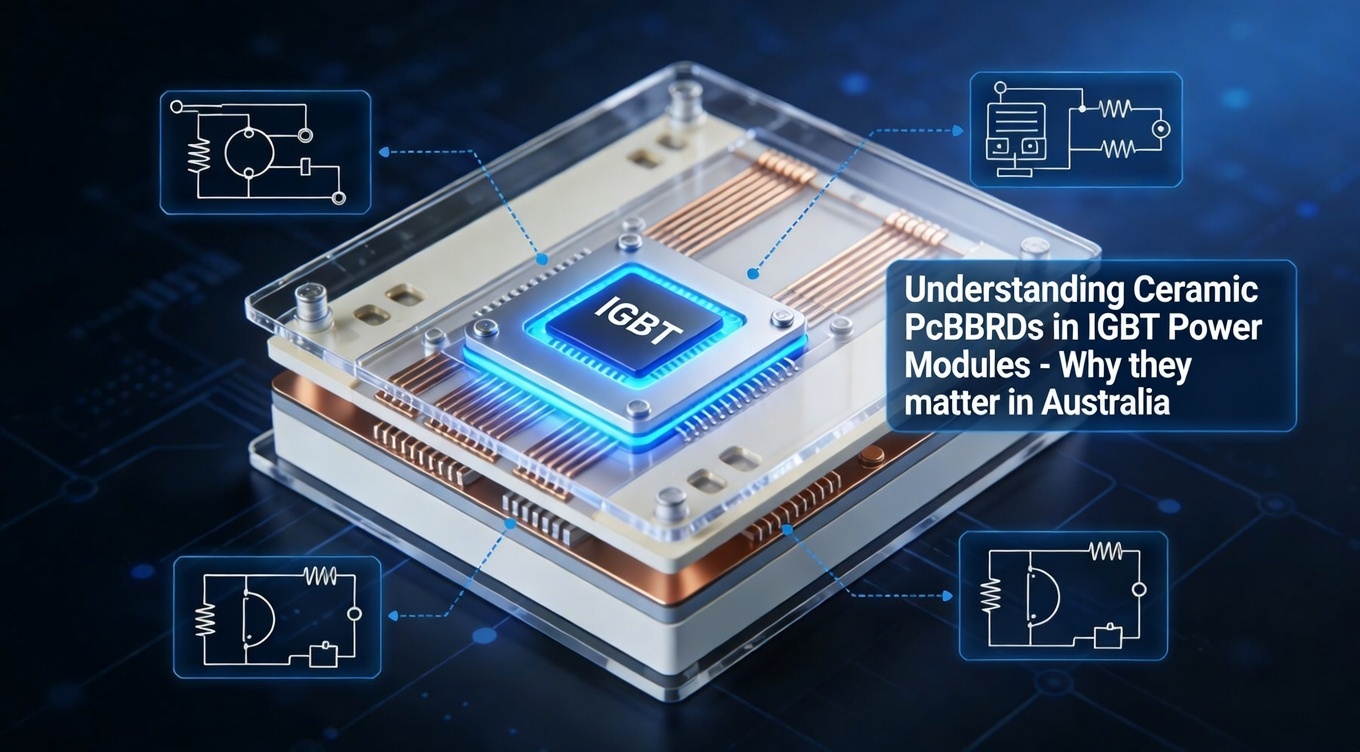
Understanding Ceramic PCBs in IGBT Power Modules — Why They Matter in Australia
IGBT power modules generate significant heat during switching and continuous operation. In Australia, where many power electronics systems operate in high ambient temperatures, outdoor installations, or remote industrial sites, thermal management becomes a first-order design constraint rather than an afterthought.
Traditional organic substrates such as FR-4 or metal-core PCBs struggle to meet these requirements due to limited thermal conductivity and long-term reliability issues. Ceramic PCBs, particularly those based on alumina or aluminum nitride with thick copper metallization, address these limitations directly.
What Makes Ceramic PCB Essential for IGBT Power Modules
A ceramic PCB used in an IGBT module must simultaneously provide:
- Efficient heat dissipation from the semiconductor junction
- High electrical insulation at elevated voltages
- Mechanical stability under thermal cycling and vibration
Ceramic substrates inherently offer superior dielectric strength and thermal stability compared to organic materials. When combined with processes such as Direct Bonded Copper (DBC) or Active Metal Brazing (AMB), they enable thick copper layers capable of handling high current without excessive resistive loss.
Thermal and Electrical Challenges in Australian Power Electronics
Australian power electronics applications often face:
- Elevated ambient temperatures
- Long duty cycles with minimal downtime
- Exposure to dust, humidity, and vibration
These conditions accelerate material fatigue and thermal degradation. Ceramic PCBs mitigate these risks by maintaining stable thermal performance over long service periods, making them particularly suitable for solar inverters, mining equipment, and industrial drives widely used across Australia.
High-Power Module Reliability Under Harsh Conditions
For Australian system integrators, reliability is closely tied to maintenance cost and system uptime. A ceramic PCB designed specifically for IGBT power modules reduces:
- Solder joint fatigue
- Delamination risk
- Thermal runaway scenarios
This is why ceramic PCB adoption in Australian IGBT modules continues to increase across both utility-scale and industrial applications.
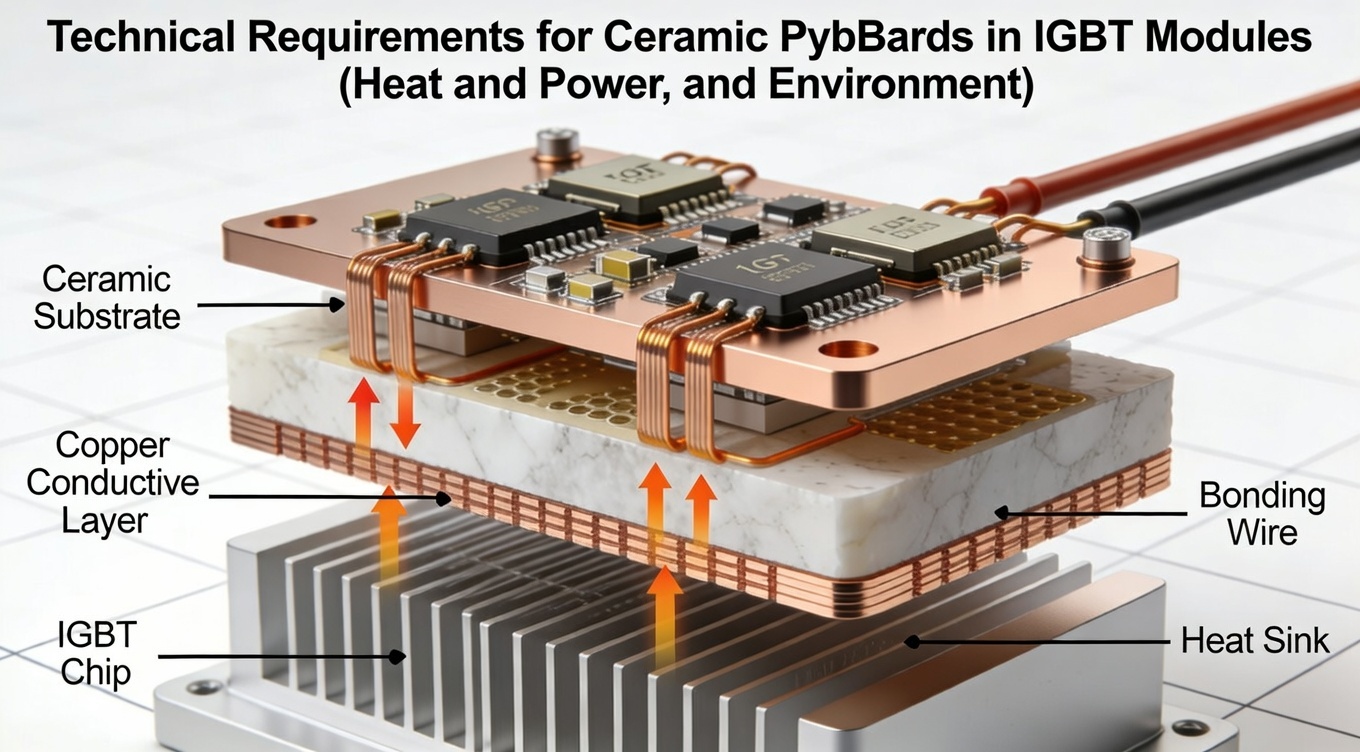
Technical Requirements for Ceramic PCBs in IGBT Modules (Heat, Power, and Environment)
Designing a ceramic PCB for IGBT power modules requires meeting a set of non-negotiable technical requirements, particularly for the Australian market where systems are often expected to operate continuously for years.
Thermal Dissipation and High Current Handling
Thermal performance is the primary driver behind ceramic PCB selection. Key requirements include:
- Low thermal resistance from IGBT junction to heatsink
- Capability to support thick copper layers (≥300 μm)
- Stable heat spreading under pulsed and continuous loads
Ceramic substrates such as alumina and aluminum nitride provide a solid thermal pathway, while DBC or AMB copper layers enable efficient current conduction without excessive Joule heating.
Electrical Insulation and Dielectric Performance
IGBT modules often operate at hundreds or thousands of volts. Ceramic PCBs must ensure:
- High dielectric strength
- Low leakage current
- Stable insulation even at elevated temperatures
These properties are critical for compliance with Australian electrical safety expectations and for preventing premature system failure.
CTE Matching, Mechanical Stability, and Vibration Resistance
Mismatch in coefficient of thermal expansion (CTE) between substrate, copper, and semiconductor devices can lead to mechanical stress. Ceramic PCBs reduce this risk by offering:
- Better CTE compatibility with IGBT chips
- High stiffness and dimensional stability
This is especially important for Australian mining and industrial applications where vibration and mechanical shock are common.
Quality and Compliance Expectations in Australia
While Australia does not impose a single automotive-style certification for power electronics, customers typically expect:
- Consistent manufacturing quality
- Material traceability
- Documented process control
BSTCERAMICPCB integrates these requirements into its ceramic PCB manufacturing process, ensuring suitability for Australian industrial and energy projects.
Core Ceramic PCB Technologies for IGBT Power Modules
Not all ceramic PCBs are equal. The choice of manufacturing technology significantly influences thermal performance, reliability, and cost.
Direct Bonded Copper (DBC) vs Active Metal Brazing (AMB)
DBC ceramic PCBs are widely used in IGBT modules due to:
- Strong copper-to-ceramic bonding
- Excellent thermal conductivity
- Proven long-term reliability
AMB ceramic PCBs provide enhanced bonding strength and are often selected for:
- High-power density designs
- Modules exposed to extreme thermal cycling
BSTCERAMICPCB supports both DBC and AMB processes, allowing Australian customers to select the most appropriate solution based on power level, environment, and cost structure.
Thick Copper and Heavy-Current Design Considerations
IGBT power modules demand copper layers capable of handling high current without excessive loss. Ceramic PCBs enable:
- Thick copper traces
- Optimized current paths
- Reduced parasitic resistance
These characteristics directly improve system efficiency and reduce thermal stress on power devices.
Process Control and Long-Term Reliability
Ceramic PCB reliability depends heavily on process stability:
- Uniform copper thickness
- Controlled bonding interfaces
- Consistent ceramic substrate quality
BSTCERAMICPCB applies strict process controls and inspection protocols to ensure that ceramic PCBs used in Australian IGBT applications meet long-term performance expectations.
Key Australian IGBT Applications and Industry-specific Solutions
The demand for ceramic PCB for power modules (IGBT) in Australia is driven by several high-growth sectors.
Renewable Energy and Solar Inverters
Australia’s large-scale solar installations rely heavily on IGBT-based inverters. Ceramic PCBs enable:
- Efficient heat dissipation in high-power inverter stages
- Compact module design
- Long service life under outdoor conditions
Industrial Drives and Motor Control Systems
In mining, manufacturing, and water infrastructure, IGBT modules are used in:
- Variable frequency drives
- Motor control units
- High-power converters
Ceramic PCBs ensure stable operation despite high loads and harsh environments.
EV Chargers and Electrified Transport
As EV infrastructure expands across Australia, ceramic PCBs support:
- Fast-charging systems
- High-voltage power stages
- Compact, thermally efficient charger designs
Harsh Environment Performance Expectations
Across all these sectors, Australian customers prioritize:
- Durability
- Minimal maintenance
- Predictable long-term performance
Ceramic PCBs address these priorities more effectively than organic alternatives.
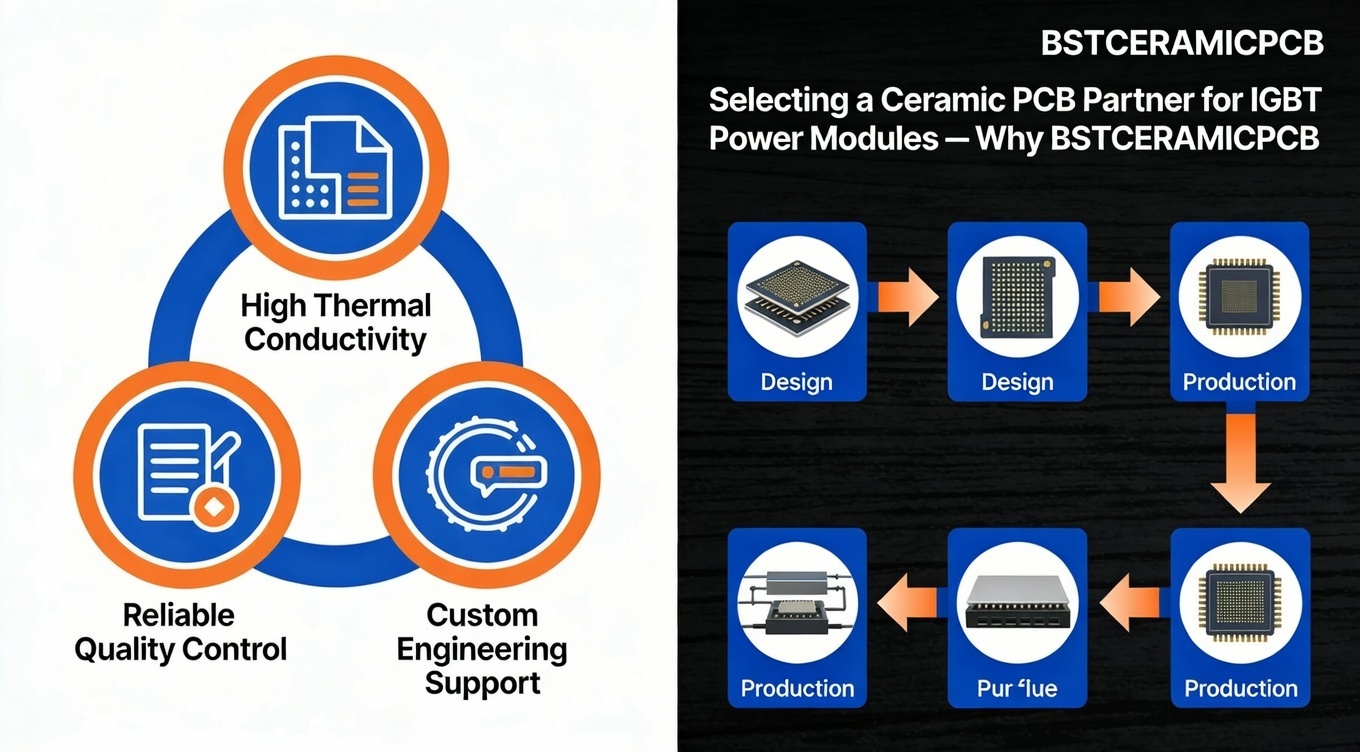
Selecting a Ceramic PCB Partner for IGBT Power Modules — Why BSTCERAMICPCB
Choosing the right supplier is as important as choosing the right technology. For Australian customers, BSTCERAMICPCB stands out through a combination of engineering expertise and manufacturing reliability.
Engineering Support and Customization
BSTCERAMICPCB provides:
- Material and process recommendations
- Design review for thermal and electrical optimization
- Prototyping support before volume production
This approach reduces risk and shortens development cycles.
Quality Control and Supply Chain Assurance
BSTCERAMICPCB implements:
- Incoming material inspection
- In-process quality control
- Final electrical and visual inspection
Ensuring consistent quality for Australian customers across pilot and production runs.
Long-term Partnership Value
Rather than acting as a transactional supplier, BSTCERAMICPCB supports:
- Design iteration
- Scaling from prototype to mass production
- Long-term project continuity
This partnership mindset aligns well with the expectations of Australian industrial and energy customers.
Start Your IGBT Ceramic PCB Project with BSTCERAMICPCB
For Australian power electronics applications, ceramic PCB for power modules (IGBT) is a strategic design choice that directly impacts system reliability, efficiency, and lifetime cost.
BSTCERAMICPCB delivers:
- DBC and AMB ceramic PCBs for IGBT modules
- Proven thermal management solutions
- Engineering-driven support from concept to production
Contact BSTCERAMICPCB today to discuss your IGBT power module requirements and receive a tailored ceramic PCB solution for the Australian market.
 Products
 About us
 Contact us