















































 HOME
HOME

-

Ceramic PCB for Humanoid Robot joint actuators
2026 04,07 -
LTCC PCB Surprises: What Most People Miss
2025 12,09 -
Step-by-Step Guide to DPC PCB Design for Sensor Systems
2025 12,03 -
Ceramic PCBs Essential Benefits and Applications
2025 12,01 -
How Al2O3 DPC Ceramic Substrate PCB Enhances Heat Dissipation in Modern Electronics?
2025 11,28 -
How to Choose Between Ceramic, FR4, and Metal Core PCBs
2025 11,27 -
DPC Ceramic PCB Materials: Surprising Science Inside
2025 11,26 -
Wire bondable 2-layer Alumina substrates PCB | Bstceramic PCB
2025 09,22 -
Silicon Nitride Substrate, Silicon Nitride Ceramic Substrate Formula
2025 05,08 -
What is thick film ceramic PCB?
2023 08,02
Real-time Defect Detection in AMB Ceramic Bonding — Quality Standards and Industrial Practices in Germany
In modern electronics manufacturing, the performance and reliability of ceramic PCBs often hinge on the quality of AMB (Active Metal Brazing) ceramic bonding — a process that joins metal conductors to ceramic substrates using a metallurgical bond. As German industries — especially automotive, telecommunications, renewable energy, and industrial automation — push the limits of performance, thermal management, and long-term reliability, the need for real-time defect detection in AMB processes becomes not just a technical advantage, but a quality imperative.
Real-time defect detection integrates advanced sensing, optical inspection, and analytics to identify bonding anomalies as they occur, enabling corrective actions before defective boards reach downstream assembly or final customers. In highly regulated and reliability-critical German markets, this capability dramatically reduces rework, scrap, warranty costs, and field failures.
This article explores what real-time defect detection involves, Germany’s technical standards around AMB ceramic bonding, practical industrial applications, specific technological considerations, and why leading German engineers are increasingly partnering with BSTCERAMICPCB for advanced AMB solutions.
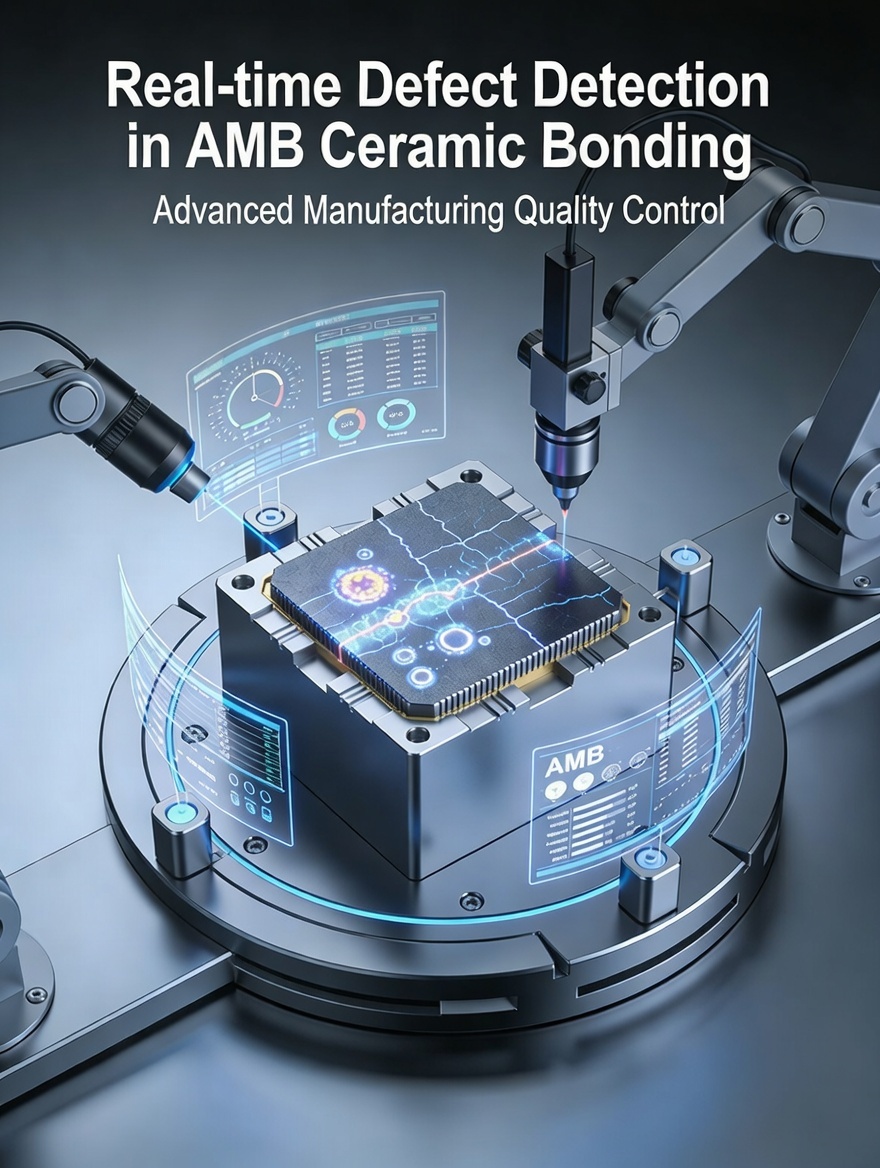
What Is Real-time Defect Detection in AMB Ceramic Bonding and Why It Matters in Germany
AMB — Active Metal Brazing — is an advanced metallurgical process that joins metal (typically molybdenum, tungsten, copper, or braze alloys) to a ceramic substrate (e.g., alumina or aluminum nitride) through a controlled brazing cycle. The bond achieved is metallurgical, offering high thermal conductivity, mechanical robustness, and electrical continuity essential for high-power and high-frequency ceramic PCB applications.
Overview of AMB (Active Metal Brazing) Ceramic Bonding
In AMB bonding, two materials with significantly different thermal expansion coefficients are joined under elevated temperature. The challenge lies in:
- Achieving uniform wetting of the metal onto ceramic
- Preventing voids, unbonded regions, or microcracks
- Maintaining bond interface integrity during cooling
Defects in AMB bonding are not cosmetic — they compromise thermal performance, mechanical strength, and electrical continuity. In German automotive or power electronics contexts, undetected bonding defects can lead to catastrophic system failures under thermal cycling or electrical load.
The Role of Real-time Defect Detection in Manufacturing
Traditionally, defect detection occurred post-brazing using destructive cross-sectioning, ultrasonic testing, or X-ray inspection. These are valuable but reactive.
Real-time defect detection uses inline sensors, optical imaging systems, thermal mapping, and data analytics to monitor the bond as it forms. Benefits include:
- Immediate identification of wetting deficiencies
- Detection of bonding voids before cooling
- Reduced inspection cycle time
- Higher confidence in output quality
In Germany’s precision manufacturing ecosystem, real-time detection is increasingly considered a baseline quality control metric, not an optional add-on.
How Defects Impact Ceramic PCB Performance
Common AMB bonding defects include:
- Incomplete adhesion
- Gas entrapment voids
- Thermal stress-induced microcracks
- Metallurgical inhomogeneities
These manifest as hotspots under operation, reduced current carrying capacity, mechanical delamination, or early life failures — all unacceptable in automotive power modules, telecom RF modules, or industrial inverter systems.
Why German Industries Require Real-time Monitoring
Germany’s industrial landscape emphasizes quality, predictability, and long service life. In sectors with functional safety requirements (e.g., automotive ISO 26262) or mission-critical industrial operations, quality assurance drives:
- Early failure avoidance
- Reduced warranty liabilities
- Process traceability
- Documented compliance
Real-time defect detection meets both engineering and purchasing expectations by reducing uncertainty and accelerating qualification cycles.
Germany’s Technical and Quality Standards for AMB Ceramic Bonding Defect Detection
German engineering standards for AMB ceramic bonding emphasize robust measurement protocols, documented inspection, and adherence to quality management systems. While specific standards (like DIN/EN norms) may not explicitly codify “real-time inspection,” German manufacturers adopt combinations of internationally recognized frameworks integrated with local aerospace, automotive, and industrial quality norms.
Material Requirements and Bonding Interface Standards
Ceramic substrates used with AMB must meet strict specifications regarding:
- Purity and microstructure
- Thermal expansion match or compensation design
- Surface roughness
- Metallization compatibility
Heat-resistant brazing alloys must be certified to withstand sustained thermal cycling and provide mechanical strength. Many German OEMs require traceability back to material certificates and supplier process reports.
Real-time Defect Detection Metrics and Tolerances
Key quality metrics monitored in real-time include:
- Wetting front progression
- Temperature uniformity across interface
- Plasma or optical emission signatures during braze
- Micro-void presence thresholds
For example, optical coherence tomography (OCT), high-resolution infrared thermography, and laser profilometry are deployed to detect anomalies at micron levels.
Tolerances for acceptable bonding quality are typically tight: residual void ratios must be below specified percentages, interface roughness must fall within narrow ranges, and heterogeneity must be quantified.
Real-time detection systems compare live data against these tolerances, triggering alerts or process adjustments.
Inspection, Testing Protocols and Certification Frameworks
While real-time inspection catches defects during production, post-brazing validation remains essential. German quality protocols often combine:
- Non-destructive evaluation (NDE)
- X-ray / CT scanning
- Destructive cross-section validation on sample lots
- Electrical continuity and thermal cycle testing
These methods align with aerospace and automotive certification frameworks (e.g., VDA, DIN EN, ISO 9001, IATF 16949).
Traceability and Documentation Requirements in German Production
German factories emphasize digital traceability — every AMB bond event is recorded, timestamped, and linked to batch records. This data is critical for:
- Root-cause analysis
- Customer audits
- Warranty support
- Functional safety reports
At BSTCERAMICPCB, all real-time inspection data is logged alongside process parameters, enabling clear historical traceability for European customers.
Industrial Use Cases in Germany and Defect Detection Benchmarks
Real-time defect detection in AMB bonding has become central in multiple German industries where failure is costly or dangerous.
Automotive Electronics and Electric Power Modules
Germany’s automotive sector leads electrification. AMB ceramic bonded modules are used for:
- Inverters
- Onboard chargers
- DC-DC converters
Automotive quality expectations include long life, thermal cycling resistance, and compliance with functional safety standards. Real-time detection ensures that bonding interfaces do not contain detrimental voids or adhesion defects.
Telecommunications and High-frequency RF Assemblies
5G and advanced RF systems require metal-to-ceramic interfaces with predictable dielectric behavior. Defects at the bond interface can cause:
- Impedance mismatches
- Signal reflections
- Thermal stress degradation
Real-time optical or thermal defect detection identifies potential issues before assembly.
Renewable Energy Inverters and Power Electronics
Germany’s renewable energy capacity relies on robust inverter electronics. AMB bonding quality affects:
- Heat dissipation
- Electrical leakage
- Long-term reliability
Continuous defect detection reduces field failures in harsh outdoor environments.
Industrial Automation and Safety-critical Systems
Industrial systems require consistency. Real-time detection ensures that every board meets production benchmarks, reducing downtime associated with electronic failures.
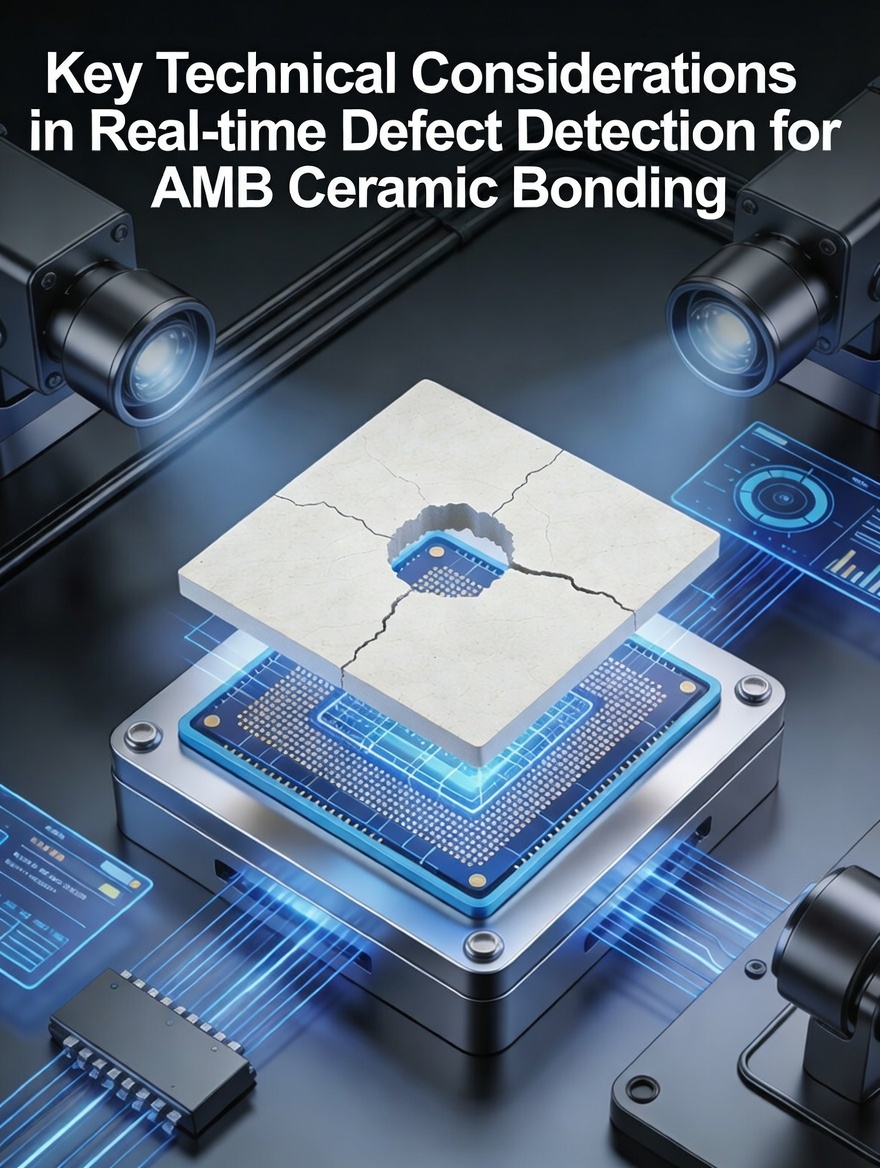
Key Technical Considerations in Real-time Defect Detection for AMB Ceramic Bonding
Advanced real-time defect detection systems integrate hardware and software components designed for speed and accuracy.
Integration of Sensor Systems and Machine Vision
Systems used include:
- High-resolution cameras
- Infrared thermography
- Laser profilometers
- Acoustic emission sensors
These capture real-time signatures associated with bond formation. Machine vision algorithms analyze surface features for anomalies.
Machine Learning and Predictive Analytics in Defect Detection
AI and machine learning models enhance defect detection by:
- Identifying pattern deviations
- Predicting defect onset
- Reducing reliance on human inspection
Models learn from historical data and adjust thresholds to reduce false positives.
Process Parameter Control and Defect Classification
Real-time systems correlate:
- Temperature cycles
- Bonding pressure profiles
- Interfacial wetting speed
…with defect types to classify anomalies and suggest corrective actions.
Avoiding False Positives and Inspection Throughput Optimization
Real-time detection must balance sensitivity with throughput. Too many false alarms slow production; too few risk defects escaping detection. System calibration, machine learning thresholds, and multi-sensor fusion improve reliability.
Why German Clients Choose BSTCERAMICPCB for AMB Ceramic Bonding Solutions
Engineering Collaboration and Defect Mitigation Expertise
BSTCERAMICPCB supports German customers with:
- Detailed AMB design reviews
- Real-time defect detection integration advice
- Optimized bonding profiles tailored to substrates and metallization
We provide DFM recommendations that reduce defect risk early in the design cycle.
Quality Management, Inspection Systems, and European Compliance
Our production lines incorporate:
- Inline optical and thermal inspection systems
- Digital process logging compliant with DIN EN and ISO quality frameworks
- Report packages ready for customer audits
This aligns with German procurement expectations for inspection traceability.
Case Studies and Testimonial Highlights
German partners in automotive, telecom, and power electronics have reported:
-
20–30% reduction in bonding defects
-
50% faster inspection cycles
-
Improved first-pass yield rates
These improvements translate to lower assembly costs and improved product reliability.
Contact, RFQ Processes, and Technical Consultation Routes
For tailored consultations on real-time defect detection in AMB ceramic bonding, submit your design files on our RFQ page.
For insights into defect detection benchmarks and process optimization, visit our Ceramic PCB Capabilities & Inspection Systems resource.
Conclusion
Real-time defect detection in AMB ceramic bonding is no longer a “nice-to-have”; it is a core technical capability that distinguishes high-reliability suppliers in Germany’s competitive electronics landscape. By monitoring bonding in real time, manufacturers can vastly improve yield, reduce scrap, ensure compliance, and deliver more reliable ceramic PCB products for critical applications.
With deep expertise in AMB processes, real-time inspection technologies, and European quality requirements, BSTCERAMICPCB is positioned as a strategic partner for German buyers seeking both performance and compliance excellence.
Contact BSTCERAMICPCB today to begin your project with confidence and optimized defect-free ceramic bonding.
 Products
 About us
 Contact us